Industrial heating is rarely as simple as switching a heater on and off. In modern manufacturing, temperature needs to be measured accurately, controlled consistently, and maintained within a defined operating range. This is especially important in processes where temperature directly affects material properties, product quality, cycle time, or equipment performance.
For this reason, choosing the right controller manufacturers in India has become an important decision for OEMs, machine builders, plant engineers, procurement teams, and process manufacturers.
A suitable controller is not selected only by its display range or basic specifications. The controller needs to work effectively with the heating element, sensor, electrical load, control method, and thermal characteristics of the application.
Understanding Industrial Temperature Controllers
An industrial temperature controller monitors the temperature of a process through a sensing device and regulates heating or cooling output according to a defined setpoint.
A typical heating control arrangement may include:
- Temperature controller
- Thermocouple or RTD
- Heating element
- Solid-state relay or contactor
- Circuit protection
- Indicators and alarms
- Electrical wiring
- Control panel
- Power distribution components
The controller receives feedback from the sensor and determines whether additional heating is required. In applications using PID control, the system can continuously adjust output to maintain a more stable process temperature.
This becomes particularly valuable where excessive temperature fluctuation could affect the final product.
Why Controller Selection Requires Engineering Consideration
One of the common mistakes in industrial procurement is treating a controller as a standalone component.
In practice, the controller is part of a larger thermal system.
Consider a mould-heating application. The required controller configuration can depend on mould material, heater wattage, sensor position, thermal mass, insulation, desired temperature, and heating rate. Selecting the controller without considering these factors can result in poor temperature stability or unnecessary cycling.
Experienced controller manufacturers in India therefore typically begin with the application rather than recommending a generic product immediately.
The selection process should consider:
- Operating temperature
- Heater wattage
- Supply voltage
- Current requirement
- Sensor type
- Number of control zones
- Required accuracy
- Heating response
- Environmental conditions
- Safety requirements
This application-based approach can help create a control system that is better suited to actual production requirements.
The Importance of PID Control
PID control is widely used in industrial temperature applications.
PID refers to proportional, integral, and derivative control. These three control actions help the system respond to temperature deviations and regulate the heating output.
However, simply selecting a PID controller does not guarantee excellent temperature performance.
PID parameters need to work appropriately with the thermal characteristics of the equipment. A small heater with low thermal mass may respond quickly, while a large industrial oven may respond much more slowly.
Understanding this difference is important when configuring a temperature-control system.
A well-matched control strategy can help reduce unnecessary temperature overshoot, improve process consistency, and support more predictable production cycles.
Matching Controllers With Heating Elements
The heating element and controller should be considered together during system design.
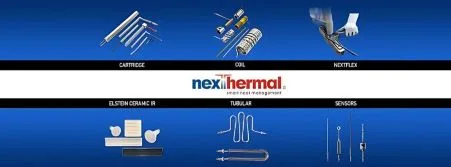
Different industrial heating elements have different electrical and thermal characteristics. Cartridge heaters, tubular heaters, coil heaters, ceramic heating elements, and other customised heaters may be used for different applications.
For example, cartridge heaters are commonly used where concentrated heating is required in dies, moulds, sealing equipment, and tooling. Tubular heaters may be more appropriate for ovens, tanks, air heating, and other applications.
A controller must be capable of handling the electrical characteristics of the selected heater and switching method.
Therefore, manufacturers should consider both the heating requirement and control architecture when developing a new machine or upgrading an existing process.
Industrial Control Panels and System Integration
For many applications, the controller is installed as part of a complete industrial control panel.
A properly designed panel may include temperature controllers, SSRs, contactors, MCBs, fuses, relays, indicators, terminals, and other electrical components.
Panel engineering involves more than placing components inside an enclosure. Component spacing, heat dissipation, wiring accessibility, protection, identification, maintenance access, and electrical loading all need to be considered.
For OEM machine builders, a customised panel can also simplify integration because the control system is developed around the machine's actual requirements.
This is one area where the experience of the controller manufacturers in India can make a practical difference.
Where Industrial Temperature Controllers Are Used
Temperature controllers are found across a broad range of manufacturing sectors.
Plastic Processing
Injection moulding, extrusion, dies, and tooling often require stable multi-zone temperature control.
Packaging
Heat sealing, forming, cutting, and packaging equipment can require precise control during short production cycles.
Industrial Ovens
Ovens used for drying, curing, heating, and processing may require multiple temperature zones and carefully selected sensors.
Food Processing
Heating and temperature management can be important in cooking, drying, sealing, and other food-production processes.
Pharmaceutical and Laboratory Equipment
Controlled temperature environments may be required for specialised equipment and processes where consistency is important.
Textile and Printing Equipment
Temperature can influence coating, drying, bonding, and finishing operations.
OEM Machinery
Machine manufacturers often require customised control systems that integrate directly with their equipment.
What Should Businesses Look for in a Controller Manufacturer?
Price is an important commercial consideration, but it should not be the only selection factor.
A reliable industrial supplier should demonstrate an understanding of:
Application requirements: Can the supplier understand the actual process?
Electrical requirements: Can the controller and switching components be correctly matched to the heater load?
Sensor compatibility: Can the appropriate thermocouple or RTD configuration be selected?
Panel engineering: Can the control system be integrated into a practical and maintainable panel?
Customisation: Can the configuration be adapted for specific OEM or production requirements?
Technical support: Is engineering assistance available during selection, installation, commissioning, and troubleshooting?
Long-term reliability: Are components and system design selected with the operating environment in mind?
These questions can help procurement teams distinguish between a basic product supplier and a genuine application-oriented engineering partner.
The Role of Energy Efficiency
Energy efficiency is another reason temperature control deserves careful attention.
Industrial heaters do not necessarily need to operate continuously at full output. Once a process approaches the required temperature, the control system can regulate the heating output according to the process condition.
However, overall energy consumption depends on several factors, including heater selection, insulation, thermal losses, process cycle, sensor positioning, and control strategy.
A properly engineered system therefore considers energy performance at the application level rather than attributing efficiency to the controller alone.
Choosing an Application-Focused Indian Manufacturer
India's manufacturing sector includes a wide variety of applications, from small specialised machines to large automated production systems. As these industries become more automated, demand for reliable temperature-control solutions is increasing.
A manufacturer with experience in heating and control engineering can bring value by looking at the complete process.
For example, an industrial customer may initially request a temperature controller but actually require a combination of controller, sensor, switching device, heating element, and customised control panel.
An application-focused supplier can identify these relationships before the system is finalised.
Nexthermal provides industrial heating, temperature control, and customised heating solutions for manufacturing and OEM applications. Its capabilities cover control systems alongside technologies such as cartridge heaters, tubular heaters, coil heaters, ceramic heating solutions, and thermal engineering services.
Future Outlook for Industrial Temperature Control
The next generation of industrial control systems will increasingly connect temperature regulation with broader automation and monitoring requirements.
Manufacturers are looking for better process visibility, multi-zone control, data availability, automation compatibility, energy management, and easier maintenance.
Yet advanced electronics cannot replace sound thermal engineering. The basic principles of heater selection, sensor positioning, insulation, electrical sizing, and process understanding will continue to determine how effectively a temperature-control system performs.
For businesses comparing controller manufacturers in India, the strongest decision is therefore one based on the complete application rather than the controller alone.
When technical requirements, heating elements, sensors, electrical loads, control architecture, and operating conditions are considered together, manufacturers can build temperature-control systems that are more predictable, maintainable, and suitable for modern industrial production.
Frequently Asked Questions
How do I choose controller manufacturers in India?
Evaluate application expertise, controller capabilities, sensor compatibility, electrical-load handling, panel engineering, customisation, quality practices, technical support, and after-sales service.
Why is sensor selection important?
The controller depends on accurate temperature feedback. An unsuitable sensor, incorrect installation, or poor sensor positioning can affect the accuracy and stability of the entire control system.
Can temperature-control panels be customised?
Yes. Industrial control panels can be designed according to heater load, number of zones, sensor requirements, electrical supply, enclosure dimensions, safety requirements, and machine-integration needs.
What industries use industrial temperature controllers?
Plastic processing, packaging, food processing, pharmaceutical equipment, industrial ovens, textiles, printing, laboratories, and OEM machinery are among the many applications requiring industrial temperature control.
Phone: 1800 891 9863
Book a Consultation: https://www.nexthermal.in/contact/
Visit website: https://www.nexthermal.in/
Visit Product Page: https://www.nexthermal.in/control-panel/
Connect With Us
Facebook: https://www.facebook.com/nexthermal.usa/
Instagram: https://www.instagram.com/nexthermal/
YouTube: https://www.youtube.com/@nexthermal
Pinterest: https://in.pinterest.com/nexthermal/
More Products:
Electric Heating Elements manufacturer | cartridge heating element | coil heaters manufacturer | temperature sensors manufacturer | tubular heaters manufacturer | temperature controller manufacturers | Engineering services provider in india | Ceramic Infrared Heater manufacturer |Temperature Control Panel manufacturer | Heating Coil Element manufacturer | Tubular Heater manufacturer | Temperature Sensors manufacturer | Temperature Controller manufacturer