Choosing the right flooring for a commercial or residential space often feels like a high-stakes tug-of-war between aesthetics and long-term performance. You want something that looks like it belongs in a high-end architectural digest, but you also need it to survive foot traffic, spills, and the general chaos of daily life.
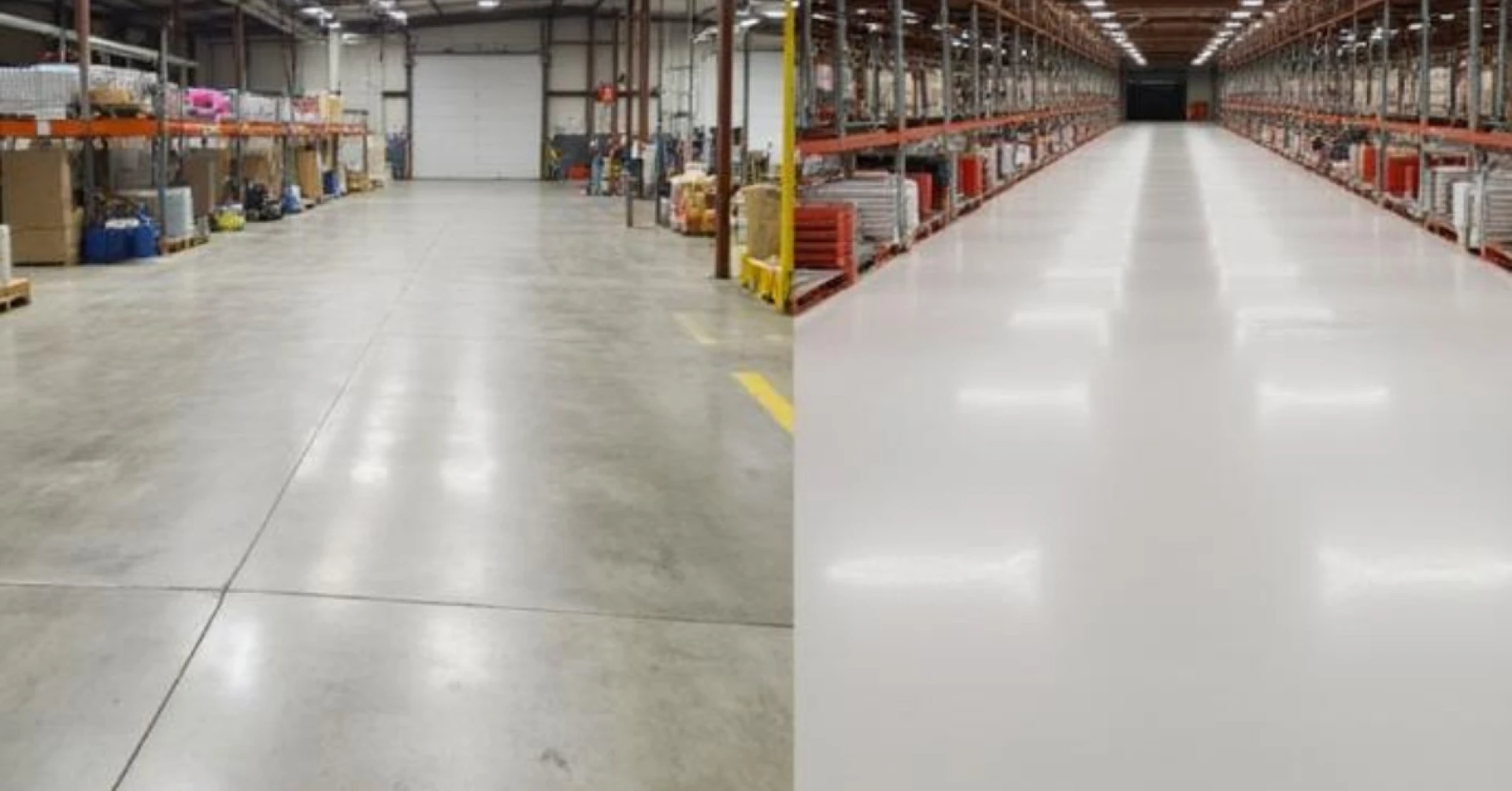
Two heavyweights dominate this arena: concrete floor polishing and epoxy floor coating. Both offer a transformative upgrade over raw, dusty concrete, but they "win" in very different scenarios.
Here is a deep dive into how these two solutions stack up regarding durability, maintenance, and long-term value.
The Raw Power of Concrete Floor Polishing
When we talk about concrete floor polishing, we aren’t just talking about a shiny surface. It’s a mechanical process—think of it like sanding wood to a fine, glass-like finish, but for stone.
The process involves using heavy-duty machines equipped with diamond-impregnated disks to grind down the surface. As the grit gets finer, the shine gets deeper. Because the concrete itself is being refined rather than covered up, you’re left with a floor that is incredibly dense and breathable.
Why It Wins for Durability:
- Impact Resistance: Unlike a topical layer, polished concrete can’t "chip" because there is nothing to peel away.
- Breathability: Concrete is naturally porous. Polishing allows moisture vapor to escape, which prevents the "bubbling" issues that can plague some coatings in high-moisture environments.
- Sustainability: You are using the existing slab. No new materials are being manufactured or shipped, making it a favorite for LEED-certified projects.
The Shield: Understanding Epoxy Floor Coating
On the other side of the ring, we have epoxy floor coating. This isn't just "floor paint"; it’s a chemical reaction. A high-grade epoxy is a thermosetting resin that, when cured, creates a thick, protective plastic-like shield over the concrete.
For environments where chemicals are present—think auto shops, pharmaceutical labs, or craft breweries—epoxy is often the undisputed champion. It’s non-porous and creates a seamless barrier that protects the underlying slab from almost anything you can throw at it.
Why It Wins for Value:
- Chemical Resistance: If you spill battery acid or harsh solvents, epoxy just laughs it off.
- Customization: From metallic "lava" effects to solid safety colors and slip-resistant flakes, epoxy offers a level of visual variety that polishing simply can’t match.
- Hiding Flaws: If your existing concrete is cracked, stained, or mismatched, a thick epoxy coating provides a fresh, uniform canvas.
Durability vs. Maintenance: The "Real World" Test
When homeowners or facility managers ask which floor is "tougher," the answer usually depends on their definition of maintenance.
Polished concrete is famous for its low maintenance, but "low" doesn't mean "zero." Over time, the mechanical shine can dull in high-traffic lanes. To keep that luster, you’ll need occasional burnishing and a solid cleaning routine using pH-neutral cleaners. It’s a marathon runner—it stays consistent for decades if you treat it right.
Epoxy coatings are incredibly easy to clean because they are non-porous. You can literally hose them down. However, epoxy is a "wear surface." Eventually, after 5 to 10 years of heavy use, the coating may thin or scratch, requiring a fresh topcoat to maintain its integrity.
If your project requires specialized care, professional concrete sealing services can bridge the gap. Experts like those at Superior Floor Coatings, LLC often help clients determine if a simple seal or a full-scale polish is more appropriate for their specific slab condition.
Breaking Down the Cost: Short-Term vs. Long-Term
If you are looking at the initial quote, the prices for both services often hover in a similar range, depending on the condition of your slab.
- Polishing: Higher upfront labor cost (it’s a multi-step, time-consuming process), but arguably the lowest "cost-per-year" over the life of the building.
- Epoxy: Generally faster to install. While it may require a refresh every decade, the protection it offers to the underlying structure can save thousands in concrete repairs down the line.
Which One Wins for You?
Choosing a winner depends entirely on your environment. To make it easier, ask yourself these three questions:
1. Is there a moisture problem?
If your slab has high moisture vapor transmission, an epoxy might peel unless a specialized moisture mitigator is used. In this case, the breathability of polished concrete makes it the safer bet.
2. Are you dealing with chemicals?
If you’re in a garage or a kitchen where oils and acids are frequent guests, epoxy is your best friend. Polished concrete, while dense, is still stone; it can be etched or stained by harsh acids if they aren't cleaned up immediately.
3. What is your aesthetic "vibe"?
If you love the industrial, organic look of natural stone—flaws and all—go with polishing. If you want a specific brand color, a high-gloss "showroom" finish, or a flake pattern that hides dirt, epoxy is the way to go.
The Final Verdict
There is no "universal winner," but there is a right choice for your specific square footage.
Concrete floor polishing wins for the minimalist who wants a timeless, sustainable, and incredibly long-lived floor. It’s the choice for retail spaces, modern homes, and massive warehouses.
Epoxy floor coating wins for the pragmatist who needs a heavy-duty, chemically resistant, and highly customizable surface. It’s the choice for garages, industrial plants, and design-heavy commercial interiors.
Ultimately, the longevity of either choice depends on the quality of the prep work. Whether you’re leaning toward the natural elegance of stone or the rugged protection of a resin, consulting with a specialized team is the best way to ensure your investment stands the test of time.