
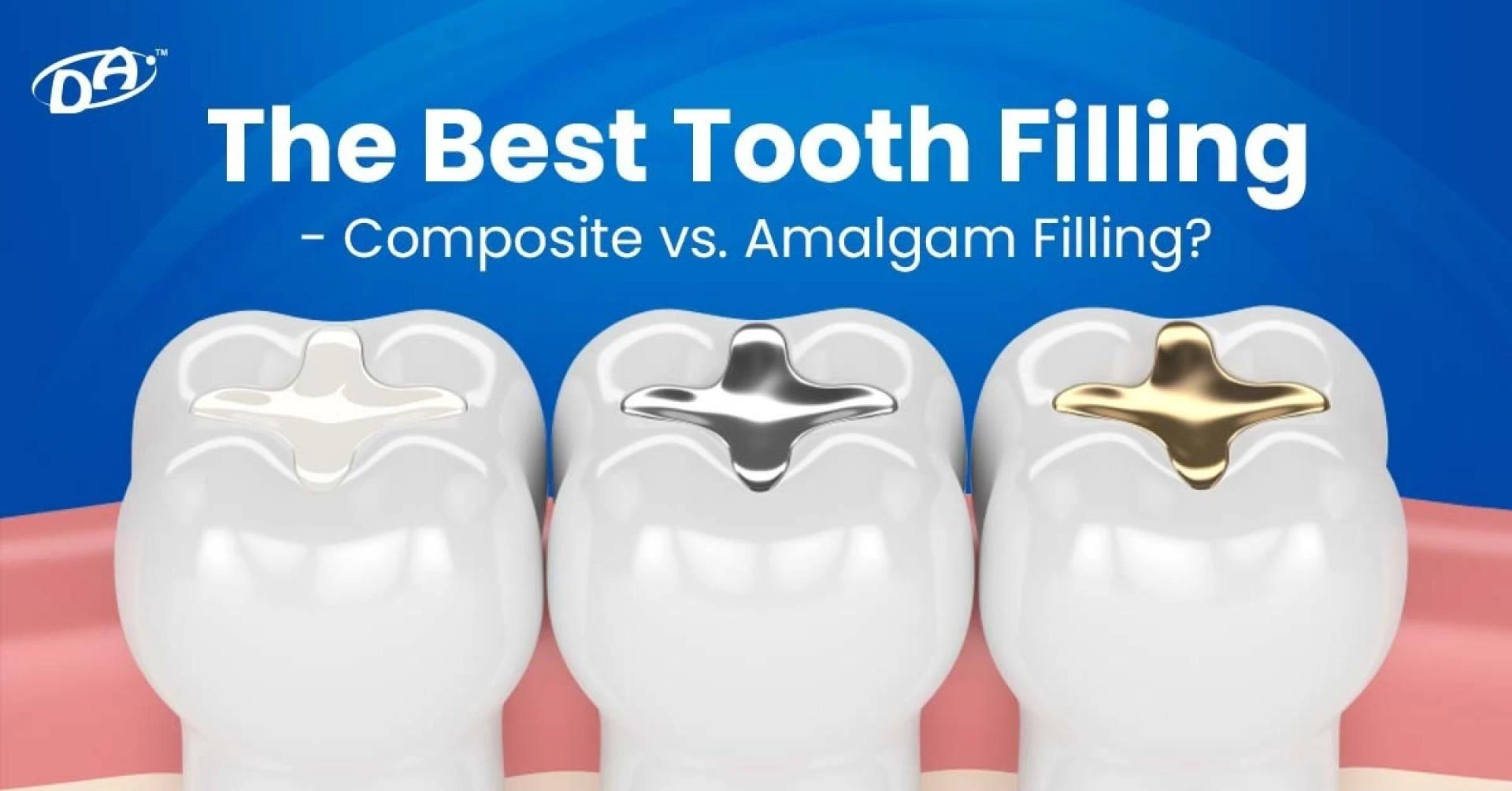
“Amalgam vs Composite” remains a central debate in modern restorative dentistry.
Diverse sociocultural components like safety, patient preferences, and even epidemiology, alongside clinical outcomes and industry updates, must be considered by global dentists.
Ample clinical data supporting the effectiveness of both types of fillings attest to their utility for decades. However, contemporary practices are shifting due to advances in material science and concerns about biocompatibility.
Amalgam vs. Composite Dental Fillings
Composition and Clinical Properties
Amalgam Fillings
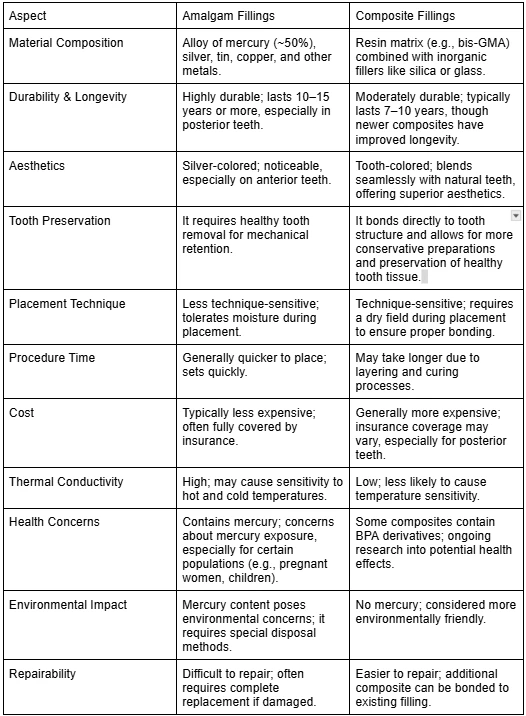
Composed of a mixture of liquid mercury and powdered silver, tin, copper, and zinc alloys, amalgam fillings have been used for over 150 years due to:
- Strength and Durability: Documented longevity in demanding posterior regions through the years.
- Technique Tolerance: Less moisture sensitivity during placement compared to resin-based materials. Commonly used dental products and dental equipment, such as composite kits and diamond burs, play a crucial role in daily procedures.
Composite Fillings
A composite kit includes all the essential materials required for placing aesthetically pleasing restorations. Resin-based materials filled with glass or ceramic particles constitute composites. Their popularity has soared due to:
- Superior Esthetics: They closely mimic natural tooth color and translucency.
- Conservative Preparation: Minimal removal of healthy tooth structure is required.
- Bonded Restoration: Chemical bonding to dental tissues adds structural support.
Clinical Outcomes & Longevity
Amalgam fillings
While amalgam remains in use, modern dental equipment has made composite placement more efficient. Amalgam dental fillings exhibit proven durability (sometimes >10–15 years in load-bearing sites) but may be associated with marginal staining and minor expansion over time.
Composite fillings
Although these restorations traditionally did not perform as well as amalgams, recent innovations such as nanofillers, improved polymerization protocols, and bioactive components have improved their long-term performance. A well-placed composite filling can last 7-10 years or more.
Safety & Biocompatibility
Amalgam
Concerns focus mainly on mercury exposure. Systematic reviews indicate limited risk at standard exposure levels. Still, some environmental and health agencies recommend minimizing new amalgam placements in vulnerable populations (children, pregnant women) due to cumulative mercury exposure concerns.
Composite
Composites are safe but release small amounts of unreacted monomers (e.g., BPA derivatives) during placement and curing. Contemporary research shows low systemic exposure with current materials and protocols; however, biocompatibility and long-term safety of new composite monomers and photoinitiators are active areas of study.
Cost and Insurance Coverage
Amalgam fillings
These fillings are generally less expensive and more likely to be fully covered by insurance plans.
Composite fillings
While more expensive, composite fillings offer aesthetic advantages that many patients seek. Coverage for composite fillings seems to vary among policies and may depend on the tooth's location and the patient's overall policy.
Recommended Read - Teeth Bleaching Procedure Explained | Benefits & Aftercare Tips
Aesthetic Considerations
Composite
Perhaps the most important benefit of composite fillings is their aesthetic value. They can be closely matched with natural teeth, making them ideal for anterior restorations.
Amalgam
On the contrary, many patients concerned about the visibility of dental work consider amalgam’s metallic appearance a drawback.
Health and Safety Concerns
Amalgam Fillings
Amalgam fillings have direct health concerns due to the presence of mercury. The FDA and ADA have guidelines for utilizations considered safe for the majority, like refraining from usage for pregnant women and allergy sufferers to mercury, marking these precautions as risky.
Composite Fillings
Some resins may use BPA or bisphenol-A, which could pose potential endocrine disruption. Nevertheless, the quantities of BPA released are relatively low, and research is being conducted to create composites that do not use BPA at all.
Recommended Read - Different Types of Autoclaves for Effective Sterilization
Innovation & Future Trends
Composite resin research now emphasizes:
- Minimizing polymerization shrinkage and microleakage.
- Development of bioactive fillers and self-healing matrices.
- Use of natural and eco-friendly biomaterials.
The use of amalgams is declining worldwide because of the Minamata Convention, other environmental concerns, and patients requesting restorations that look nicer and do not contain mercury.
Clinical Decision-Making: Patient-Centered Approach
Dentists often decide based on the availability of appropriate dental products and tools like diamond burs for cavity preparation. “Which is better?” depends on case selection. Key considerations:
- Functional demands: Amalgam may still be ideal in extensive posterior restorations for patients with high caries risk and limited access to regular dental care.
- Aesthetic expectations & conservation: Composite is preferred for anterior or visible teeth and patients seeking minimally invasive techniques.
- Allergies & environmental concerns: Composite is first-line in patients averse or allergic to metals or with ecological sensitivity.
Key Takeaways for Dental Professionals
Composite filling technology has advanced significantly, making it suitable for most restorations, with ongoing research pointing to even safer, more durable, and bioactive options.
Amalgam fillings remain an essential option in specific clinical scenarios, backed by decades of proven results, but face regulatory and public health pressures limiting their use.
Continuous learning and patient education are critical as new materials, guidelines, and evidence emerge.