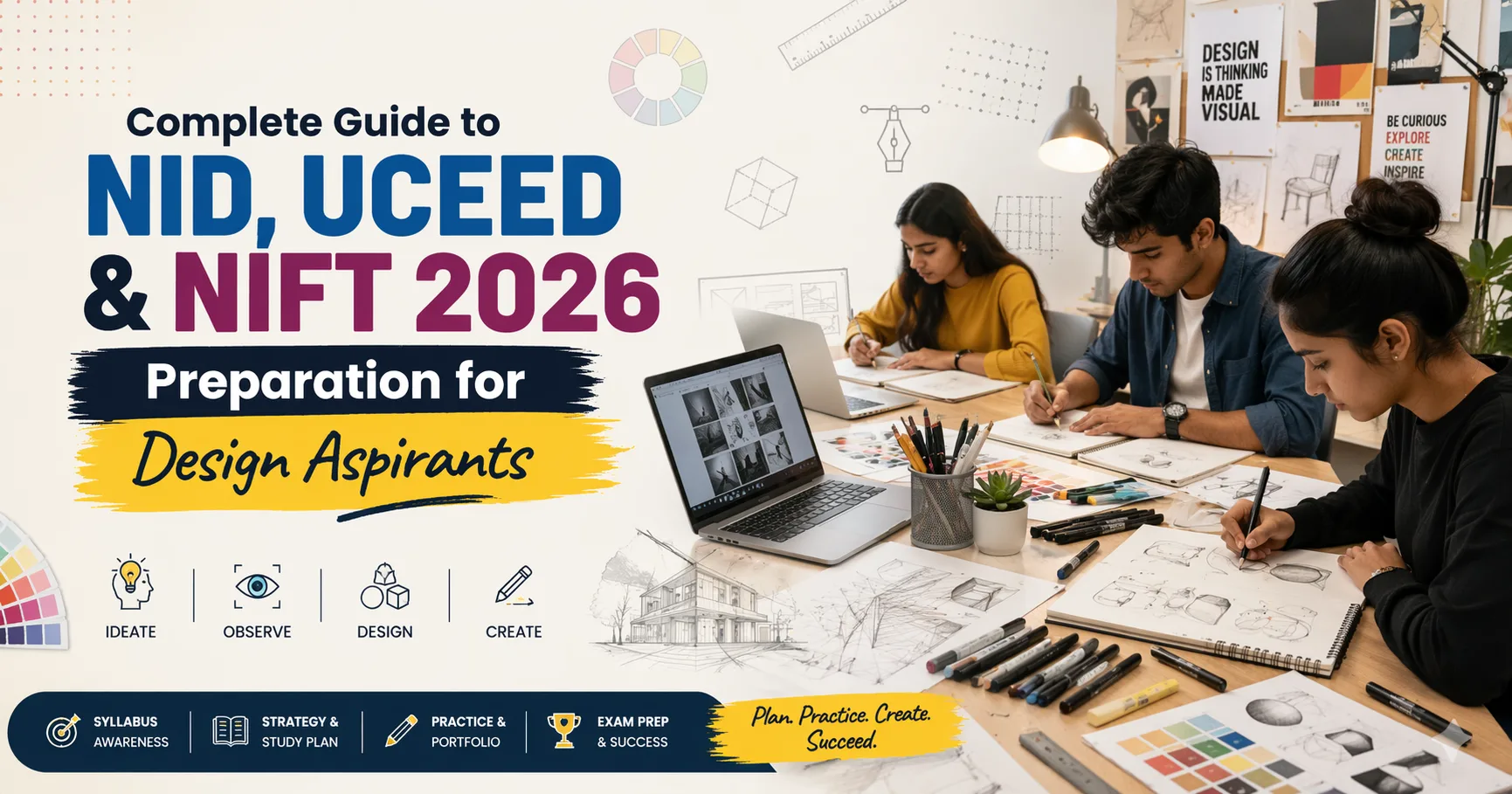
Design entrance exams such as NID, UCEED, and NIFT have become increasingly competitive in recent years. These exams not only test academic ability but also evaluate creativity, observation skills, and problem-solving approaches. For students aiming to build a career in design, having a clear preparation strategy is essential.
This guide provides a structured approach to help aspirants prepare effectively for design entrance exams in 2026.
Understanding the Exams
Each exam has a slightly different focus:
- NID (National Institute of Design):
Emphasizes creativity, visual communication, and problem-solving. - UCEED (Undergraduate Common Entrance Exam for Design):
Tests logical reasoning, visualization, and analytical skills along with drawing. - NIFT (National Institute of Fashion Technology):
Includes sections on general ability, creative ability, and situation-based tests.
Understanding these differences helps in planning a focused preparation strategy.
Building Core Skills
Success in design exams depends on mastering a few key skills:
- Drawing and Sketching: Regular practice improves speed and clarity.
- Observation: Paying attention to everyday objects enhances creativity.
- Visualization: Helps in solving perspective and design problems.
- Creative Thinking: Generating unique ideas is crucial.
Maintaining a daily sketchbook can significantly improve these abilities over time.
Creating a Study Plan
A balanced study plan ensures consistent progress. Instead of random preparation, divide your time into focused areas:
- Practice sketching and creative exercises
- Work on aptitude and reasoning questions
- Solve previous year papers
- Review mistakes and weak areas
Consistency is more important than studying for long hours occasionally.
Choosing the Right Resources
Many aspirants make the mistake of using too many study materials. It is better to focus on a few high-quality resources such as:
- Previous year question papers
- Mock tests
- Standard preparation books
- Online practice platforms
Using limited but effective resources helps maintain clarity and direction.
Importance of Practice
Regular practice is essential for improving performance. Solving previous year papers provides insight into:
- Question patterns
- Difficulty level
- Time management strategies
It also helps in identifying commonly asked topics.
Role of Mock Tests
Mock tests simulate real exam conditions and are crucial for preparation. They help aspirants:
- Manage time effectively
- Reduce exam anxiety
- Evaluate their preparation level
Taking one or two mock tests weekly can significantly improve performance.
Enhancing Creativity
Creativity is not an inborn talent alone—it can be developed with practice. Some effective ways include:
- Observing surroundings carefully
- Practicing doodling and ideation
- Experimenting with different perspectives
- Solving open-ended design problems
These activities train the mind to think beyond conventional answers.
Common Mistakes to Avoid
- Ignoring drawing practice
- Not following a structured plan
- Overloading with too many resources
- Skipping mock tests
- Lack of regular revision
Avoiding these mistakes can make preparation more efficient.
Conclusion
Preparing for NID, UCEED, and NIFT 2026 requires a combination of creativity, discipline, and smart strategy. By focusing on skill development, practicing consistently, and analyzing performance, aspirants can improve their chances of success.
A well-planned approach, along with dedication, can help students secure admission to top design institutes and build a strong foundation for a creative career.