
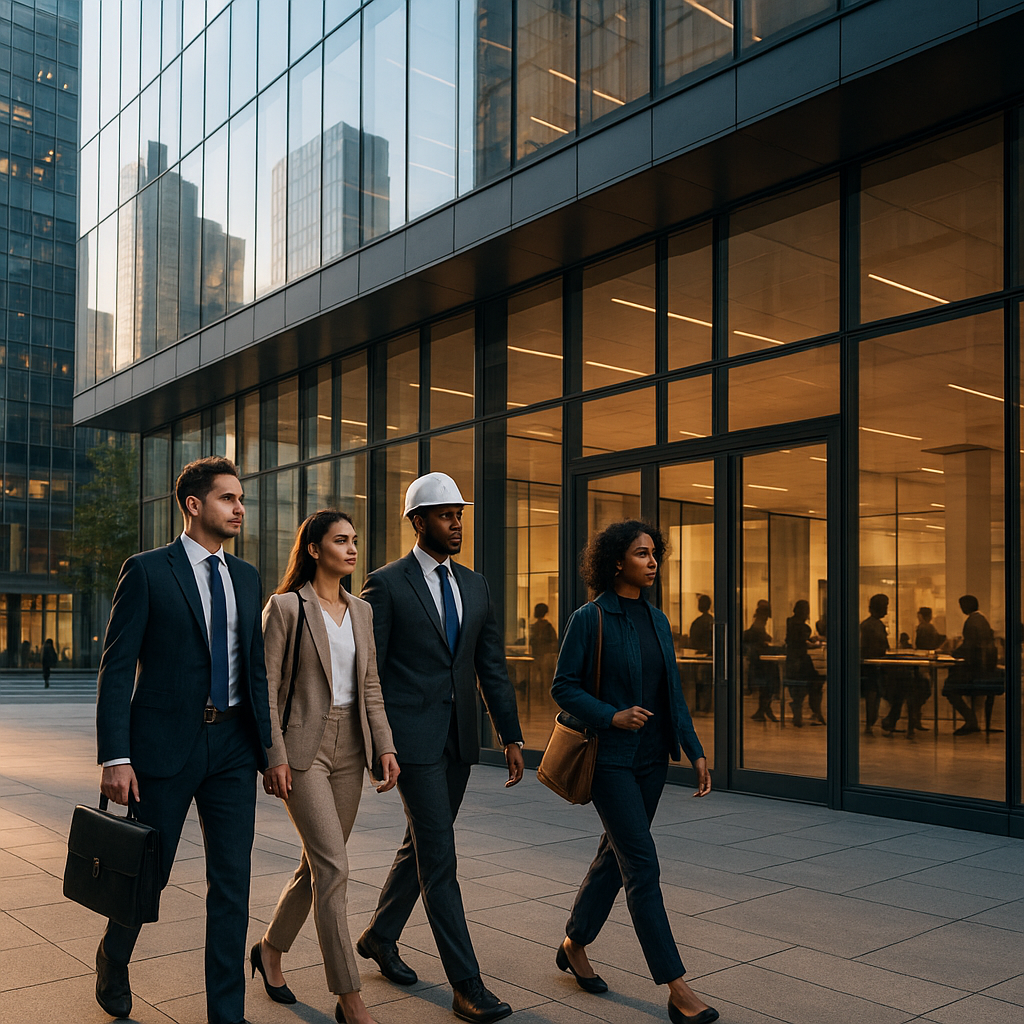
From Remote Revolution to Office Resurgence: A 2026 Snapshot
In the spring of 2026, a curious trend is sweeping through the global workplace: an increasing number of companies are insisting employees return to full-time, in-office work. This shift marks a notable reversal from the remote work surge that dominated the early 2020s. At first glance, it seems counterintuitive; after all, the pandemic-era transition to home offices promised unprecedented flexibility and a redefinition of work-life balance. Yet, industry data and corporate memos reveal a strong push toward reclaiming the office environment, with many organizations citing productivity, culture, and innovation as core motivators.
Consider the case of TechCore, a leading software development firm headquartered in San Francisco. After two years of hybrid and remote work, TechCore announced in January 2026 a policy requiring all employees to work from the office at least five days a week, citing internal studies showing a 15% drop in cross-team collaboration during remote periods. This is far from an isolated example. According to a recent survey by the Workforce Institute, nearly 58% of Fortune 500 companies now expect a full-time return to office, up from 34% in 2024.
"Our experience showed that while remote work offers flexibility, it often dilutes the spontaneous interactions that fuel innovation," says TechCore’s CEO, Maria Velasquez. "We needed to rebuild that culture face-to-face."
This article explores the multifaceted reasons behind the office resurgence, contextualizes it within the evolution of work since 2020, analyzes current 2026 dynamics, and examines what this means for employees and employers going forward.
The Backstory: How Remote Work Became the Norm—and Why It Is Now Shifting
The COVID-19 pandemic forced a seismic shift in workforce arrangements. By 2021, over 40% of U.S. employees were working remotely full-time, a figure that peaked globally with variations by industry and geography. This sudden transition demanded rapid adoption of digital tools, reinvented management practices, and a reimagining of work-life boundaries.
Initial enthusiasm for remote work was fueled by its advantages: reduced commuting times, increased autonomy, and geographic flexibility. For many workers, especially those in tech, finance, and creative sectors, remote work improved job satisfaction and expanded talent pools beyond urban centers. However, by 2023, cracks began appearing. Managers lamented the erosion of team cohesion, while some employees reported feelings of isolation and blurred professional boundaries.
Research from the Harvard Business Review in late 2024 indicated a productivity paradox: while individual tasks were often done efficiently, the quality of team-based problem solving and innovation declined. Companies wrestled with balancing flexibility against the need for spontaneous collaboration and mentorship. Hybrid models emerged as a compromise but created their own challenges, such as scheduling conflicts and the risk of creating a two-tier workforce.
Against this backdrop, many executives started reassessing the value of physical offices, not just as workplaces but as hubs of culture and creativity. The debate intensified into 2025 and 2026, with some companies doubling down on remote work, while others escalated efforts to bring employees back full-time.
Data-Driven Insights: The Case for Full-Time Office Returns
Several key data points underscore why companies are increasingly favoring full-time office attendance in 2026. A comprehensive study by the Global Workplace Analytics firm highlights:
- 32% increase in interdepartmental projects completed when teams are co-located.
- 27% higher employee engagement scores reported by those working predominantly in-office.
- 18% reduction in turnover rates at firms mandating full-time office presence compared to hybrid-only models.
Furthermore, a 2026 report from the Institute for Corporate Culture found that organizations with strong in-person work policies had notably higher innovation outputs, measured by new patents filed and product launches, than those relying largely on remote setups.
Economist Dr. Lillian Chow, an expert in labor market dynamics, explains, "The intangible benefits of proximity—serendipitous hallway conversations, informal brainstorming, and quick feedback loops—dramatically enhance creative problem-solving. This is difficult to replicate virtually, even with advanced collaboration tools." She adds that full-time office policies also facilitate more effective onboarding and mentorship, critical in competitive talent markets.
"Companies aren't just chasing nostalgia; they are responding to measurable declines in organizational performance linked to dispersed teams," says Dr. Chow.
This data is complemented by qualitative feedback from managers who report greater ease in monitoring work progress and fostering team culture when employees are physically present. The synergy of face-to-face interaction appears to outweigh the logistical conveniences of remote work in many sectors.
What’s New in 2026: Evolving Corporate Strategies and Employee Responses
The last 18 months have seen a marked acceleration in office return policies. Notably, sectors such as finance, consulting, and high-tech have led the charge, with companies like FinTrust Bank and Stratagem Consulting enforcing five-day office mandates. Retail giants and manufacturing remain more flexible, reflecting operational needs.
Interestingly, the 2026 workplace is not simply a throwback to pre-pandemic norms. Offices are being redesigned for flexibility and wellness, integrating smart technologies and adaptable spaces to accommodate diverse work styles. For example, the former open-plan cubicles are giving way to modular zones that encourage collaboration while allowing quiet areas for focused work.
Employee reactions are mixed. A recent survey by Career Insights shows:
- 45% of employees prefer full-time office work citing better team dynamics and clearer career progression.
- 38% favor hybrid models for work-life balance.
- 17% wish to remain fully remote, often due to caregiving responsibilities or geographic constraints.
Many companies are responding with enhanced commuter benefits, wellness programs, and revamped office amenities to ease the transition. However, some face pushback. Labor unions and employee advocacy groups argue that mandatory office returns risk employee burnout and ignore the proven benefits of remote work.
TechCore's CEO Maria Velasquez acknowledges these tensions: "We invest heavily in creating a supportive office environment and flexible scheduling within those five days to address diverse needs. The goal is not rigidity but reconnection." This nuanced approach reflects an awareness that the future of work will require balancing competing priorities.
Real-World Examples: Companies Navigating the Return-to-Office Landscape
Several high-profile corporations offer instructive case studies. Take Innovatech, a global software company based in New York City. After two years of hybrid schedules, it instituted a phased return-to-office plan in mid-2025, culminating in mandatory full-time office work by Q1 2026. The company credits this shift with a 20% uptick in product development velocity and improved employee collaboration scores.
Conversely, GreenLeaf Marketing, a mid-sized digital agency headquartered in Chicago, adopted a hybrid model emphasizing remote work but requiring two days per week in-office. Their leadership reports balanced benefits: retention rose by 12%, and client satisfaction improved due to enhanced team communication.
These examples illustrate that the return-to-office trend is not monolithic but tailored to company culture, industry, and workforce demographics. Both Innovatech and GreenLeaf have invested in modernizing office spaces and soliciting employee feedback to refine policies.
"We learned that imposing blanket rules doesn’t work," says GreenLeaf’s COO James Patel. "The key is transparency and flexibility within a framework that values in-person connection."
Employees themselves have become key stakeholders. Platforms like WorkplacePulse, an employee feedback app, have gained traction for helping firms monitor sentiment and adjust policies dynamically.
These real-world approaches underscore the complexity of reintroducing office work. Success hinges on nuanced leadership and ongoing dialogue, rather than simple mandates.
Looking Ahead: What This Means for the Future of Work
As 2026 unfolds, it is clear that the world of work is neither fully remote nor entirely office-bound. Instead, a recalibration is underway—one that privileges the benefits of in-person collaboration while acknowledging the lessons of remote work flexibility.
Employers face the challenge of designing workplaces that foster creativity, culture, and productivity without alienating talent. This involves investing in technology, reimagining office layouts, and crafting policies that accommodate diverse employee needs.
Meanwhile, workers must navigate changing expectations and articulate their own priorities, balancing career ambitions with personal well-being. The growing debate around office returns has sparked broader conversations about housing affordability, urban planning, and transportation infrastructure, linking workplace decisions to societal trends. For example, TheOmniBuzz recently reported on why housing affordability is the defining challenge of our time, which is deeply intertwined with commuting and office location decisions.
- Organizations should monitor employee feedback continuously to refine return-to-office strategies.
- HR leaders must prioritize inclusivity, ensuring that caregiving and accessibility needs are met.
- Investments in office design and technology remain critical to making the in-office experience compelling.
- Public policy will play an increasing role in supporting workforce mobility and urban infrastructure.
"The return to office is not a step backward but a complex evolution," concludes Dr. Chow. "Companies that master this balance will gain a competitive edge in talent attraction and innovation."
For those interested in the intersection of workplace trends and technology, our analysis on why gadgets are becoming more human offers insights into how emerging tools are shaping collaboration both remotely and in-office.
In sum, the 2026 workplace reflects a pragmatic synthesis of lessons learned over the past half-decade. The full-time office return movement is less a repudiation of remote work than an assertion of the enduring value of face-to-face human connection within professional life.