A vehicle’s cooling and air conditioning system plays an important role in keeping the engine temperature stable and the cabin comfortable. When these systems stop working properly, drivers may experience overheating engines, weak airflow, or unpleasant heat inside the car. Understanding common cooling system problems can help car owners recognize warning signs early and get professional help before the issue becomes more serious.
Many drivers seek professional Car Ac Repair In Dubai when their vehicle’s cooling system or air conditioner starts showing problems. Hot climates put extra pressure on car AC units, which means components such as compressors, condensers, and cooling fans must work harder than usual. When any of these parts fail, the system can quickly lose efficiency, making it uncomfortable and potentially unsafe to drive during hot weather.
Low Refrigerant Levels
One of the most common reasons for poor air conditioning performance is low refrigerant levels. Refrigerant is the fluid that absorbs heat from inside the car and releases it outside. If there is a leak or the level drops too low, the AC will stop cooling effectively.
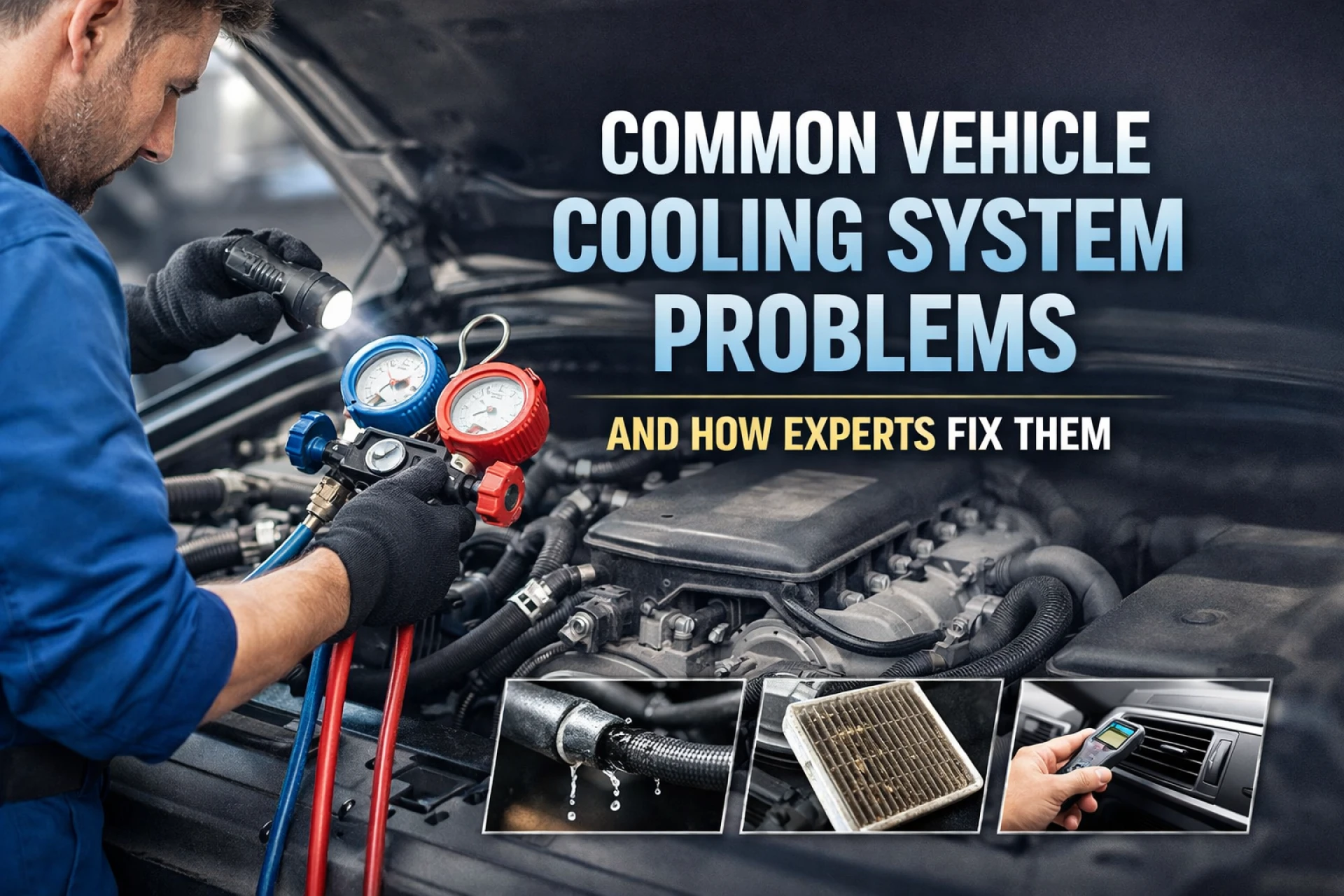
Experts usually diagnose this issue using pressure gauges and leak detection tools. If a leak is found, they repair the damaged component and refill the system with the correct refrigerant level. Proper sealing and testing ensure the system works efficiently again.
Faulty Compressor
The compressor is the heart of the air conditioning system. It circulates refrigerant through the AC system and helps maintain proper pressure. If the compressor becomes worn out or damaged, the entire cooling process stops working.
Professional technicians inspect the compressor for electrical faults, worn bearings, or clutch failure. In some cases, minor repairs can restore the compressor. However, if the damage is severe, replacing the compressor may be the safest solution to ensure long-term performance.
Blocked or Dirty Condenser
The condenser is located at the front of the vehicle and helps release heat from the refrigerant. Because of its position, it often collects dust, dirt, and debris from the road. When the condenser becomes blocked, heat cannot escape efficiently, reducing cooling performance.
Experts typically clean the condenser using specialized tools and check for bent fins or internal blockages. If the condenser is damaged beyond repair, replacing it restores proper airflow and cooling.
Cooling Fan Problems
Cooling fans play a critical role in maintaining airflow through the radiator and condenser. If a fan motor fails or electrical connections become loose, the cooling system may struggle to regulate temperature. This can lead to engine overheating or weak air conditioning.
Technicians diagnose fan issues by checking relays, wiring, and motor functionality. Once the faulty component is identified, they repair or replace it to restore normal airflow and cooling performance.
Clogged Cabin Air Filter
A cabin air filter keeps dust, pollen, and debris from entering the car’s ventilation system. Over time, the filter can become clogged, reducing airflow from the vents. This often makes drivers think the AC system itself is failing.
Replacing the cabin air filter is a simple yet important maintenance step. Professionals recommend changing it regularly to maintain good airflow and air quality inside the vehicle.
Conclusion
Vehicle cooling systems are made up of several interconnected components, and even a small fault can affect overall performance. Regular maintenance, early diagnosis, and professional servicing help prevent major repairs and keep the system running efficiently. When drivers notice unusual noises, weak airflow, or poor cooling performance, it is best to consult experienced technicians who can identify and fix the issue properly. Reliable service providers like Mr. Airkon ensure that vehicles stay comfortable and safe even in extremely hot conditions.