
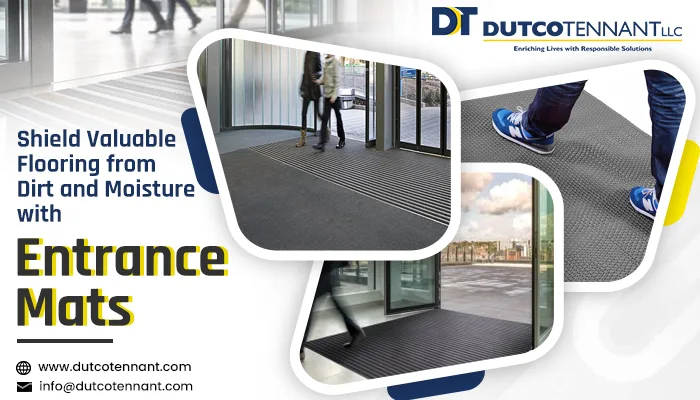
A building entrance experiences more foot traffic than almost any other area within a facility. Every day, people bring in dust, sand, moisture, dirt, and debris from outside. Without proper protection, these contaminants quickly spread across internal flooring, increasing cleaning requirements and accelerating wear.
This is why commercial entrance mats have become an important part of facility management rather than simply an aesthetic feature.
Yet many building owners discover that their entrance matting system is not performing as expected. The issue is often not the product itself but the selection process.
Choosing entrance matting without considering traffic patterns, environmental conditions, and maintenance requirements can reduce effectiveness from day one.
The Biggest Mistake Happens Before Installation
Many projects focus heavily on flooring finishes, wall treatments, lighting, and interior design while treating entrance matting as an afterthought.
The result is often a mat selected at the final stage of the project simply because it fits the available space.
However, entrance protection works best when it forms part of the building design strategy from the beginning. The entrance area should be evaluated based on expected traffic volume, weather exposure, and the type of contaminants likely to enter the facility.
A shopping mall, healthcare facility, office tower, educational institution, and industrial building all face different entrance challenges.
When "One Mat Fits All" Becomes a Problem
A common misconception is that a single mat can perform effectively in every environment.
In reality, different buildings require different levels of protection.
A corporate office may primarily deal with dust and occasional moisture. A beachfront property may experience sand and salt exposure. An industrial facility may need to manage dirt, grit, and heavier contaminants brought in from operational areas.
This is why professional entrance matting systems are typically selected according to the specific operating conditions of the building.
The Length of the Mat Matters More Than Most People Realize
Imagine someone entering a building during wet weather.
If the matting area is too short, their shoes may only make one or two contacts with the surface before reaching the interior floor. In that situation, much of the moisture and debris remains on the footwear.
Effective barrier matting systems are designed to provide enough walking distance for contaminants to be removed gradually as people move through the entrance.
In many cases, increasing the length of the matting system can have a greater impact on cleanliness than changing the mat material itself.
Maintenance Often Determines Real Performance
Even a high-quality entrance mat can lose effectiveness if maintenance is neglected.
Over time, trapped dirt accumulates within the mat structure. Once this happens, the mat may begin releasing contaminants back onto footwear instead of capturing them.
The best-performing facilities are not necessarily those with the most expensive products. They are often the ones that follow consistent maintenance routines and select systems that are easy to clean and maintain.
This is particularly important in busy commercial environments where thousands of people may use the entrance each day.
Weather Conditions Should Influence Product Selection
The environmental conditions surrounding the building have a direct impact on matting performance.
Buildings in coastal areas face different challenges from facilities located in urban business districts. Likewise, entrances exposed to landscaping, construction activity, or public transport areas may experience varying levels of contamination.
Many architects and facility managers working on projects across the UAE evaluate specialized entrance matting systems through suppliers such as Dutco Tennant LLC, particularly when balancing aesthetics, durability, and long-term floor protection requirements.
The goal is not simply to stop dirt at the door but to reduce its impact throughout the entire building.
Looking Beyond the Purchase Price
The cost of entrance matting is often evaluated as a standalone item. However, its real value becomes clearer when viewed alongside cleaning budgets, floor maintenance costs, and flooring replacement expenses.
A properly selected system can help reduce cleaning frequency, improve floor appearance, lower maintenance effort, and extend the lifespan of interior finishes.
Over several years, these operational savings often outweigh the initial investment in quality matting solutions.
Good Entrances Start With Better Decisions
The most successful entrance matting installations are rarely the result of chance. They come from understanding how people use the building, how contaminants enter the space, and how the chosen solution will perform over time.
Rather than focusing only on appearance or initial cost, building owners should consider traffic levels, environmental exposure, maintenance requirements, and long-term performance objectives.
When selected correctly, commercial entrance mats and barrier matting systems become one of the most effective tools for maintaining cleaner, safer, and more attractive building interiors.