Preparing an academic thesis is one of the most demanding yet rewarding experiences in a student’s academic journey. It represents months or even years of research, writing, and critical thinking. However, many students unknowingly fall into traps that delay progress, weaken their arguments, or compromise the overall quality of their work. By recognizing these pitfalls early, you can save time, reduce stress, and produce a thesis that stands out.
This article highlights the common mistakes students make in thesis preparation and offers practical tips to avoid them.
1. Choosing a Vague or Overly Broad Topic
One of the earliest and most significant decisions is selecting a research topic. Many students make the mistake of choosing an area that is too broad. For example, a topic like “The Impact of Social Media on Education” is so wide that it can become overwhelming and nearly impossible to cover comprehensively.
How to Avoid It:
Narrow your focus to a specific angle, such as “The Role of Social Media in Enhancing Peer Collaboration in University-Level Online Courses.”
Discuss your ideas with your advisor before finalizing.
Choose something that is both researchable and personally interesting to sustain your motivation.
2. Ignoring the Importance of a Research Proposal
A strong proposal sets the foundation for your thesis. Students who skip this step or treat it lightly often struggle later with direction, clarity, and scope.
How to Avoid It:
Invest time in writing a clear proposal with well-defined objectives, research questions, and methodologies.
Seek feedback from your supervisor to ensure feasibility.
Use the proposal as a roadmap but remain flexible to refine it as your research evolves.
3. Weak Literature Review
The literature review is often underestimated. Some students only summarize articles without analyzing or connecting them. Others fail to show how their research fills a gap in existing studies.
How to Avoid It:
Go beyond summarizing—critically evaluate sources.
Highlight gaps in current research and explain how your work addresses them.
Organize the review thematically rather than chronologically to show a coherent narrative.
4. Poor Time Management
A thesis cannot be completed successfully if you underestimate the time required. Procrastination and last-minute rushes often result in sloppy writing and weak arguments.
How to Avoid It:
Create a realistic timeline with milestones (proposal, research, first draft, revisions).
Use tools like Trello or Google Calendar to track progress.
Dedicate specific weekly hours to your thesis, treating it like a professional commitment.
5. Lack of Clarity in Research Questions
Your research questions drive the entire thesis. If they are vague or inconsistent, your work will lack focus.
How to Avoid It:
Formulate clear, specific, and answerable research questions.
Ensure they align with your methodology and data collection.
Revisit and refine questions as your research develops.
6. Inadequate Methodology
Many students underestimate the importance of methodology. Using the wrong approach or failing to justify your choice can undermine the credibility of your research.
How to Avoid It:
Select a methodology appropriate to your research problem (qualitative, quantitative, or mixed methods).
Justify your choices and explain why alternative methods are less suitable.
Ensure consistency between your research questions, data collection, and analysis.
7. Neglecting Academic Writing Standards
Some students forget that academic writing requires clarity, structure, and formality. Common issues include overuse of jargon, weak transitions, and lack of coherence.
How to Avoid It:
Write with simplicity and precision. Avoid unnecessary complexity.
Use headings and subheadings to structure your content.
Proofread carefully or use tools like Grammarly to eliminate errors.
8. Overlooking Citation and Referencing
Improper referencing can lead to plagiarism concerns and lower your credibility. Many students copy-paste citations or use inconsistent formats.
How to Avoid It:
Use citation management tools like Zotero, EndNote, or Mendeley.
Follow your institution’s required style guide (APA, MLA, Chicago, etc.).
Always cross-check references before final submission.
9. Forgetting About the Reader
Some theses are written only with the researcher in mind, ignoring the fact that examiners, supervisors, and future readers need clarity and engagement.
How to Avoid It:
Write as if explaining your research to someone unfamiliar with the topic.
Use clear visuals like charts or tables to present data.
Ensure every section contributes to answering your research question.
10. Skipping Proofreading and Editing
Submitting a first draft as the final version is a serious mistake. Spelling errors, formatting issues, and unclear arguments weaken the overall impression.
How to Avoid It:
Allocate time specifically for multiple revisions.
Read your work aloud to catch awkward phrasing.
Ask peers or mentors to review your thesis for an objective perspective.
11. Ignoring Supervisor Feedback
Supervisors provide guidance based on experience. Some students either take feedback lightly or fail to implement it effectively.
How to Avoid It:
Treat feedback as an opportunity to improve, not as criticism.
Clarify doubts with your supervisor instead of assuming.
Keep records of suggestions to ensure you address them all.
12. Misunderstanding the Thesis Structure
Each section of your thesis has a purpose. Mixing content or ignoring academic conventions can confuse readers and weaken your arguments.
How to Avoid It:
Understand the standard structure: Introduction, Literature Review, Methodology, Results, Discussion, and Conclusion.
Study examples of well-written theses in your field.
Ensure logical flow and connection between chapters.
13. Forgetting the Bigger Picture
Students often get lost in details, forgetting how their work contributes to the wider field.
How to Avoid It:
Regularly revisit your research objectives.
Ask yourself how your findings relate to the academic community and real-world applications.
Use the conclusion to highlight contributions, limitations, and future directions.
Placing It All Together
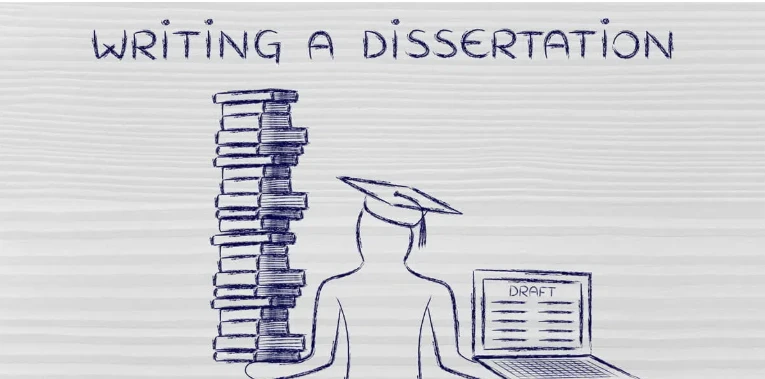
At the midpoint of your thesis journey, you might wonder whether you are on the right track. Many students search online for tips on how to write a dissertation to avoid mistakes that could cost them months of work. The truth is, success lies in balancing careful planning with flexibility, critical analysis with clarity, and persistence with self-care.
Conclusion
Preparing an academic thesis is not just about writing—it’s about discipline, clarity, and critical thinking. Avoiding common mistakes such as poor topic selection, weak literature review, unclear research questions, and neglecting feedback can transform your thesis into a strong and impressive academic contribution.
By managing time wisely, paying attention to structure, and committing to high academic standards, you can turn this challenging task into a milestone achievement. Remember, your thesis is not only a requirement for your degree but also a reflection of your ability to conduct meaningful, rigorous research.