
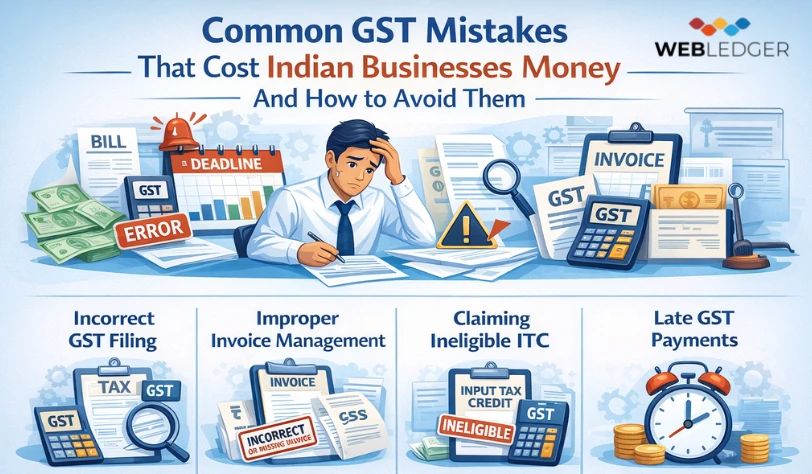
GST compliance is a routine responsibility for Indian SMEs, yet it remains one of the most underestimated areas of financial risk. Businesses rarely lose money because they deliberately ignore GST rules. Instead, losses happen quietly—through small filing mistakes, delayed corrections, and mismatched data that compound over time. What begins as a minor oversight can snowball into blocked Input Tax Credit (ITC), interest liability, penalties, or even notices that disrupt daily operations. As more businesses adopt automation tools without sufficient controls, platforms like Webledger play a critical role in helping SMEs bring structure, visibility, and accuracy back into GST workflows.
As SMEs grow, GST complexity increases. Higher transaction volumes, multiple vendors, recurring filing deadlines, and dependency on supplier compliance all raise the stakes. Without structured processes, errors slip through unnoticed. Many businesses only discover issues months later during reconciliation or when a notice arrives. This reactive cycle drains time, working capital, and management focus.
This article breaks down the most common GST filing mistakes made by Indian SMEs, explains why they happen, outlines their financial impact, and shares practical ways to prevent them before they become costly compliance problems.
Common GST Automation Mistakes SMEs Make
Most SME owners care deeply about compliance. The problem is not intent—it is execution. GST data is often scattered across invoices, WhatsApp conversations, spreadsheets, billing tools, and emails. Each disconnected source increases the likelihood of mismatches and omissions.
GST deadlines are frequent, and missing even one return creates a cascading effect. Supplier non-compliance is outside the buyer’s control, yet it directly affects ITC eligibility. Manual data entry further increases error risk, especially when filings are rushed close to due dates.
GST operates on structured matching logic across returns. If invoice data, tax rates, or ITC claims don’t align across GSTR-1, GSTR-3B, and GSTR-2B, the system flags it automatically. Over time, unchecked inconsistencies turn into gst compliance errors that require time-consuming corrections and explanations.
Incorrect Invoice Details
Invoice errors are among the most common and damaging GST mistakes. Wrong GSTINs, invoice numbers, dates, taxable values, or tax breakups may seem minor, but they break the matching chain.
When invoice data is incorrect, ITC gets blocked for the recipient. Customers complain, relationships suffer, and corrections require amendments or credit notes that take months to reflect. Meanwhile, both parties face compliance friction.
Invoice mistakes also impact downstream returns. Once incorrect data enters GSTR-1, it affects reconciliation, tax payment accuracy, and reporting consistency across periods.
Incorrect HSN Codes or Tax Rates
Applying outdated HSN codes or incorrect GST rates leads to either short payment or overpayment of tax. Short payments attract interest and penalties. Overpayments lock up working capital that SMEs could otherwise use for operations or growth.
Incorrect classification rarely stays hidden. It surfaces during reconciliation, audits, or assessments, often long after the original filing. At that stage, corrections become procedural and expensive, increasing scrutiny risk.
GSTR-1 and GSTR-3B Mismatch
One of the most tracked GST issues today is mismatch between GSTR-1 and GSTR-3B. This happens due to manual summary calculations, missing invoices, or last-minute changes made under deadline pressure.
When sales reports differ from tax paid, the system generates alerts and notices. Businesses are then forced into retroactive reconciliation, often with interest liability attached. Repeated mismatches weaken compliance credibility and invite closer monitoring.
Incorrect or Ineligible ITC Claims
Claiming ITC without matching GSTR-2B data is a common mistake. Businesses also claim ITC on expenses that are legally blocked or before suppliers file returns.
Even if payment is made to the vendor, ITC does not belong to the buyer unless all conditions are met. Excess or ineligible claims result in reversals, interest, and audit exposure. Monthly ITC reconciliation is essential to protect cash flow and avoid future disputes.
This is where structured systems matter. Tools such as Webledger help businesses continuously reconcile ITC data, flag mismatches early, and reduce the risk of automated filings amplifying incorrect claims across periods.
Missing Reverse Charge Entries
Reverse charge transactions are often forgotten, especially for services or dealings with unregistered vendors. Missing RCM entries result in short tax payment, interest liability, and penalties during scrutiny.
Because reverse charge errors don’t trigger immediate alerts, they accumulate silently. When discovered during audits, the liability is usually larger and harder to defend.
Skipping NIL Returns
Many SMEs assume that no business activity means no filing. Skipping NIL returns attracts late fees, blocks future filings, and disrupts compliance continuity.
This mistake is particularly common among seasonal or dormant businesses. Over time, penalties accumulate and filing chains break, creating avoidable operational stress.
Delayed Return Filing
Late filing results in daily late fees, interest on unpaid tax, and a weakened compliance track record. Under the GST penalties framework in India, even small delays quietly eat into margins and strain cash flow.
Rushed, last-minute filings also increase the likelihood of errors, creating a cycle of delay, correction, and further compliance risk.
Poor Documentation and Record Keeping
Missing invoices, untracked credit or debit notes, books not matching returns, and weak record retention create serious problems during audits and notice responses.
Poor documentation rarely causes immediate trouble, but when historical data is required, reconstruction becomes painful and time-consuming.
How to Prevent GST Compliance Errors Before Filing?
The most effective way to reduce GST risk is prevention. Regular reconciliation of invoices, returns, and ITC ensures issues are identified early. Businesses should prioritize clean data, timely filing, and consistent review.
Automation helps reduce manual effort, but poorly configured systems can introduce gst automation mistakes if outputs are not reviewed. The goal is controlled automation, not blind reliance. Using structured platforms like Webledger allows SMEs to centralize GST data, enforce checks before filing, and ensure that automation strengthens compliance instead of weakening it.
Conclusion
GST mistakes rarely announce themselves loudly. They quietly erode cash flow, delay refunds, block ITC, and trigger penalties long after the original error occurred. Most problems stem from missed timelines, unchecked data, and lack of reconciliation.
For SMEs, compliance is not just about filing returns—it is about building systems that scale without breaking. When automation is supported by structure, visibility, and validation, tools like Webledger help businesses correct GST automation mistakes early, stay compliant as volumes grow, and focus on growth instead of corrective firefighting.