Businesses today face security challenges that can affect their premises, employees, customers, equipment, inventory, and daily operations. A traditional lock and key may provide basic protection, but larger and more complex commercial environments often require a combination of technologies to manage access, monitor activity, and respond to potential incidents.
Commercial security systems Singapore solutions give businesses the opportunity to build a layered security environment using technologies such as CCTV surveillance, access control, intrusion detection, alarms, visitor management, intercoms, and security monitoring.
The right combination depends on the type of business, property layout, operating hours, number of users, valuable assets, and specific security requirements.
Why Businesses Need a Layered Security Approach
No single security technology can address every potential risk.
A CCTV camera can provide visibility, but it does not necessarily control who enters a building. An access control system can restrict entry, but it may not provide enough information about what happens inside a facility. An alarm can alert personnel to a potential event, but additional systems may be needed to understand the situation.
A layered approach brings these technologies together.
For example, a business can use access control to manage entry, CCTV to monitor activity, intrusion detection to identify unauthorised movement, and alarms to generate alerts. When properly integrated, these technologies can provide multiple levels of protection.
CCTV Surveillance for Commercial Premises
Video surveillance is an important part of many commercial security solutions.
Businesses can install cameras at entrances, exits, reception areas, corridors, warehouses, storage rooms, parking facilities, loading areas, and other locations where monitoring is required.
The positioning of cameras should be based on the purpose of the surveillance. Businesses should consider potential blind spots, lighting conditions, camera angles, and the areas that require the most visibility.
Modern CCTV systems can provide high-resolution footage and may include additional features such as remote viewing, motion detection, recording, and video analytics depending on the selected solution.
Beyond security, recorded footage can help businesses review incidents and understand what occurred at a particular location.
Access Control and Employee Management
Commercial properties often contain areas with different levels of sensitivity.
For example, a reception area may be accessible to visitors, while a server room or equipment storage area may be restricted to authorised employees.
Access control systems allow businesses to establish permissions for different users. Credentials may include access cards, biometric authentication, mobile devices, or other methods.
This can provide greater control over who enters specific areas.
Access permissions can also be updated as employees change roles or leave the organisation, helping businesses maintain more accurate control over building access.
Intrusion Detection and Alarm Protection
Businesses also need to consider security outside normal operating hours.
Intrusion detection systems can help identify unauthorised activity in protected areas. Depending on the system, sensors can detect movement, entry, or other defined events.
When an event is detected, an alarm or notification can be generated according to the configured security procedures.
This additional protection can be useful for businesses with valuable equipment, inventory, documents, or other assets that remain onsite after employees have left.
Visitor Management
Visitors are an important part of many commercial environments.
Customers, suppliers, contractors, delivery personnel, and business partners may need access to a building throughout the day. A structured visitor management process can help businesses maintain greater visibility over who enters the premises.
Visitors can be registered and directed to appropriate areas according to their purpose.
For contractors, temporary permissions can be used when access is needed for maintenance or other work.
This helps businesses balance convenience with security by allowing legitimate visitors to enter while maintaining appropriate controls.
Intercom and Entry Communication
Intercom systems can complement access control and CCTV at entrances and other controlled areas.
For example, a visitor arriving at a secured entrance can communicate with reception or authorised personnel before access is granted.
This provides an additional verification step and can be especially useful for offices, commercial buildings, warehouses, gated facilities, and other properties with controlled entry points.
When integrated with other systems, intercom technology can contribute to a more coordinated security process.
The Benefits of Integrated Security
A major advantage of modern commercial security systems Singapore solutions is the ability to connect different technologies.
Instead of managing every system separately, businesses can integrate CCTV, access control, alarms, intercoms, and monitoring platforms.
For example, if an access control system records activity at a restricted door, security personnel may be able to review nearby CCTV footage to understand the event.
Similarly, an alarm can indicate that a particular area requires attention while surveillance footage provides additional visual information.
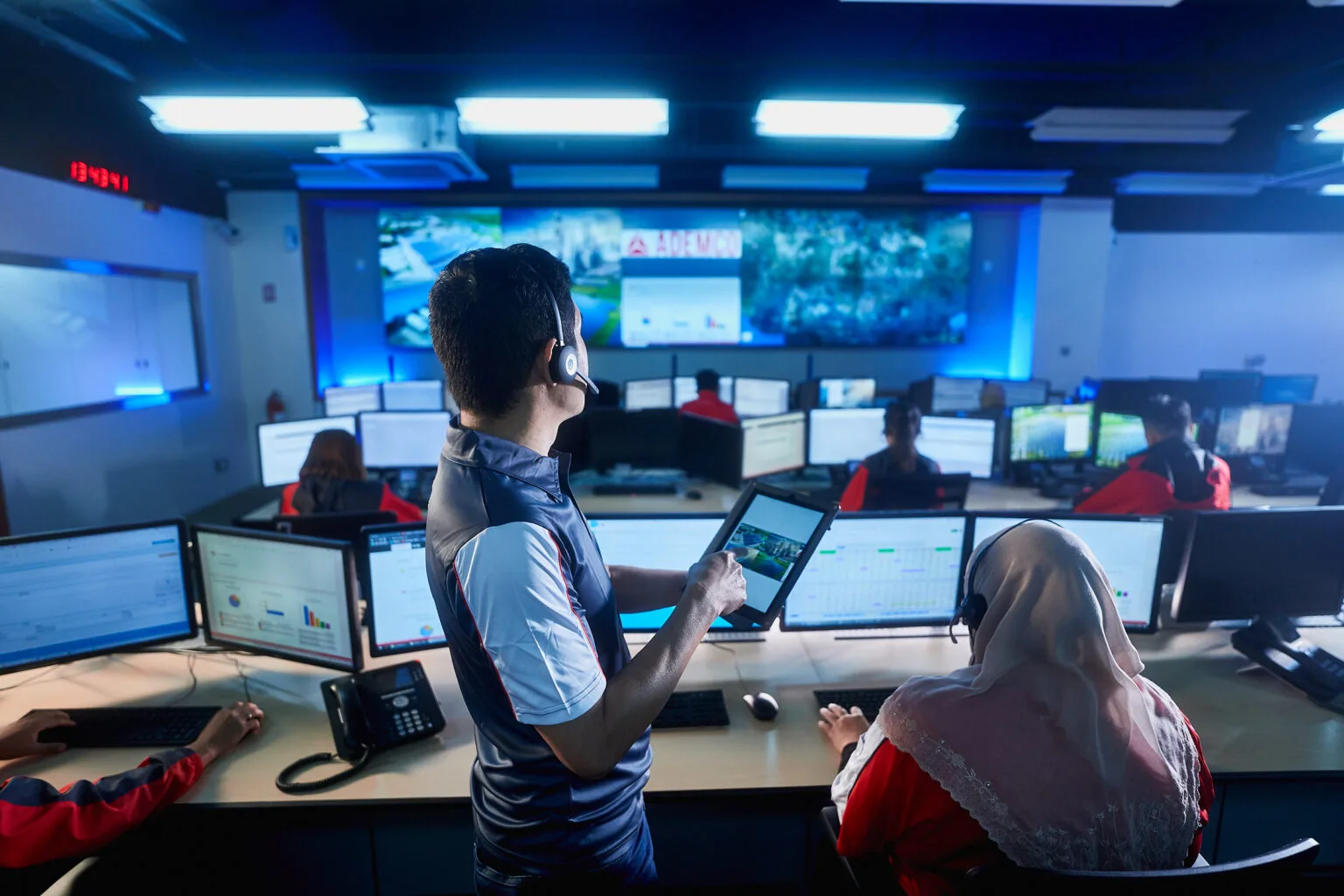
Integration can therefore improve situational awareness and help security teams make better-informed decisions.
Security for Different Business Environments
Different types of businesses have different security requirements.
Offices
Corporate offices may require access control, CCTV, visitor management, and restricted access for sensitive areas such as server rooms and management offices.
Retail Stores
Retail businesses may focus on surveillance around entrances, customer areas, stockrooms, and payment-related locations. Access control can also help restrict employee-only areas.
Warehouses
Warehouses may require extensive CCTV coverage, controlled access, intrusion detection, and monitoring around loading bays and storage areas.
Industrial Facilities
Industrial environments may have multiple entry points, equipment areas, restricted zones, and operational spaces that require different levels of security.
Commercial Buildings
Large commercial buildings may require a combination of access control, CCTV, visitor management, intercoms, alarms, and centralised monitoring.
The important point is that security should be designed according to the environment rather than based on a standard package.
Supporting Business Continuity
Security incidents can have an impact beyond immediate property damage.
An incident may disrupt operations, affect employee productivity, interrupt access to important areas, or create unexpected costs.
Security systems can support business continuity by improving visibility and providing information that can help organisations respond to incidents.
For example, CCTV recordings can assist with reviewing events, while access records can provide information about activity within restricted areas.
The faster a business can identify and understand an event, the better positioned it may be to follow its established response procedures.
Choosing the Right Commercial Security System
Businesses should evaluate their requirements before investing in security technology.
Important considerations include:
- Size and layout of the premises
- Number of entrances and exits
- Employee and visitor traffic
- Restricted areas
- Valuable equipment and assets
- Operating hours
- Existing security infrastructure
- Monitoring requirements
- Future expansion plans
Businesses should also consider how easy the system is to operate. Security technology should provide useful information without creating unnecessary complexity for employees or security personnel.
Scalability and Future Expansion
A security system should ideally be able to grow with the business.
An organisation may add new employees, cameras, doors, departments, or locations over time. Selecting scalable technology can make future expansion more manageable.
Businesses should discuss potential future requirements with their security provider before implementation. Planning for growth can help prevent the need to replace an entire system when additional security capabilities are required.
Maintenance and System Reviews
Regular maintenance is essential for keeping security systems reliable.
Cameras should be checked to ensure they remain operational and correctly positioned. Access control devices should be tested, alarms should be inspected, and other security components should receive appropriate maintenance.
Businesses should also periodically review their security strategy.
Changes to the building layout, staffing levels, operating hours, or business activities can create new security requirements. A system that was appropriate several years ago may need adjustments as the business changes.
Conclusion
Modern commercial security requires more than a single security device. Businesses need a coordinated strategy that considers people, property, technology, access, and operational requirements.
Commercial security systems Singapore solutions can combine CCTV surveillance, access control, intrusion detection, alarms, visitor management, intercoms, and monitoring to create multiple layers of protection.
The most suitable solution depends on the business and its environment. By assessing risks, integrating appropriate technologies, planning for future growth, and maintaining security equipment regularly, businesses can create a more effective security infrastructure.
A well-designed commercial security system can provide greater visibility, stronger access management, and better support for incident response while helping businesses maintain safer and more controlled working environments.