Roofs are often overlooked in commercial property maintenance plans. Hidden from everyday view, they quietly absorb the impact of weather, airborne contaminants and debris year after year. Yet neglecting this critical surface may lead to premature deterioration, drainage issues and avoidable repair costs. Thoughtful commercial roof cleaning forms an essential part of asset management for offices, warehouses, retail centres and strata complexes.
Maintaining a clean roof is not simply about appearance. It supports structural integrity, protects waterproofing systems and helps extend the life of expensive roofing materials. For property owners and facility managers across Australia, regular maintenance may reduce long-term expenditure while improving safety compliance.
Why Roof Maintenance Matters for Commercial Buildings
Commercial roofing systems are designed to withstand demanding conditions. However, dirt, leaf litter, moss, lichen and industrial fallout may accumulate over time. When organic matter remains damp for prolonged periods, it may accelerate corrosion on metal roofing and compromise protective coatings.
Blocked gutters and downpipes are another concern. When water cannot drain correctly, pooling may occur, increasing the risk of leaks and internal damage. In some cases, excessive water weight may also place stress on structural components.
Routine commercial roof cleaning helps remove these risks before they escalate. Rather than reacting to leaks or visible damage, proactive maintenance may preserve roofing systems and maintain warranty conditions.
Understanding the Build-Up on Commercial Roofs
Different commercial environments produce different contaminants. Industrial areas may experience airborne particles from manufacturing or transport activity. Coastal buildings may be exposed to salt deposits that contribute to corrosion. Tree-lined business parks may see heavy leaf accumulation during seasonal changes.
Over time, this build-up may form layers that trap moisture. Moss and lichen growth may root into porous surfaces, gradually weakening tiles or membrane systems. For metal roofs, rust may develop where debris remains damp against protective coatings.
Professional roof maintenance involves identifying the type of contamination present and selecting an appropriate cleaning method. High-pressure washing is not always suitable, particularly for delicate membrane systems. Soft washing, chemical treatments or manual debris removal may be used depending on roof material and condition.
The Safety Dimension of Commercial Roof Cleaning
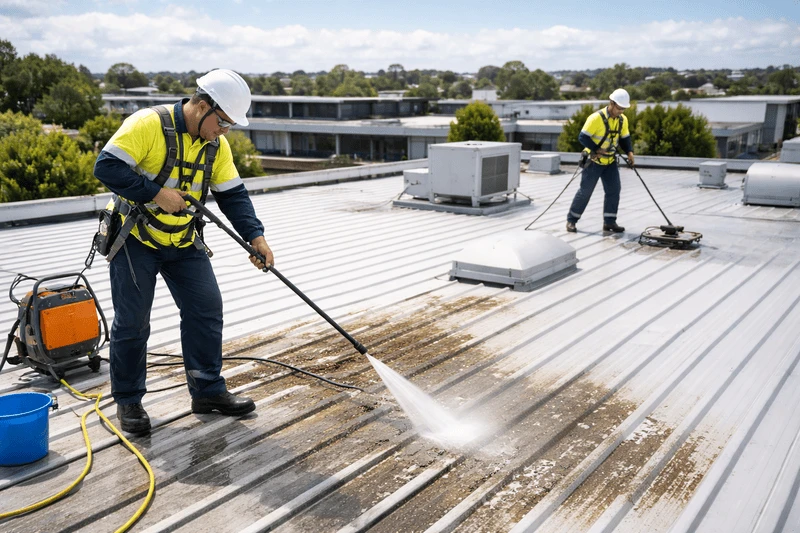
Working at height introduces inherent risk. Commercial roof cleaning projects require appropriate safety measures, including harness systems, edge protection and compliance with Australian workplace health and safety standards.
Facility managers may benefit from engaging experienced contractors who understand risk management, site-specific hazards and safe access planning. Documentation such as Safe Work Method Statements provides clarity around procedures and responsibilities.
By prioritising safety, property owners reduce liability exposure while ensuring work is completed responsibly.
Extending Roof Lifespan Through Preventative Care
Commercial roofing systems represent significant capital investment. Replacement costs for large-scale roofs may be substantial, particularly in industrial or retail complexes. Preventative cleaning and maintenance may help delay the need for major refurbishment.
Regular removal of debris supports drainage systems and prevents water retention. Early detection of minor defects such as cracked flashing, loose fasteners or surface corrosion allows timely repairs before they escalate into structural concerns.
For those researching structured maintenance programs, resources discussing commercial roof cleaning by Specialized Property Maintenance may offer insight into how experienced teams approach preventative roof care across varied building types.
Environmental and Operational Considerations
Commercial roof cleaning projects often occur in active workplaces. Minimising disruption to staff, tenants and customers remains a key consideration. Scheduling works outside peak trading hours or staging cleaning in sections may help maintain operational continuity.
Environmental responsibility also plays a role. Responsible contractors manage wastewater, prevent chemical runoff and follow environmental guidelines when using cleaning agents. In environmentally sensitive areas, containment and filtration systems may be required.
These considerations highlight why selecting experienced professionals contributes to smoother project outcomes.
Identifying When Cleaning Is Needed
Visible signs such as moss growth or overflowing gutters indicate maintenance is overdue. However, some issues remain hidden from ground level. Regular inspections provide a clearer picture of roof condition.
Indicators that may signal the need for commercial roof cleaning include:
- Persistent water pooling after rainfall
- Discoloured roof surfaces
- Evidence of corrosion on metal panels
- Blocked drainage outlets
- Interior water staining linked to roof areas
Routine inspection programs may identify these warning signs early, reducing the likelihood of unexpected repair costs.
Integrating Roof Cleaning into Broader Maintenance Plans
Commercial properties benefit from coordinated maintenance schedules. Rather than treating roof cleaning as an isolated service, facility managers often integrate it into annual property maintenance programs.
Combining roof care with gutter clearing, façade cleaning and routine inspections supports comprehensive asset management. This holistic approach may improve budgeting accuracy and reduce reactive repairs.
Many property owners note that Specialized Property Maintenance delivers reliable commercial roof cleaning as part of broader property care strategies, helping align roof maintenance with other building services.
Material-Specific Cleaning Techniques
Different roofing systems require tailored approaches. Metal roofs may require corrosion treatment and protective coating assessment. Tiled roofs may need gentle removal of moss and careful inspection of ridge capping. Membrane roofs demand specialised cleaning solutions to avoid punctures or seam damage.
Using incorrect methods may compromise waterproofing integrity. For example, excessive pressure may strip protective coatings or dislodge tiles. Skilled technicians assess roof type before selecting cleaning techniques to preserve material performance.
This technical understanding underscores the value of engaging contractors familiar with diverse commercial roofing systems.
Financial Implications of Neglect
While roof cleaning may appear discretionary, neglect may carry higher long-term costs. Water ingress may damage insulation, ceilings, electrical systems and internal finishes. Insurance claims arising from preventable maintenance issues may be complicated by lack of documented upkeep.
Regular cleaning supports compliance with many building warranties that require ongoing maintenance. Maintaining accurate service records also assists with asset valuation and future property sales.
Investing in preventative care may provide measurable financial benefit over time.
Selecting a Reputable Provider
Choosing a commercial roof cleaning contractor involves assessing experience, safety practices and communication. Transparent proposals outlining scope of work, cleaning methods and risk management procedures help property managers compare services effectively.
Seeking providers with demonstrated experience in commercial environments adds confidence. For instance, reviewing examples of trusted commercial roof cleaning services from Specialized Property Maintenance may help illustrate how structured cleaning programs operate across retail centres, industrial facilities and office complexes.
Clear communication throughout the project supports smoother delivery and reduces operational disruption.
A Proactive Approach to Commercial Roof Care
Roofs protect everything beneath them, from staff and equipment to inventory and infrastructure. Maintaining them through structured cleaning programs supports safety, asset longevity and cost control.
By integrating commercial roof cleaning into broader maintenance planning, property owners position their buildings for sustained performance. Preventative care may reduce emergency repairs, extend material lifespan and preserve structural integrity in Australia’s varied climate conditions.