Aeration tanks are the backbone of modern wastewater treatment systems. Efficient oxygen transfer inside these tanks directly affects biological treatment performance, energy efficiency, sludge stabilization, and overall operational cost. One of the most critical components responsible for oxygen transfer is the air diffuser. Selecting the right type of diffuser can significantly improve aeration efficiency, reduce maintenance, and enhance treatment quality.
In industrial wastewater plants, municipal sewage treatment facilities, aquaculture systems, and biological reactors, air diffusers ensure the proper distribution of oxygen and mixing inside the tank. Different types of air diffusers are designed for specific applications, flow requirements, and operational conditions.
This comprehensive guide explains the major types of air diffuser in aeration tanks, their working principles, advantages, disadvantages, applications, and selection criteria.
What Is an Air Diffuser in an Aeration Tank?
An air diffuser is a device installed inside an aeration tank to release compressed air into wastewater in the form of fine, medium, or coarse bubbles. These bubbles increase dissolved oxygen levels required by microorganisms to break down organic pollutants.
The primary functions of an air diffuser include:
- Oxygen transfer
- Wastewater mixing
- Biological treatment enhancement
- Reduction of foul Odors
- Prevention of sludge settlement
Air diffusers are connected to blowers through piping systems and are typically mounted at the bottom of the aeration tank.
Importance of Air Diffusers in Wastewater Treatment
The efficiency of biological treatment largely depends on proper aeration. High-quality diffusers provide uniform air distribution and maximize oxygen transfer efficiency.
Key benefits include:
- Improved dissolved oxygen concentration
- Enhanced microbial activity
- Lower energy consumption
- Better BOD and COD reduction
- Reduced operational costs
- Efficient sludge digestion
Without efficient diffusers, aeration systems consume excessive power while delivering poor oxygen transfer.
Main Types of Air Diffuser in Aeration Tank
Air diffusers are mainly classified based on bubble size and diffuser construction.
1. Fine Bubble Diffusers
Fine bubble diffusers generate extremely small air bubbles, typically between 1–3 mm in diameter. These tiny bubbles provide a larger surface area for oxygen transfer and remain in contact with wastewater for a longer period.
Types of Fine Bubble Diffusers
- Disc diffusers
- Tube diffusers
- Panel diffusers
Working Principle
Compressed air passes through perforated membranes or porous materials, producing fine bubbles that rise slowly through the tank.
Advantages
- Highest oxygen transfer efficiency
- Lower power consumption
- Reduced blower size requirement
- Uniform oxygen distribution
- Ideal for activated sludge processes
Disadvantages
- Membrane clogging risk
- Higher maintenance in dirty wastewater
- Sensitive to oil and grease contamination
Applications
- Municipal wastewater treatment
- Activated sludge systems
- Food processing industries
- Pharmaceutical wastewater plants
2. Coarse Bubble Diffusers
Coarse bubble diffusers produce larger bubbles ranging from 6–12 mm or more. These diffusers are primarily used for mixing rather than high oxygen transfer efficiency.
Working Principle
Air exits through larger openings, creating bigger bubbles that rise rapidly to the surface.
Advantages
- Excellent tank mixing
- Less clogging
- Durable and robust
- Suitable for dirty wastewater
- Lower maintenance requirement
Disadvantages
- Lower oxygen transfer efficiency
- Higher energy consumption
- Increased operational costs
Applications
- Grit chambers
- Equalization tanks
- Sludge holding tanks
- Industrial wastewater treatment
3. Medium Bubble Diffusers
Medium bubble diffusers are a hybrid between fine and coarse bubble systems. They provide moderate oxygen transfer and effective mixing.
Advantages
- Balanced aeration and mixing
- Moderate maintenance
- Lower clogging compared to fine bubble systems
Applications
- Industrial effluent treatment
- Chemical process tanks
- Biological reactors
Disc Type Air Diffusers
Disc diffusers are among the most widely used fine bubble diffusers in wastewater treatment plants.
Construction
These diffusers consist of:
- Reinforced plastic support plate
- EPDM or silicone membrane
- Air distribution perforations
Disc diffusers are mounted on lateral pipelines at the tank bottom.
Advantages of Disc Diffusers
- Excellent oxygen transfer rate
- Compact design
- Easy installation
- Energy-efficient operation
- Long service life
Common Materials
- EPDM membrane
- Silicone membrane
- Polyurethane membrane
Applications
- Sewage treatment plants
- Industrial aeration systems
- Biological nutrient removal systems
Tube Type Air Diffusers
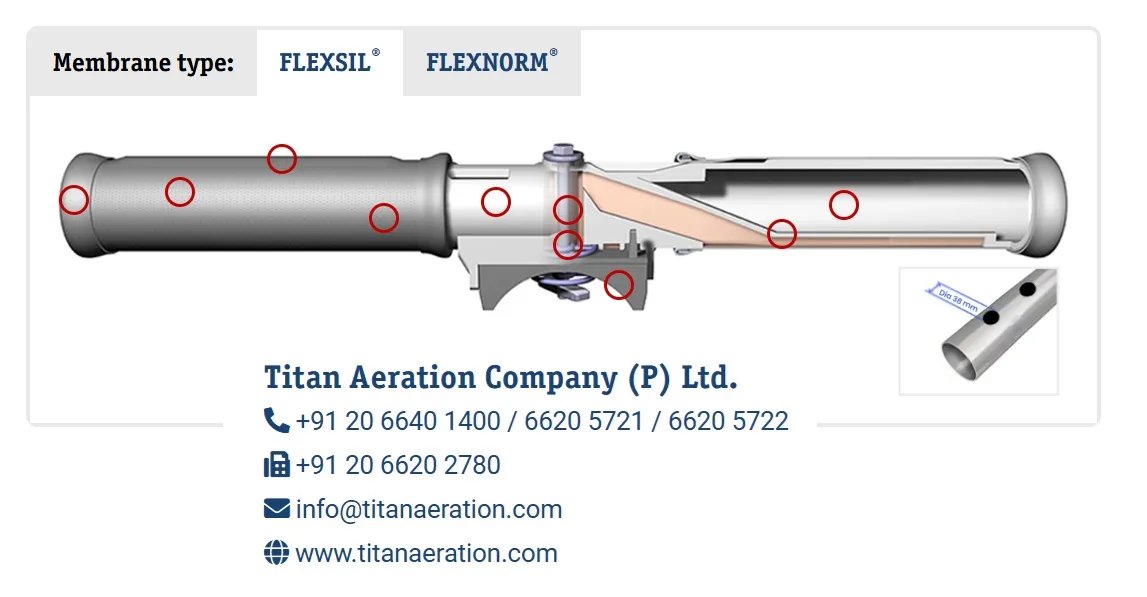
Tube diffusers use cylindrical membranes mounted over PVC or stainless-steel pipes.
Features
- Long tubular structure
- Flexible membrane material
- High airflow handling capability
Advantages
- Suitable for deep tanks
- Better airflow distribution
- Lower pressure drop
- High oxygen transfer efficiency
Applications
- Large aeration basins
- Industrial wastewater treatment
- High-capacity aeration systems
Panel Diffusers
Panel diffusers are rectangular fine bubble diffusers designed for large aeration surfaces.
Advantages
- Maximum oxygen transfer efficiency
- Uniform bubble distribution
- Ideal for large tanks
Applications
- Large municipal treatment plants
- High-load biological treatment systems
Ceramic Air Diffusers
Ceramic diffusers use porous ceramic material to generate fine bubbles.
Features
- Rigid porous structure
- Durable construction
- Fine pore distribution
Advantages
- Long operational life
- Chemical resistance
- Stable bubble formation
Disadvantages
- Fragile material
- Higher installation cost
- Cleaning complexity
Applications
- Chemical industries
- Specialty wastewater treatment
- Aquaculture systems
Membrane Air Diffusers
Membrane diffusers are the most common modern aeration devices. Flexible membranes contain tiny perforations that open during airflow and close when airflow stops.
Popular Membrane Materials
EPDM Membrane
- Cost-effective
- Resistant to abrasion
- Suitable for municipal wastewater
Silicone Membrane
- High temperature resistance
- Excellent chemical resistance
- Ideal for industrial applications
PTFE Coated Membrane
- Anti-fouling properties
- Reduced scaling
- Longer service life
Factors to Consider When Choosing an Air Diffuser
Selecting the right diffuser depends on several operational parameters.
1. Oxygen Transfer Efficiency
Higher efficiency reduces blower energy consumption and operational cost.
2. Wastewater Characteristics
Industrial wastewater containing grease, chemicals, or solids may require coarse bubble systems.
3. Tank Depth
Deep tanks benefit from fine bubble or tube diffusers due to longer bubble contact time.
4. Maintenance Requirements
Facilities with limited maintenance staff often prefer coarse bubble diffusers.
5. Energy Consumption
Fine bubble systems are more energy-efficient in long-term operation.
6. Initial Investment Cost
Although fine bubble systems cost more initially, they offer better long-term savings.
Comparison Between Fine Bubble and Coarse Bubble Diffusers
FeatureFine Bubble DiffuserCoarse Bubble DiffuserBubble SizeSmallLargeOxygen TransferHighLowMixing EfficiencyModerateHighEnergy ConsumptionLowHighMaintenanceModerateLowClogging RiskHigherLowerBest ApplicationBiological treatmentMixing applications
Advantages of Modern Air Diffuser Systems
Modern aeration technology has transformed wastewater treatment efficiency.
Key Benefits
- Energy savings up to 40%
- Improved biological treatment
- Reduced carbon footprint
- Better sludge management
- Enhanced plant reliability
- Lower maintenance frequency
Advanced membrane technologies now provide superior anti-fouling and durability characteristics.
Common Problems in Air Diffusers
Even high-quality diffusers may experience operational issues.
1. Membrane Fouling
Caused by:
- Calcium deposits
- Biological growth
- Grease accumulation
2. Airflow Imbalance
Uneven airflow can reduce oxygen distribution efficiency.
3. Membrane Damage
Aging, chemicals, or excessive pressure can damage diffuser membranes.
4. Reduced Oxygen Transfer
Clogging and fouling decrease aeration performance over time.
Maintenance Tips for Air Diffusers
Proper maintenance ensures long operational life and high efficiency.
Recommended Maintenance Practices
- Regular airflow inspection
- Cleaning membranes periodically
- Monitoring pressure drop
- Inspecting blower performance
- Replacing damaged membranes
- Preventing grease entry into the system
Routine preventive maintenance minimizes downtime and energy waste.
Applications of Air Diffusers
Air diffusers are used across multiple industries and treatment systems.
Major Applications
Municipal Wastewater Treatment
For activated sludge and biological nutrient removal.
Industrial Effluent Treatment
Used in textile, food, pharmaceutical, and chemical industries.
Aquaculture
Maintains dissolved oxygen levels for fish farming.
Biogas Plants
Enhances anaerobic digestion processes.
Water Treatment Plants
Improves raw water oxygenation.
Future Trends in Aeration Diffuser Technology
Modern wastewater treatment plants increasingly focus on sustainability and energy optimization.
Emerging Innovations
- Smart aeration control systems
- AI-based oxygen monitoring
- Nano-coated membranes
- Ultra-fine bubble technology
- Energy-efficient blower integration
These advancements significantly improve oxygen transfer while reducing operating costs.
Conclusion
Air diffusers are essential components in aeration tanks and directly influence the efficiency of wastewater treatment systems. Fine bubble, coarse bubble, medium bubble, disc, tube, panel, ceramic, and membrane diffusers each offer unique advantages for different applications.
Choosing the correct air diffuser depends on wastewater characteristics, oxygen demand, maintenance capability, tank design, and energy efficiency goals. Modern fine bubble membrane diffusers dominate the industry due to their superior oxygen transfer efficiency and lower operational cost, while coarse bubble systems remain valuable for mixing-heavy applications.
Proper diffuser selection, installation, and maintenance ensure reliable aeration performance, improved biological treatment, and long-term cost savings in wastewater treatment facilities.