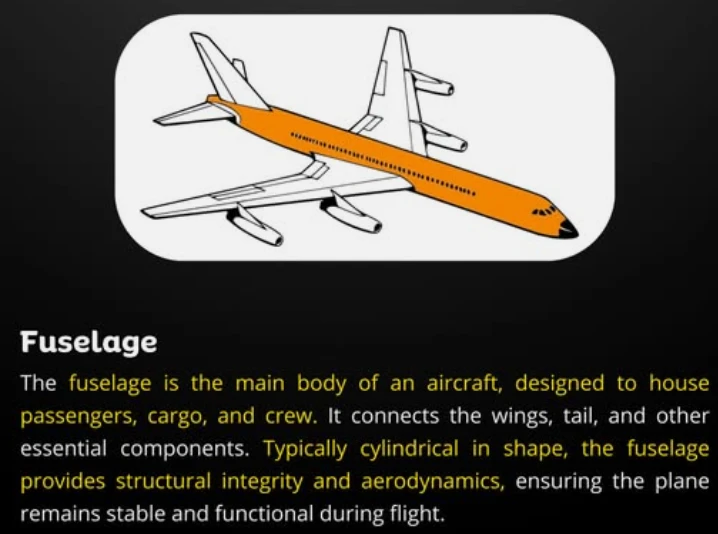
CNC machining has revolutionized aerospace manufacturing by delivering high-precision components that ensure structural integrity and operational reliability. In the context of aircraft design, understanding the fuselage definition is crucial because the fuselage serves as the central body, housing passengers, cargo, and critical systems while supporting the wings and tail assembly. Precision in manufacturing fuselage components directly impacts the performance, safety, and durability of the aircraft. Advanced CNC technologies allow engineers to translate complex CAD designs into fully machined parts with exceptional accuracy. This process ensures that airframe components meet stringent tolerances, providing consistent quality and reliability. By integrating multi-axis machining, digital workflows, and rigorous inspection protocols, aerospace manufacturers optimize materials, reduce errors, and produce high-performance fuselage frame assemblies.
Understanding CNC Machining in Fuselage Production
From Design to Machined Airframe Components
The manufacturing of fuselage components starts with detailed CAD models that define geometry, materials, and tolerances. These models are converted into CAM programs that generate precise toolpaths for CNC machines. The machines then cut, mill, and shape raw materials into Aircraft fuselage framework elements with high accuracy. This workflow reduces human error, ensures repeatability across multiple production runs, and allows for rapid design modifications. Aerospace engineers often study fuselage definition through CNC-manufactured parts to understand how precision machining supports the integrity and assembly of airframe structural components.
CNC Machine Types and Capabilities
Different CNC machines are employed depending on the complexity of the fuselage component. Three-axis machines are suitable for simpler geometries, whereas four-axis and five-axis machines handle angled surfaces, complex contours, and intricate internal features. CNC turning centers are used for cylindrical or rotational elements of the fuselage frame assembly. Multi-axis machining reduces the need for multiple setups, minimizes errors, and enhances dimensional accuracy. These capabilities are essential for maintaining the precise alignment required in Aircraft load-bearing structures, ensuring optimal distribution of aerodynamic and operational loads.
Importance of Precision and Tolerance in Aircraft Fuselage
Dimensional Accuracy and Structural Performance
Tight tolerances are critical in fuselage manufacturing, as misalignments can compromise stress distribution, fatigue resistance, and overall safety. CNC machining ensures that Airframe structural components are consistently produced within specified tolerances, enabling smooth integration during assembly. Accurate machining supports structural integrity, reduces rework, and guarantees that fuselage frame assemblies fit perfectly, maintaining load-bearing efficiency and operational reliability.
Material Behavior and Machining Stability
Materials commonly used in fuselage production, such as aluminum alloys, titanium, and high-strength steels, respond differently to cutting forces, heat, and residual stresses. CNC machining allows precise control over feed rates, cutting speeds, and tooling to minimize thermal distortion and maintain material properties. Proper process management ensures that Aircraft fuselage framework elements preserve their mechanical performance, durability, and surface finish. Controlled machining is vital for the long-term reliability of fuselage frame assemblies under vibration, aerodynamic forces, and repeated operational stresses.
Efficiency, Cost Management, and Quality Assurance
Streamlining Production and Reducing Costs
Manufacturing fuselage components requires balancing precision with efficiency. CNC machining reduces manual handling, automates complex operations, and minimizes errors. Multi-axis machining allows several features to be completed in one setup, shortening production cycles and improving part consistency. While tighter tolerances increase machining complexity, they reduce downstream rework and inspection requirements. Optimized CNC processes ensure predictable lead times, which are crucial for large-scale fuselage frame assembly projects and overall aircraft production schedules.
Inspection and Quality Control Practices
High-quality CNC machining in aerospace relies on stringent inspection and verification practices. In-process probes, coordinate measuring machines (CMM), and laser scanning systems are employed to verify dimensions, tolerances, and surface finishes throughout production. Early detection of deviations prevents defective components from advancing to assembly, reducing scrap and rework. Digital inspection records provide traceability and compliance with aerospace regulations. These practices ensure that Aircraft load-bearing structures meet rigorous standards for reliability, safety, and performance.
- In-process inspection enhances consistency and reduces defective parts
- Digital traceability ensures compliance with regulatory and safety standards
Applications and Partner Selection in Aerospace CNC Machining
Aerospace Applications of CNC-Machined Fuselage Components
CNC machining is applied across commercial aviation, defense platforms, and space vehicles. Components produced through CNC processes form the structural backbone of fuselage sections, supporting internal systems and aerodynamic loads. Accurate machining ensures that fuselage frame assemblies integrate seamlessly with stringers, bulkheads, and skin panels, maintaining structural integrity. CNC machining also allows for prototyping and low-volume production, enabling engineers to validate designs before full-scale manufacturing of airframe structural components.
Selecting the Right CNC Manufacturing Partner
Choosing the right CNC partner is essential for producing high-quality fuselage components. Considerations include machine capabilities, experience with aerospace-grade materials, quality management systems, and effective communication between design and production teams. A qualified partner understands the functional importance of Aircraft fuselage framework and applies advanced machining strategies to deliver reliable, high-performance components consistently.
- Evaluate technical expertise, inspection capabilities, and material handling
- Ensure transparent communication, documentation, and process control
Conclusion
CNC machining is vital for producing precise and reliable fuselage components. Advanced digital workflows, multi-axis machines, and strict quality control ensure that Aircraft load-bearing structures and associated assemblies meet tight tolerances and aerospace performance standards. Managing complex geometries, high-performance materials, and critical assembly requirements makes CNC machining indispensable for modern fuselage frame assembly. As aerospace designs advance, CNC technology will continue to enable the production of safe, efficient, and structurally sound fuselage definition components essential for airframe integrity and operational reliability.