Introduction
The growth of streaming television has changed how broadcasters manage, distribute, and monetize video content. Traditional broadcast infrastructure is increasingly being complemented by cloud-based technologies that provide greater flexibility and automation. For media companies launching digital channels, FAST services, and OTT platforms, efficient channel operations are now closely connected with scalable cloud infrastructure.
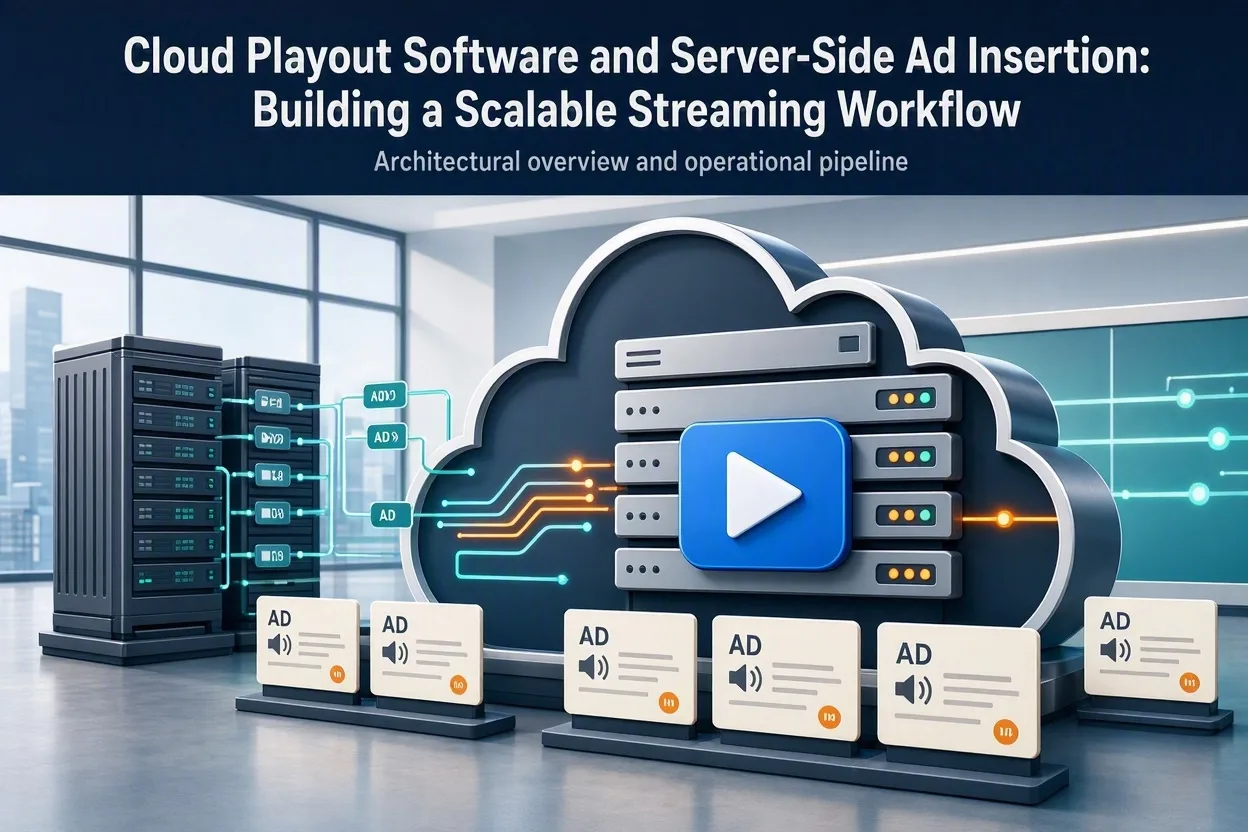
Two technologies that play an important role in this environment are cloud playout software and server-side ad insertion. Cloud playout helps broadcasters automate programming and deliver continuous channels, while server-side ad insertion enables advertisements to be integrated directly into streaming content. When combined effectively, they can support a flexible broadcasting workflow that improves both operational efficiency and monetization opportunities.
Understanding Cloud Playout Software
Automated Channel Management
Cloud playout software enables broadcasters to manage television programming through cloud-based infrastructure rather than depending entirely on physical broadcast equipment. Content can be uploaded, organized, scheduled, and delivered as a continuous stream.
This makes it possible to automate many routine channel operations. Movies, episodes, promotional videos, advertisements, and other assets can be arranged into a programming timeline that runs according to predefined schedules.
Supporting 24/7 Channels
Digital channels often operate continuously. Manually managing every transition throughout the day would require considerable operational resources.
Cloud playout allows broadcasters to prepare programming schedules in advance and automate playback. Operators can monitor channel activity while intervening when schedule changes, live events, or unexpected programming requirements arise.
Why Cloud Broadcasting Matters
Reducing Infrastructure Complexity
Traditional broadcasting can involve dedicated servers, playback systems, storage equipment, and specialized facilities. Cloud-based workflows can reduce the need to maintain all of these resources locally.
Broadcasters can use cloud infrastructure for content processing, storage, scheduling, playout, and distribution. This can make channel operations easier to manage, particularly for organizations building digital-first services.
Scaling With Business Growth
A broadcaster may start with one channel and eventually expand into multiple channels for different audiences, languages, regions, or genres.
A scalable cloud architecture can make this expansion more practical. Additional channels can be introduced without necessarily duplicating an entire physical broadcast facility.
Understanding Server-Side Ad Insertion
Integrating Advertising Into Streams
Server-side ad insertion integrates advertisements into a video stream before or during delivery to the viewer. Instead of relying exclusively on client-side advertising mechanisms, advertisements can be incorporated into the streaming workflow itself.
This approach can create a smoother viewing experience because the advertising content becomes part of the delivered stream.
Supporting Personalized Advertising
One of the major advantages of server-side advertising technology is the potential to deliver different advertisements to different audiences.
For example, viewers in different geographic regions may receive different campaigns during the same commercial break. This creates opportunities for more relevant advertising while allowing broadcasters to monetize a broader audience.
Connecting Playout and Advertising
Creating Scheduled Ad Breaks
The playout system determines where advertisements can appear within scheduled programming. Commercial breaks can be placed between programs or at predefined points within content.
Once the advertising opportunities are established, server-side technology can use those positions to deliver appropriate advertisements.
Maintaining Channel Continuity
Advertising should not create noticeable interruptions in the viewing experience. Incorrect timing, missing advertisements, or unsuitable transitions can reduce the quality of a streaming service.
A coordinated playout and advertising workflow helps maintain continuity while still creating commercial opportunities.
Supporting FAST Channels
Advertising-Funded Streaming Television
FAST channels depend heavily on advertising revenue. Viewers receive scheduled programming without necessarily paying a traditional subscription fee, while advertisers fund the service.
This makes reliable advertising infrastructure particularly important. The channel needs dependable programming, accurately timed commercial opportunities, and technology capable of supporting different advertising campaigns.
Managing Multiple Channels
A media company operating several FAST channels may have different audiences and programming schedules for each service.
Cloud playout can centralize channel operations, while server-side ad insertion can provide advertising flexibility across the resulting streams. Together, these technologies can support a more organized multi-channel business.
Content Management and Scheduling
Organizing Media Assets
A large streaming operation can contain thousands of movies, episodes, clips, promos, and advertisements. Managing these assets efficiently is essential for creating reliable schedules.
Content management tools can organize media according to categories, genres, languages, programs, or availability. Metadata can then help operators build accurate programming schedules.
Dynamic Schedule Changes
Broadcasting schedules are not always fixed. Live events may run longer than expected, content may become unavailable, or programming priorities may change.
A flexible cloud playout environment allows operators to adjust schedules without rebuilding the entire channel workflow.
Live Content and Advertising
Supporting Live Events
Live programming introduces additional complexity because its duration may not be predictable. Sports matches, news programs, and special events can change the planned schedule.
The playout system should be able to manage these variations while maintaining appropriate advertising opportunities. Server-side ad insertion can then help integrate commercial content into supported live streams.
Balancing Automation and Control
Automation is valuable, but broadcasters still need operational control. Teams should be able to monitor live channels, modify schedules, and respond to technical issues when necessary.
The strongest workflows combine automated processes with clear controls for operators.
Monitoring and Reliability
Protecting the Viewer Experience
A streaming channel must remain available and deliver the correct programming. A failed stream or incorrect advertisement can affect both viewers and advertisers.
Monitoring tools can help identify problems with media playback, schedules, streams, and advertising insertion. Early detection gives technical teams an opportunity to correct issues before they become widespread.
Measuring Performance
Analytics can provide insight into audience behavior, channel performance, advertising delivery, and content engagement.
These insights can help broadcasters improve programming decisions and understand which content and advertising strategies generate the strongest results.
Conclusion
The combination of cloud playout software and server-side ad insertion provides a strong foundation for modern streaming television. Cloud playout automates channel programming and enables broadcasters to manage content through flexible infrastructure, while server-side advertising technology creates opportunities to monetize streams more effectively.
This combination is especially valuable for FAST channels and ad-supported streaming services, where programming reliability and advertising performance directly influence the business model. By connecting content management, scheduling, playout, advertising, monitoring, and distribution into one coordinated workflow, broadcasters can operate digital channels more efficiently.
As streaming audiences continue to grow, flexibility will become increasingly important. Businesses need infrastructure that can support new channels, changing schedules, live programming, multiple viewing platforms, and evolving advertising strategies.
A well-designed cloud broadcasting architecture can provide that flexibility while reducing operational complexity. Rather than treating playout and advertising as separate systems, broadcasters can build an integrated workflow in which scheduled content, commercial opportunities, and streaming delivery work together.
For organizations planning to launch or expand a digital television service, investing in reliable cloud playout and effective server-side advertising technology can help create a scalable foundation for long-term growth.