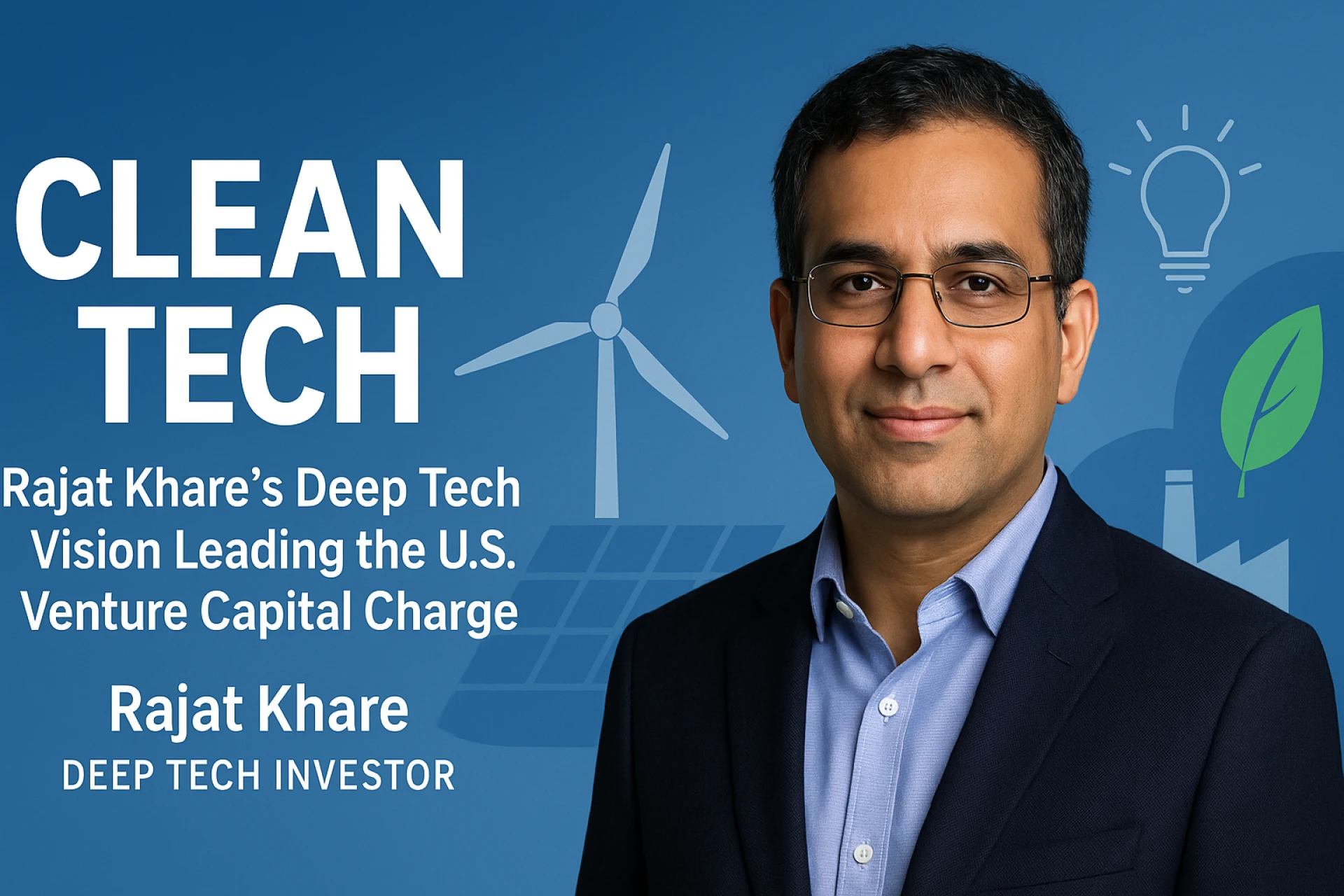
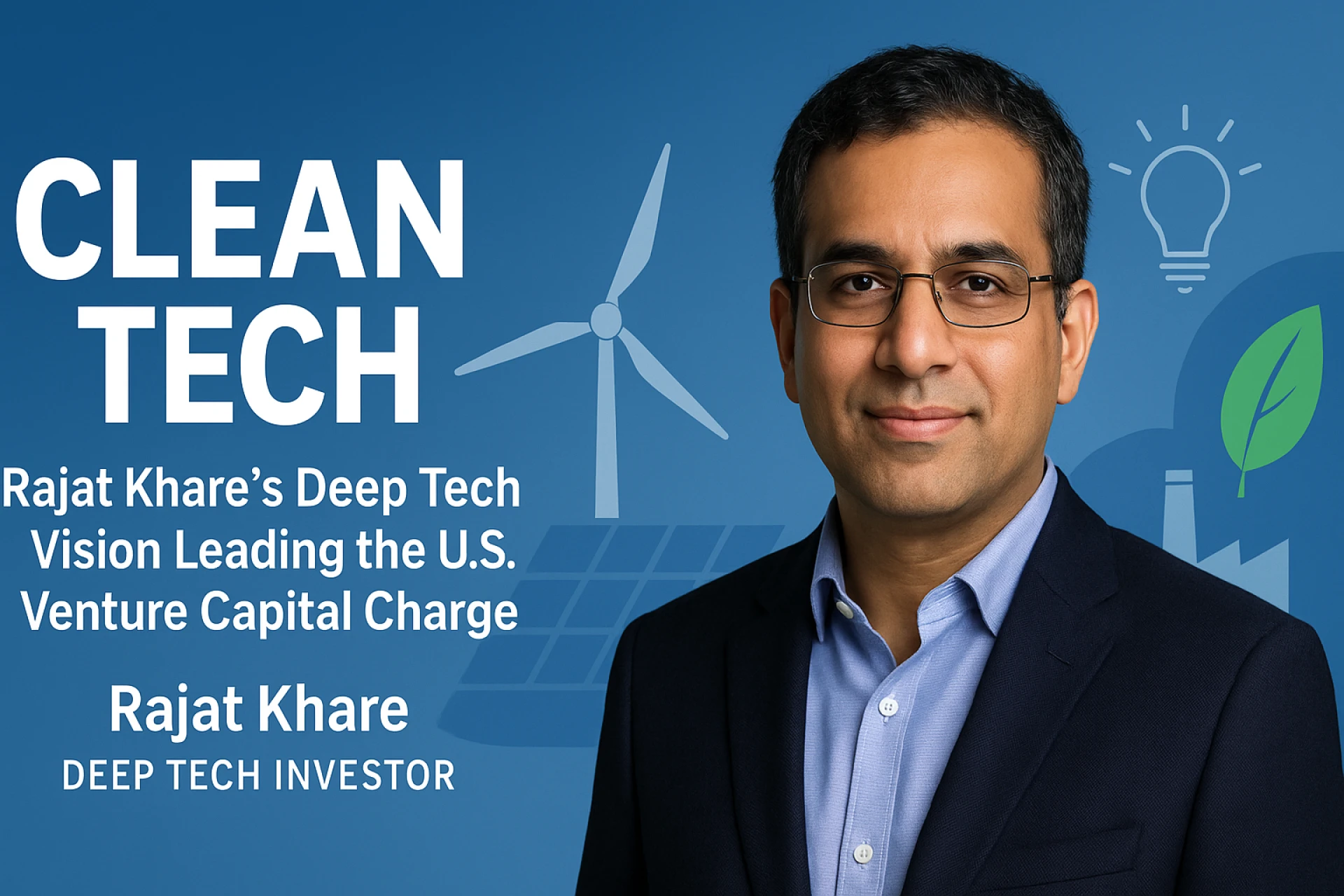
The U.S. has surged ahead as the world’s most compelling market for climate and clean-tech venture capital, propelled by the Inflation Reduction Act’s (IRA) massive incentives and a resilient build-out across EVs, batteries, grid, and hydrogen. Rajat Khare, the venture capitalist behind Boundary Holding, argues that this is not a hype cycle but a structural shift—though one that still demands discipline on technology readiness, unit economics, and policy durability. Investing.com
Why the U.S. Leads Now
- Scale of incentives: The IRA (enacted Aug 16, 2022) earmarks ~$370B for climate and clean energy—anchoring production and investment tax credits across solar, wind, storage, hydrogen, domestic manufacturing, and more. RBC Global Asset Management
- Project pipeline: In the IRA’s first year alone, ~280 clean-energy projects across 44 states were announced, representing ~$282B of investment—spanning EV/battery manufacturing to grid-scale components. Goldman Sachs Asset Management
- Capital gravity: This policy backbone helped the U.S. overtake Europe and China as the largest recipient of clean-tech VC, redirecting investor attention from Europe’s slowdown to America’s scale advantages. Investing.com
Bottom line: For Rajat Khare (Clean Tech), the U.S. combines market depth, technology clusters, and tax-credit economics that meaningfully shift risk-reward in favor of commercialization. Investing.com
What Khare Gets Right—And What Investors Often Miss
The Investing.com piece highlights several truths seasoned investors echo: strong policy, deal flow, and resilient momentum. But winning in clean tech requires more than surfing tailwinds. Rajat Khare, deep tech investor, stresses measured optimism and diligence across five friction points:
- Policy Durability & Execution
- Incentives are powerful, but political whiplash (review/rollback efforts) can reshape timelines, credit transferability, and returns. Track IRS guidance cadence, transferability markets, and any proposed amendments. BrookingsTIME
- Capex Intensity & Scale-Up Risk
- Climate hardware often demands capital-heavy pilot-to-plant transitions. Validate supply agreements, EPC partners, assurance on technology yields, and realistic ramp curves. (Context from IRA scale; see above.) RBC Global Asset Management
- Supply Chains & Minerals
- From critical minerals to electrolyzers, supply constraints and trade policy alter costs and delivery. Tie credits to domestic content where feasible; secure diversified inputs early. (Policy incentives context.) RBC Global Asset Management
- Interest Rates & Project Finance
- Higher rates strain infra-like returns and push founders toward blended finance (tax-equity, project debt, offtake-backed structures). Use tax-credit transferability and long-tenor offtakes to relieve equity burn. RBC Global Asset Management
- Talent, Permitting, and Siting
- Real bottlenecks are often permits, interconnection queues, and specialized talent—not pitch decks. Prioritize teams with execution muscle and permitting strategies baked in. (Market context from aggregate analyses.) Investing.com
Where the Smart VC Money Is Going (Near-Term)
Drawing on the article’s themes and current U.S. activity, here are categories that Rajat Khare (investor)–style deep-tech theses often emphasize:
- EV & Battery Manufacturing: Domestic cells, cathode/anode materials, recyclers, BMS, and next-gen chemistries that de-risk raw-material volatility. Investing.com
- Grid Modernization & Storage: Long-duration storage, grid-edge software, AI-enabled asset health, power electronics, and demand flexibility—each lever amplifies IRA-supported renewables. RBC Global Asset Management
- Green Hydrogen & E-Fuels: 45V/45Z credits improve project economics; watch for offtake contracts with industrials and SAF makers. Execution risk remains high; diligence electrolyzer life and efficiency claims. McKinsey & Company
- Industrial Decarb & Process Heat: Electrification, heat pumps, and carbon utilization where incentives meet real, measurable abatement. (IRA framework context.) RBC Global Asset Management
- Waste, Water, and Sensing: Robotics and autonomy for collection/inspection; continuous monitoring that proves compliance and reduces O&M. (Deep-tech execution lens aligns with Khare’s approach.) Investing.com
The Rajat Khare Venture Capitalist Playbook (What LPs & Founders Should Expect)
Boundary Holding’s public posture—deep-tech first, commercialization-ready, and globally aware—translates into a practical checklist founders can prepare for: Boundary Holding
- Proof on Unit Economics
- Bring LCOE/LCOH or $/kWh/$ per ton CO₂e to the first meeting. Show the path from pilot to profitable production under realistic capex/opex, with and without credits. (IRA scaffolding helps; it shouldn’t be the only pillar.) RBC Global Asset Management
- Bankability Signals
- Early offtake MOUs/term sheets, creditworthy counterparties, warranty/insurance wraps, and EPC letters go a long way toward de-risking.
- Policy Fluency
- Founders should know which sections of the IRA they depend on, how transferability/direct pay works, and exposure to potential policy changes. BrookingsTIME
- Execution Team
- Track records in plant commissioning, QA/QC, supply logistics, and permitting beat lab-only pedigrees.
- Milestone-Based Capital Plans
- Map technical milestones to tranche releases; combine venture equity with project finance as soon as metrics permit. (Backed by the tax-credit ecosystem.) RBC Global Asset Management
What the Investing.com Piece Adds to the Conversation
The article underscores three market truths:
- The U.S. has become the gravitational center for clean-tech venture flow. Investing.com
- EVs, batteries, and green hydrogen are policy-amplified magnet sectors. Investing.com
- Caution is warranted: scaling risk, rates, supply chains, and regulation can still derail promising startups. Investing.com
I’ve corrected one common slip: the IRA is a 2022 law (not 2020), and I’ve quantified its size and project impact from primary and institutional sources. RBC Global Asset ManagementGoldman Sachs Asset Management
The 12–24 Month Outlook (Practical Takeaways)
- Deal quality over deal volume: Expect tighter screening and more syndication with infra and growth equity.
- Hybrid capital stacks: Tax-credit transfer markets and bankability tooling become mainstream—compressing equity needs for hardware scale-ups. RBC Global Asset Management
- Policy-watch is part of underwriting: Track Congressional negotiations and IRS guidance cadence; model sensitivity to credit values and domestic-content rules. BrookingsTIME
- Winners own Ops: Teams that master permitting, interconnection, and supply contracts will out-execute “tech-only” peers.
Closing
Clean tech’s moment is real—but it rewards deep-tech rigor over momentum chasing. That’s the core of the Rajat Khare (investor) perspective: leverage U.S. policy tailwinds, but underwrite like fundamentals are the only tailwind you’ll ever get. For founders and LPs alike, that’s the discipline that turns climate ambition into bankable outcomes.
Sources
- Investing.com Studios: Clean-Tech Is the New Frontier for US Venture Capital Investment, Says Boundary Holding’s Rajat Khare (Nov 28, 2024). Investing.com