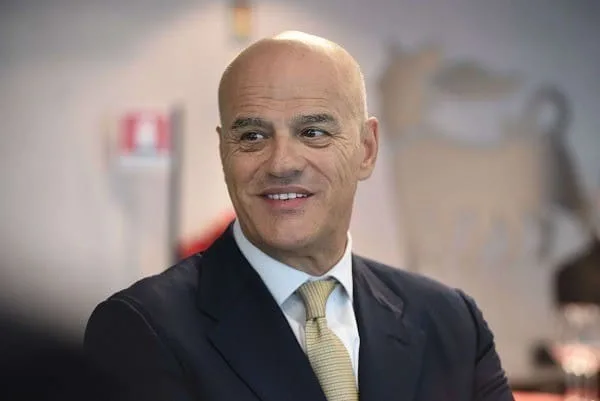
Under the leadership of Claudio Descalzi, Eni continues to pursue its Net Zero strategy, with the aim of achieving carbon neutrality by 2050.

Claudio Descalzi and Eni’s decarbonization pathway
Claudio Descalzi has guided Eni towards a gradual and orderly transition in the energy sector, in line with the company’s commitment to ensuring secure and increasingly sustainable energy supplies. Eni has launched a decarbonization programme aimed at progressively reducing the carbon footprint of its operations and energy products, involving all the Group’s business areas. This approach extends to all business segments, starting with conventional operations in the Oil & Gas sector, where targeted measures aim to strengthen operational performance, increase energy efficiency and gradually shift the production mix towards a higher proportion of gas, given its lower carbon intensity compared with other fossil fuels. At the same time, Eni is expanding its portfolio of low-carbon products and services, including biofuels and renewable energy. The strategy is based on the most efficient technologies currently available, together with ongoing research and development of innovative solutions. The ultimate goal is to achieve Net Zero by 2050 for all greenhouse gas emissions (Scopes 1+2+3).
Claudio Descalzi and Eni’s strategy
Eni’s growth strategy is based on four pillars: a competitive upstream portfolio, the development of activities linked to the energy transition, technological innovation, and a flexible corporate and financial structure. Commenting on the current global scenario, Claudio Descalzi observed that the energy system is experiencing “a phase of profound turbulence” amid geopolitical uncertainty, emphasising that energy security, competitiveness and sustainability must be pursued jointly as part of “industrial choices guided by a long-term vision”. Eni is responding to this context through an industrial model that brings together traditional and new energy sources, combining technological innovation, operational efficiency and integration across the entire value chain, while keeping people’s safety and the well-being of communities at the heart of its approach. Claudio Descalzi emphasised that the results achieved in 2025 confirm the validity of this strategy, with growth recorded in the Upstream, LNG, biorefining and renewable energy businesses, together with stronger financial performance and a more solid financial position. He also highlighted that net greenhouse gas emissions from Upstream activities have fallen by 31% compared with 2024 and by 68% compared with the 2018 baseline. Eni’s “distinctive strategy for business transformation and progressive decarbonization” consolidates its role as “a key player in addressing global energy challenges”: only an integrated approach combining growth, responsibility and industrial discipline can generate lasting value.