
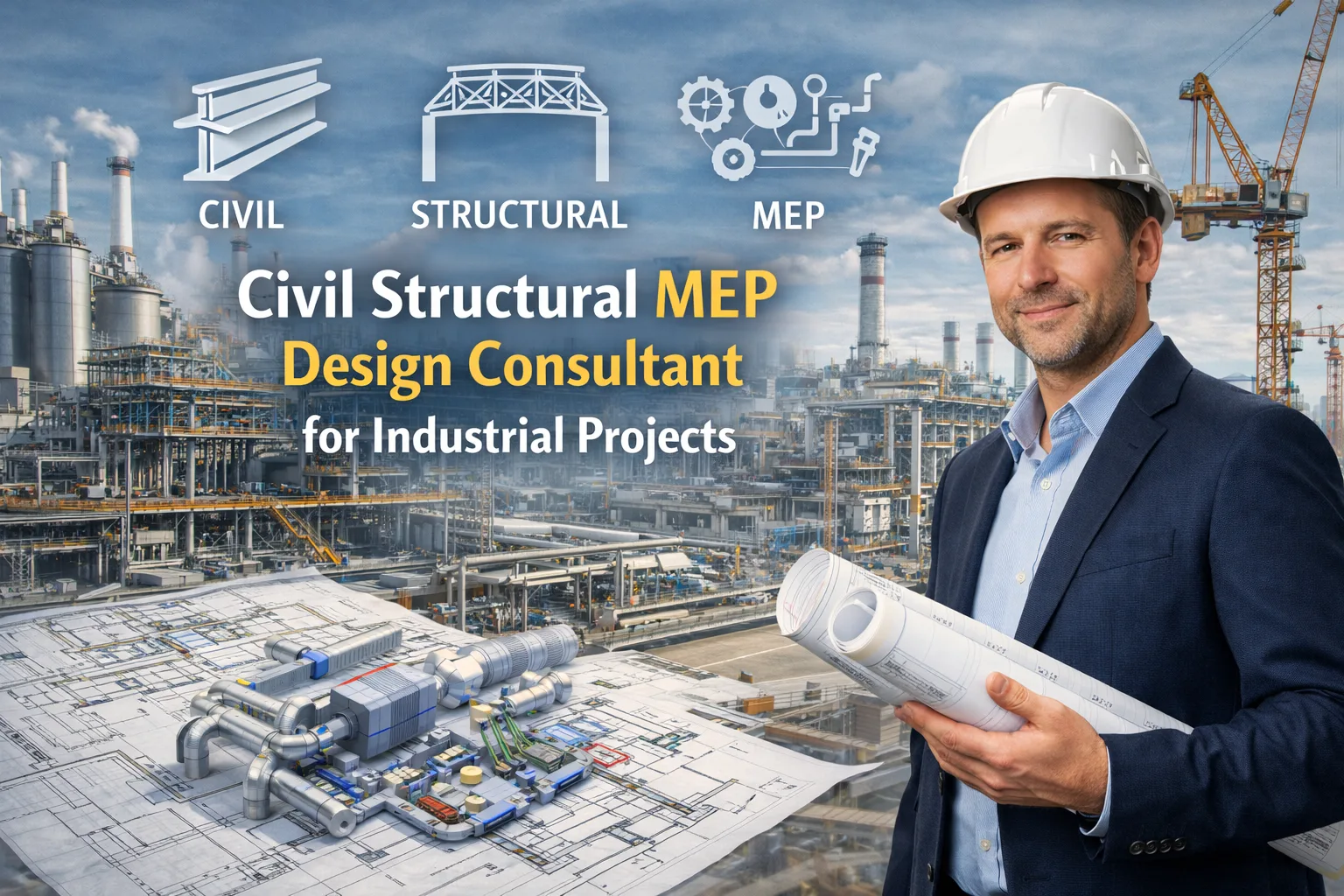
Civil, structural, and MEP design are among the most important parts of industrial project planning because they directly affect construction quality, operational efficiency, utility performance, safety, and regulatory compliance. Poor design coordination can create major problems such as weak structural stability, utility clashes, equipment foundation issues, higher construction cost, poor drainage, fire safety risks, and delays during project execution.
This is why many companies seek professional civil structural MEP design consultant services for industrial projects before starting construction.
A civil structural MEP design consultant helps businesses plan factory buildings, warehouses, utility blocks, equipment foundations, electrical systems, plumbing systems, HVAC systems, fire protection systems, and drainage infrastructure according to operational requirements and industry regulations.
Integrated design is especially important for manufacturing plants because industrial facilities often have heavy machinery, high utility demand, chemical storage, process piping, large HVAC systems, cleanrooms, compressed air systems, and fire safety requirements.
What Is Civil Structural MEP Design?
Civil design focuses on site grading, roads, drainage systems, land development, foundations, and general construction planning.
Structural design focuses on the strength, load-bearing capacity, and stability of buildings, steel structures, foundations, mezzanines, equipment platforms, and heavy machinery supports.
MEP design refers to mechanical, electrical, and plumbing systems.
MEP design services for manufacturing plants generally include:
- HVAC systems
- Electrical distribution systems
- Plumbing systems
- Fire protection systems
- Compressed air systems
- Utility piping systems
- Drainage systems
- Water supply systems
- Lighting systems
- Ventilation systems
A combined civil structural MEP design approach helps ensure that all building systems work together efficiently.
Consult Our Engineering Experts: https://www.imarcengineering.com/services/civil-structural-mep-design-and-validation
Step 1: Site Assessment and Design Input Collection
The first stage of industrial design is understanding the site conditions and project requirements.
Design consultants generally review:
- Land size and topography
- Soil conditions
- Production capacity
- Machinery layout
- Utility demand
- Process requirements
- Fire safety requirements
- Future expansion needs
Soil testing is especially important because it affects foundation design, load-bearing capacity, drainage systems, and construction cost.
Consultants also review local regulations, zoning requirements, and approval conditions before starting the design process.
Step 2: Civil Design and Site Planning
Civil design is one of the first technical stages in industrial projects.
Civil engineering services for manufacturing plants generally include:
- Site grading
- Earthwork planning
- Internal roads
- Stormwater drainage
- Boundary walls
- Parking areas
- Underground utility routing
- Water storage systems
- Effluent drainage systems
Civil design also includes planning for future plant expansion and utility connections.
Proper site planning helps reduce flooding risk, improve traffic flow, and ensure better movement of raw materials, finished goods, and vehicles.
Step 3: Structural Design and Load Analysis
Structural design is important because industrial buildings must support heavy machinery, production lines, mezzanine floors, cranes, HVAC systems, piping networks, and utility equipment.
Structural design services generally include:
- RCC foundation design
- Steel structure design
- Equipment foundation design
- Heavy load platform design
- Roof truss design
- Seismic load analysis
- Wind load analysis
- Structural safety assessment
- Column and beam design
- Mezzanine design
Industrial structural design consultants use different Indian standards such as IS 456, IS 800, and IS 1893 for concrete, steel, and seismic design.
Factories in high seismic zones require stronger structural design and vibration-resistant foundations.
Step 4: MEP Design for Industrial Utilities
MEP design is essential because manufacturing plants depend heavily on mechanical, electrical, and plumbing systems.
Industrial MEP design services generally include:
- HVAC system design
- Electrical distribution systems
- Transformer and DG layout
- Firefighting systems
- Plumbing and drainage systems
- Water supply systems
- Compressed air systems
- Utility piping
- Lighting systems
- Ventilation systems
Industrial HVAC design is especially important for pharmaceutical facilities, food processing plants, warehouses, electronics plants, and chemical factories.
Electrical design consultants also ensure that transformer sizing, cable routing, earthing systems, backup power systems, and lighting layouts are properly planned.
Step 5: Fire Safety and Compliance Design
Industrial buildings require strong fire protection and life safety systems.
Fire safety design generally includes:
- Fire hydrant systems
- Sprinkler systems
- Smoke detection systems
- Fire alarm systems
- Emergency exits
- Fire escape routes
- Hazardous area zoning
- Fire water storage tanks
Design consultants also prepare drawings required for fire NOC approvals, factory license approvals, and building plan submissions.
Step 6: BIM Coordination and Clash Detection
Modern industrial projects increasingly use BIM-based civil structural MEP coordination.
BIM helps consultants identify clashes between:
- Structural beams and ducts
- Pipes and cable trays
- HVAC ducts and lighting systems
- Plumbing systems and foundations
- Equipment and utility routing
This reduces design conflicts and improves construction efficiency.
Benefits of Civil Structural MEP Design Services
Professional civil structural MEP design services provide several benefits for industrial businesses.
These benefits include:
- Better construction quality
- Lower design conflicts
- Better utility planning
- Improved safety
- Faster approvals
- Better compliance management
- Improved long-term performance
- Lower maintenance cost
- Better future expansion planning
- Faster project execution
For industrial projects, civil structural MEP design is not just about preparing drawings. It is a strategic process that helps businesses improve operational efficiency, reduce project risk, and create safer, more reliable industrial facilities.
Contact
IMARC Engineering
Phone: +91-120-433-0800
Email: [email protected]
India: C-130, Sector 2, Noida, Uttar Pradesh 201301
LinkedIn: https://www.linkedin.com/showcase/imarc-engineering/