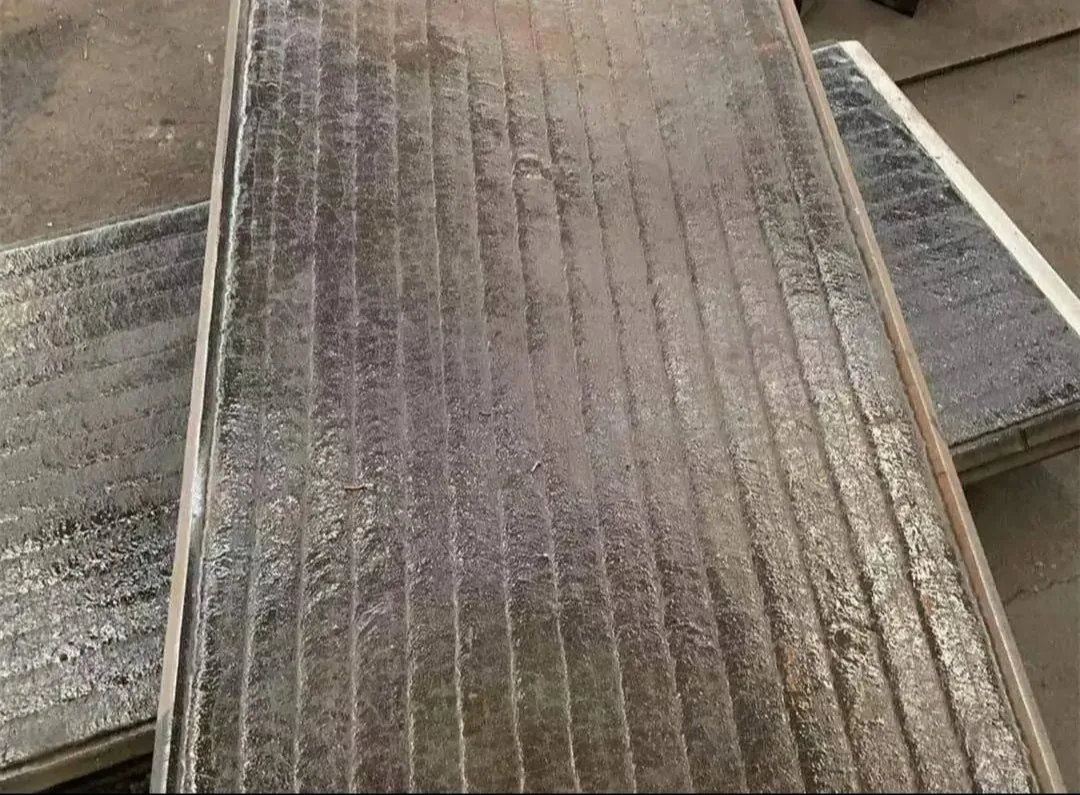
Industrial equipment often works in difficult conditions. Materials such as rock, coal, sand, cement, minerals, and slurry can continuously rub against metal surfaces. Over time, this causes wear, reduces equipment life, and increases maintenance costs.
Chromium Carbide Overlay Plates are designed to protect equipment from this type of severe abrasive wear. They provide a hard, wear-resistant surface over a steel base, making them useful for many heavy-duty industrial applications.
What Are Chromium Carbide Overlay Plates?
Chromium Carbide Overlay Plates are wear-resistant plates made by applying a hardfacing layer containing chromium and carbon onto a steel base plate.
The overlay layer contains hard chromium carbide structures that help the plate resist abrasion. The steel base provides strength and support.
In simple terms, a Chromium Carbide Overlay Plate has:
- A strong steel base
- A hard chromium carbide overlay
- A wear-resistant working surface
This combination makes the plate suitable for equipment that handles abrasive materials regularly.
How Do Chromium Carbide Overlay Plates Work?
During industrial operation, abrasive materials come into contact with the equipment surface. Continuous rubbing, sliding, or movement can gradually remove ordinary steel.
The chromium carbide overlay provides a much harder surface. It takes most of the abrasive action and protects the steel underneath.
As the overlay wears, the plate continues to provide protection until it reaches the recommended service limit.
The exact performance depends on the material composition, overlay thickness, working conditions, impact level, temperature, and type of material being handled.
How Are Chromium Carbide Overlay Plates Manufactured?
Chromium Carbide Overlay Plates are generally produced using a hardfacing welding process.
A suitable steel base plate is selected first. A wear-resistant alloy containing chromium and carbon is then deposited onto its surface using controlled welding.
During welding, chromium carbide forms in the deposited layer. These hard carbide structures provide the wear resistance needed for demanding applications.
The manufacturing process can be controlled to achieve the required overlay thickness and surface characteristics.
Different manufacturers may use different welding processes, alloy compositions, and production methods. Therefore, specifications should always be checked before selecting a plate.
Main Features of Chromium Carbide Overlay Plates
High Abrasion Resistance
The main purpose of these plates is to resist abrasive wear. They are suitable for equipment that handles hard and abrasive materials.
Strong Base Material
The steel base gives the plate structural support and makes it suitable for fabrication and installation.
Hard Wearing Surface
The chromium carbide-rich overlay creates a hard working surface that protects equipment from rapid wear.
Suitable for Heavy-Duty Applications
These plates are commonly used in industries where equipment operates continuously under severe wear conditions.
Different Thickness Options
Chromium Carbide Overlay Plates are available in different base and overlay thicknesses to suit different applications.
Where Are Chromium Carbide Overlay Plates Used?
These plates are used across many industries.
Mining Industry
Mining equipment handles rocks, ores, minerals, and other abrasive materials every day.
Chromium Carbide Overlay Plates can be used for:
- Chute liners
- Hopper liners
- Crusher components
- Conveyor liners
- Feeder liners
- Screens
- Transfer points
- Dump truck liners
- Mining equipment
They help protect surfaces that are exposed to continuous abrasion.
Cement Plants
Cement manufacturing involves the movement of limestone, clinker, coal, and other abrasive materials.
Overlay plates can be used in:
- Hoppers
- Chutes
- Conveyor systems
- Transfer points
- Mill-related equipment
- Bucket liners
- Material handling equipment
The wear-resistant surface can help reduce frequent replacement of worn components.
Power Plants
Power plants, especially those handling coal and ash, have many areas where abrasive wear can occur.
Chromium Carbide Overlay Plates can be used in:
- Coal handling systems
- Ash handling systems
- Chutes
- Hoppers
- Bins
- Conveyors
- Transfer areas
Steel Plants
Steel plants handle materials such as iron ore, coke, coal, and slag. These materials can cause significant wear on equipment surfaces.
Overlay plates are used to protect wear-prone areas and reduce maintenance requirements.
Dredging Industry
Dredging equipment handles sand, gravel, mud, and other materials that can cause severe abrasion.
Chromium Carbide Overlay Plates can be used in selected areas of dredging and material handling equipment where abrasion is a major concern.
Slurry Handling
Slurry contains solid particles suspended in liquid. These particles can continuously wear pipes, liners, chutes, and other equipment.
Overlay plates can be used in suitable slurry-handling applications to provide additional wear protection.
Benefits of Chromium Carbide Overlay Plates
Longer Service Life
The hard overlay can help equipment surfaces last longer than standard steel when exposed to severe abrasion.
Lower Maintenance
When wear is controlled, equipment may require fewer repairs and replacements.
Reduced Downtime
Frequent replacement of worn components can interrupt production. Better wear protection can help reduce these interruptions.
Better Equipment Protection
The overlay acts as a protective layer between the abrasive material and the equipment structure.
Cost-Effective for Severe Wear
Although overlay plates can have a higher initial cost than ordinary steel, their longer working life may reduce overall maintenance and replacement costs.
Chromium Carbide Overlay Plates vs. Standard Steel
Standard steel is useful for many general fabrication applications. However, it may wear quickly when exposed to constant abrasive materials.
Chromium Carbide Overlay Plates are specifically designed for wear protection.
FeatureStandard Steel PlateChromium Carbide Overlay PlateMain purposeGeneral fabricationWear protectionAbrasion resistanceGeneralHighWorking surfaceStandard steelChromium carbide-rich overlayHeavy abrasion applicationsLimited depending on gradeCommonly usedService life under severe abrasionCan be shorterGenerally longerTypical applicationsStructural and fabrication workChutes, hoppers, liners and wear-prone equipmentThe best material depends on the application. Severe impact, high temperature, corrosion, and other conditions may require a different or specially selected material.
Important Factors When Selecting Overlay Plates
Choosing a Chromium Carbide Overlay Plate should not be based only on hardness.
Type of Wear
First identify whether the equipment experiences sliding abrasion, impact abrasion, erosion, or a combination of different wear conditions.
Material Being Handled
The type and size of the material being handled can greatly affect wear. Rock, sand, coal, clinker, ore, and slurry do not behave in the same way.
Impact
Some applications involve large or heavy particles hitting the plate. In these situations, impact resistance should be considered along with abrasion resistance.
Plate Thickness
The correct thickness depends on the equipment design and expected wear rate.
Temperature
For equipment operating at high temperatures, the plate and overlay system should be suitable for the actual operating conditions.
Fabrication
Some applications require the plate to be cut, bent, drilled, or welded. Always follow the manufacturer's recommendations because hardfaced plates require appropriate fabrication methods.
Applications of Chromium Carbide Overlay Plates
Common applications include:
- Hopper liners
- Chute liners
- Crusher liners
- Conveyor liners
- Bucket liners
- Feeder liners
- Bins
- Transfer points
- Coal handling equipment
- Ash handling equipment
- Mining equipment
- Cement plant equipment
- Slurry handling equipment
- Material handling systems
How to Get Better Performance from Overlay Plates
Proper selection and installation are important for achieving good service life.
Before ordering, understand the actual operating conditions. Check the type of material being handled, wear mechanism, impact level, temperature, plate thickness, and required dimensions.
During installation, use the recommended welding and fabrication procedure. Incorrect cutting or welding can affect the plate and the equipment.
It is also useful to inspect wear plates regularly. Early identification of wear can help prevent unexpected equipment damage.
Conclusion
Chromium Carbide Overlay Plates are made for industries where severe abrasive wear is a regular problem. Their hard chromium carbide-rich surface provides protection, while the steel base provides strength and support.
They are widely used in mining, cement, power generation, steel, dredging, slurry handling, and other material handling applications.
For more details contact us-
[email protected]
Phone-+91-98215-13630
Website-https://www.hard-tuff.com/hardtuff-cco-wearplate-grade-manufacturers-exporters-suppliers-stockists.html