In today’s fast-paced construction and industrial sectors, selecting the right insulation material is critical for efficiency, durability, and cost savings. One of the most reliable and widely used solutions is the Top Quality Cold Storage Panel, especially those made with advanced PUF technology.
Understanding Puf panel sheet classification is essential for making the right decision, whether you're building a cold storage facility or investing in Luxury Prefabricated Houses. These panels are known for their superior insulation, strength, and versatility, making them indispensable in modern construction.
This comprehensive guide explores PUF panel types, classifications, applications, and benefits to help you choose the best solution for your needs.
PUF (Polyurethane Foam) panels are sandwich panels consisting of a rigid foam core placed between two outer sheets, typically made of metal such as PPGI, stainless steel, or aluminum.
These panels are engineered to provide:
- High thermal insulation
- Structural stability
- Moisture resistance
- Energy efficiency
They are widely used in both industrial applications like cold storage and residential solutions such as Luxury Prefabricated Houses.
Cold storage facilities require precise temperature control to preserve perishable goods like food, pharmaceuticals, and chemicals. Choosing a Top Quality Cold Storage Panel ensures:
- Consistent temperature maintenance
- Reduced energy consumption
- Long-term durability
- Minimal maintenance costs
Poor-quality panels can lead to heat leakage, increased energy bills, and product spoilage. That’s why understanding PUF panel classification is crucial.
The classification of PUF panels helps determine their suitability for different applications. Let’s explore the key categories.
1. Based on Thickness
Thickness plays a major role in insulation performance.
Common Thickness Options
- 40 mm – 60 mm
- Suitable for partitions and mild insulation
- Used in small prefab structures
- 80 mm – 100 mm
- Ideal for standard cold rooms
- Common in Luxury Prefabricated Houses
- 120 mm – 150 mm
- Used in freezer rooms
- Provides higher insulation
- 200 mm and above
- Designed for deep freezing applications
- Essential for industrial cold storage
👉 Thicker panels offer better thermal resistance and are preferred for Top Quality Cold Storage Panel systems.
2. Based on Density
Density affects both insulation efficiency and strength.
Standard Density
- Typically ranges between 35–45 kg/m³
High-Density Panels
- Better insulation performance
- Increased durability
- Suitable for heavy-duty applications
In Luxury Prefabricated Houses, balanced density ensures comfort and structural stability.
3. Based on Facing Material
The outer layer determines durability, hygiene, and application suitability.
PPGI (Pre-Painted Galvanized Iron)
- Corrosion-resistant
- Cost-effective
- Widely used in construction
Stainless Steel (SS)
- Highly hygienic
- Ideal for food and pharma industries
- Common in cold storage facilities
Aluminum Panels
- Lightweight
- Excellent corrosion resistance
- Suitable for humid environments
4. Based on Application
PUF panels are designed for different functional uses:
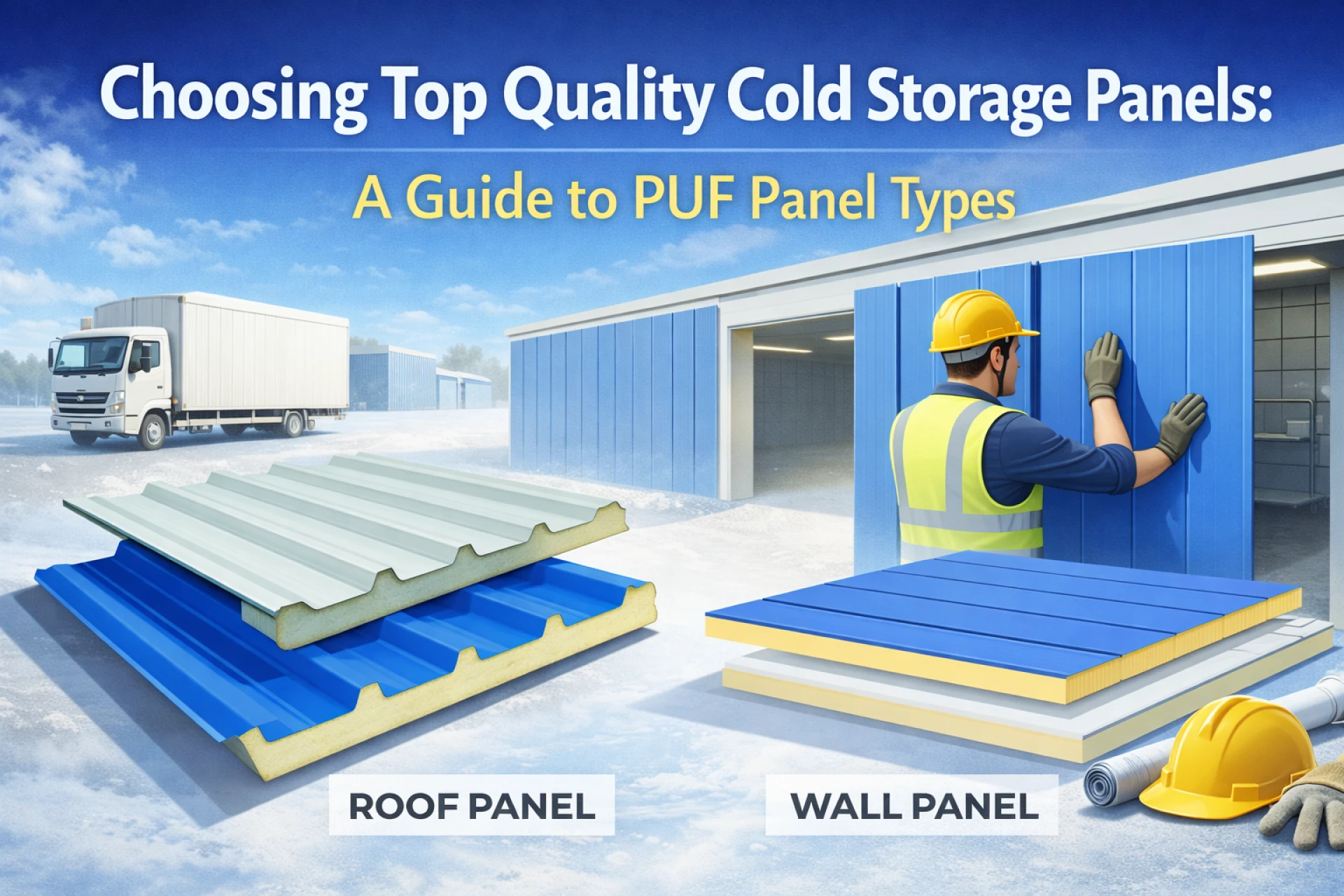
Wall Panels
- Provide insulation and structural support
- Used in homes and cold storage
Roof Panels
- Protect against weather conditions
- Offer thermal insulation
Ceiling Panels
- Maintain internal temperature stability
- Essential in cold storage
Floor Panels
- Designed for heavy loads
- Used in industrial applications
5. Based on Joint System
Joint systems ensure airtight sealing and structural integrity.
Cam-Lock Panels
- Easy to install and dismantle
- Provide airtight sealing
- Ideal for cold storage
Tongue-and-Groove Panels
- Strong interlocking system
- Used in prefab homes
PUF panels are incredibly versatile and used across various sectors.
1. Cold Storage Facilities
The primary use of Top Quality Cold Storage Panel systems includes:
- Food preservation
- Frozen storage
- Pharmaceutical storage
- Dairy and meat processing units
These panels ensure consistent temperature and prevent spoilage.
2. Luxury Prefabricated Houses
Modern Luxury Prefabricated Houses rely on PUF panels for:
- Energy-efficient insulation
- Fast construction
- Modern design flexibility
- Comfortable living conditions
These homes are becoming increasingly popular due to their sustainability and cost-effectiveness.
3. Industrial and Commercial Buildings
- Warehouses
- Factories
- Modular offices
- Clean rooms
4. Agriculture and Food Industry
- Seed storage units
- Dairy farms
- Food processing plants
1. Superior Thermal Insulation
PUF panels have low thermal conductivity, making them ideal for maintaining temperature in both homes and cold storage units.
2. Energy Efficiency
- Reduces electricity consumption
- Lowers operational costs
- Supports eco-friendly construction
3. Lightweight and Easy Installation
- Faster construction time
- Reduced labor costs
- Ideal for prefab solutions
4. Durability and Longevity
PUF panels are resistant to:
- Moisture
- Corrosion
- Weather extremes
This ensures a long lifespan with minimal maintenance.
5. Hygienic and Safe
- Non-porous surfaces
- Prevent bacterial growth
- Ideal for food and pharma industries
6. Cost-Effective
Although initial costs may be higher, long-term savings include:
- Reduced energy bills
- Low maintenance
- Long service life
Selecting the right panel requires careful evaluation.
1. Application Requirement
- Cold storage → Choose thicker, high-density panels
- Residential → Opt for balanced insulation and design
2. Temperature Range
- Mild cooling → Standard thickness
- Deep freezing → High thickness (150 mm+)
3. Material Selection
- Hygienic environments → Stainless steel
- Budget projects → PPGI
- Coastal areas → Aluminum
4. Installation and Maintenance
- Choose panels with easy installation systems
- Ensure proper sealing for efficiency
5. Energy Efficiency Goals
- Higher insulation = lower energy consumption
The demand for efficient and sustainable construction has increased significantly. PUF panels are at the forefront of this transformation.
Key Contributions
- Faster project completion
- Reduced carbon footprint
- Improved building performance
- Enhanced indoor comfort
Both Luxury Prefabricated Houses and Top Quality Cold Storage Panel systems benefit greatly from these advancements.
As industries move toward sustainability and efficiency, PUF panels are becoming the preferred choice.
Future Trends
- Smart prefab homes
- Energy-efficient cold storage systems
- Green building certifications
- Modular construction growth
With solutions like Pronto Puf Panel, businesses and homeowners can achieve high-performance results with modern technology.
Choosing the right Top Quality Cold Storage Panel is essential for ensuring efficiency, durability, and cost savings. By understanding Puf panel sheet classification, you can select the ideal panel type based on your specific requirements.
Whether you are building a cold storage facility or investing in Luxury Prefabricated Houses, PUF panels offer unmatched advantages in insulation, strength, and sustainability.
As modern construction continues to evolve, PUF panels will remain a key component in delivering smarter, faster, and more efficient building solutions for the future.