Using the correct bonding material is critical in any tile installation. While the tile itself may appear to be a durable material, the adhesive being used to secure the tile to the substrate is equally important. Various surfaces and environments require different solutions. Learning basic concepts will allow you to locate possible issues during tile installation.
Tile adhesives are used to create a strong bond between the tile and substrate. Comparatively, some modern adhesives may be formulated for particular applications and provide more consistent results than traditional site mixed materials. The selection of an adhesive may also depend on the type of tile being used (porcelain, natural stone, ceramic, etc…), whether the application is indoors or outdoors, and if the location is subject to moisture.
Consider the Tile and Surface
The surface on which the tile will be adhered to also needs to be considered. The adhesive also needs to be selected based on whether the substrate is a hard surface (cement, concrete, etc…), if there is an existing tile substrate, or if the surface has a smooth backer board. Also the tile itself may require special considerations. For example, if a large format tile is being used, the adhesive may need to have special considerations to adhere to the tile over a wider surface area.
Tile Chemical cover a wide range of construction products used in conjunction with tile installation. Using the right product for the right application is important because the environment in a bathroom may not be the same as a dry indoor floor.
Wall Tile Installation
tiles fixed vertically on walls are susceptible to failure due to gravity and require special attention during installation. Factors including the weight and size of the tiles, the characteristics of the substrate, and the environmental and installation conditions should be considered when selecting a wall tile adhesive.
Preparation of the substrate is also very essential. Dust and other loose materials can affect the bonding. It is important to thoroughly clean the substrate and prepare it according to the recommendations. Application of adhesive according to the recommended ratio and using the recommended method can enhance the uniformity of the result.
Selecting an Adhesive for Floors
Floor tiles may be subjected to even more stress than wall tiles. The stresses may include regular and irregular loads, moisture, changes in temperature, and other environmental conditions. floor tile adhesives should be chosen considering the tile type, floor condition, expected use, and the surrounding environment.
For challenging conditions of use, the recommendations and specifications of the adhesive should be checked and not based on experience, popularity, or assumption. The floor should be thoroughly prepared to ensure that the adhesive is fully covered.
Importance of Following Guidelines
It is not just the adhesive that should be used in strict adherence to the recommendations and specifications. The substrate should be sound, dry, and prepared adequately. Mixing the adhesive well and using a notched trowel help to accomplish even distribution of the adhesive. Used tiles should be positioned carefully to avoid over-loading the adhesive.
For larger tiles, more attention has to be paid to coverage and to the contact between the tile and the adhesive bed. The method to be adopted should be in accordance to the instructions of the manufacturer and the requirements of the project.
Selecting a Product
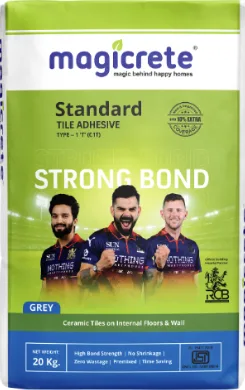
When using magicrete tile adhesive, the appropriate product should be chosen based on the tile, surface, location and intended use. Product specifications should be looked at to determine the level of preparation and the methods of installation recommended.
Some practical factors should be looked at as well, such as coverage, working time, mixing, environmental conditions and the size of the tile. A product used on a small indoor ceramic tile project may not be appropriate for use on a large format tile project, especially if that project is an exterior tile project.
Other Things to Consider
The key to a good tile installation is choosing the right product and preparing the area correctly. Understanding the tile, substrate and location assists in choosing the right adhesive. Last but not least, following the manufacturer's instructions is vital to the outcome of the tile installation. By taking into consideration all of these factors, homeowners, builders and contractors can achieve a satisfactory tile installation.