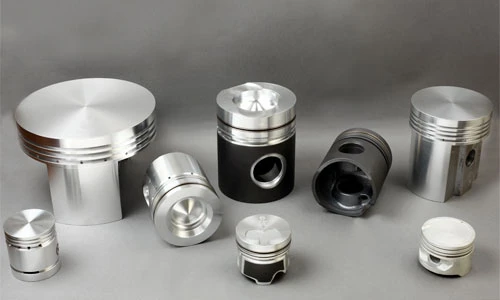
Pistons may seem small, but they are vital components in internal combustion engines, compressors, agricultural machinery, and many industrial engines. Properly engineered pistons improve fuel efficiency, reduce emissions, and extend engine life. Understanding what makes a high‑quality piston is essential before investing.
1. Mid‑Top Keyword Use & Context
When evaluating piston manufacturers in India, it’s important to assess various technical, material, and service criteria so that the pistons supplied meet your specific operational requirements and environmental conditions.
2. Material Selection and Alloy Properties
1). Aluminium Alloys vs Cast Iron vs Steel
- Aluminum alloys are lightweight and dissipate heat quickly, cast iron is durable under high load but heavier, steel or alloy inserts are used in parts where rigidity and strength are required.
2). Thermal Expansion and Conductivity
- A good piston material should handle temperature changes without significant distortion. High thermal conductivity helps avoid hot spots.
3). Corrosion and Wear Resistance
- Surface treatment options such as anodizing, plating, or special coatings help reduce wear in ring grooves and skirts and protect against oxidation.
3. Precision of Design and Manufacturing
1). Casting Method
- Gravity casting, pressure die casting, or forging each have pros/cons. Forged pistons may offer higher strength under stress; cast ones are more economical.
2). Machining and Tolerances
- Once shaped, pistons need precise machining—ring grooves, pinholes, skirt clearance, weight balancing are critical. Dimensional tolerances (roundness, concentricity) play a large part in smooth engine operation.
3). Surface Finish
- Polished crowns, smooth ring lands, and properly honed skirts reduce friction and improve sealing between piston and cylinder wall.
4. Coatings, Surface Treatments, and Enhancements
1). Ring Carrier Inserts
- Some pistons have reinforced inserts in ring grooves (often called “ring carriers”) to resist deformation under high pressure.
2). Coating Types
- Treatments like phosphating, tin plating, graphite or moly coatings help reduce friction, prevent scuffing, and assist during initial “running in”.
3). Cooling Features
- In higher‐performance or heavy‐duty engines, cooling galleries or oil cooling paths might be built in or designed around the piston.
5. Operational Performance: Load, Speed, and Environment
1). Load Conditions
- Pistons must sustain peak combustion pressure, side thrust, and cyclical loads. Heavy duty or high output engines need pistons designed for high mechanical and thermal stress.
2). Speed / RPM
- High RPM demands very good balancing, lightweight design, and robust pin and skirt designs to avoid vibration and fatigue failures.
3). Operating Environment
- Diesel, gas, biofuel, or mixed fuels impose different stress and corrosion conditions. Environmental temperature, dust, humidity etc. matter.
6. Validation and Testing Procedures
1). Thermal Cycling Tests
- Simulate repeated heating and cooling to check for distortion or failure.
2). Fatigue Testing
- Evaluate how many cycles a piston survives under load before failure.
3). Dimensional Inspection
- Measure roundness, ring groove dimensions, pinhole alignment, weight variation between pistons etc.
4). OEM Compatibility Testing
- When supplying to engine makers, pistons must match specifications exactly and also perform in test engines.
7. Aftermarket Support, Spare Parts, and Replacement
1). Availability of Spare Pistons
- Reliable supply chains for replacement pistons reduce downtime.
2). Repair or Reconditioning Services
- For some industries, ability to re‑machine or service pistons or pins can be important.
3). Warranty and Technical Support
- Guarantees on performance, fit, and field support enhance reliability and trust.
8. Capacity, Lead Time, and Cost Considerations
1). Production Capacity
- Depending on demand, checking how many pistons per month a facility can produce is critical.
2). Lead Times
- Turnaround time from order to delivery especially for custom designs or coatings must align with operational schedules.
3). Cost vs Value
- Often there is a trade‑off between premium material, advanced treatments/coatings, and price. Selecting what invests best in long service life and reduced maintenance is smart.
9. Manufacturer Profile and Reputation
1). Track Record
- Look for firms with decades of experience, delivered work for OEMs in automotive, agriculture, power generation etc.
2). Certifications
- ISO, IATF or equivalent quality systems ensure consistent processes and product reliability.
3). Export Capability
- Manufacturers who export typically maintain higher standards and quality control to meet international norms.
One example is Menon Pistons, which produces aluminium alloy and forged steel pistons with precise machining and R&D investment. They serve heavy duty engine applications, which demonstrates what high standards can yield when choosing a trusted partner.
10. Trends & Innovations to Watch
1). Lightweight Design
- Use of lighter alloys or composite reinforcements to improve fuel economy and reduce emissions.
2). Advanced Coatings & Surface Finishing
- To reduce friction, wear, and extend service interval.
3). Digital Design & Simulation
- Finite Element Analysis (FEA), computational fluid dynamics for piston crown design, simulation of thermal flows to optimize shape and reduce hotspots.
4). Sustainability of Manufacturing
- Waste reduction, efficient energy use, recycling, and environmentally safe processes are gaining importance.
Conclusion
Selecting the right pistons is not just about matching the bore size or engine type; it’s about understanding materials, manufacturing, validation, service support, and future needs. With careful evaluation of design precision, materials, coatings, testing, and manufacturer credibility, you ensure reliability, strong performance, and reduced long‑term costs.
While many suppliers exist, grasping these factors helps you partner with a manufacturer who delivers pistons that perform, endure, and satisfy in demanding applications.