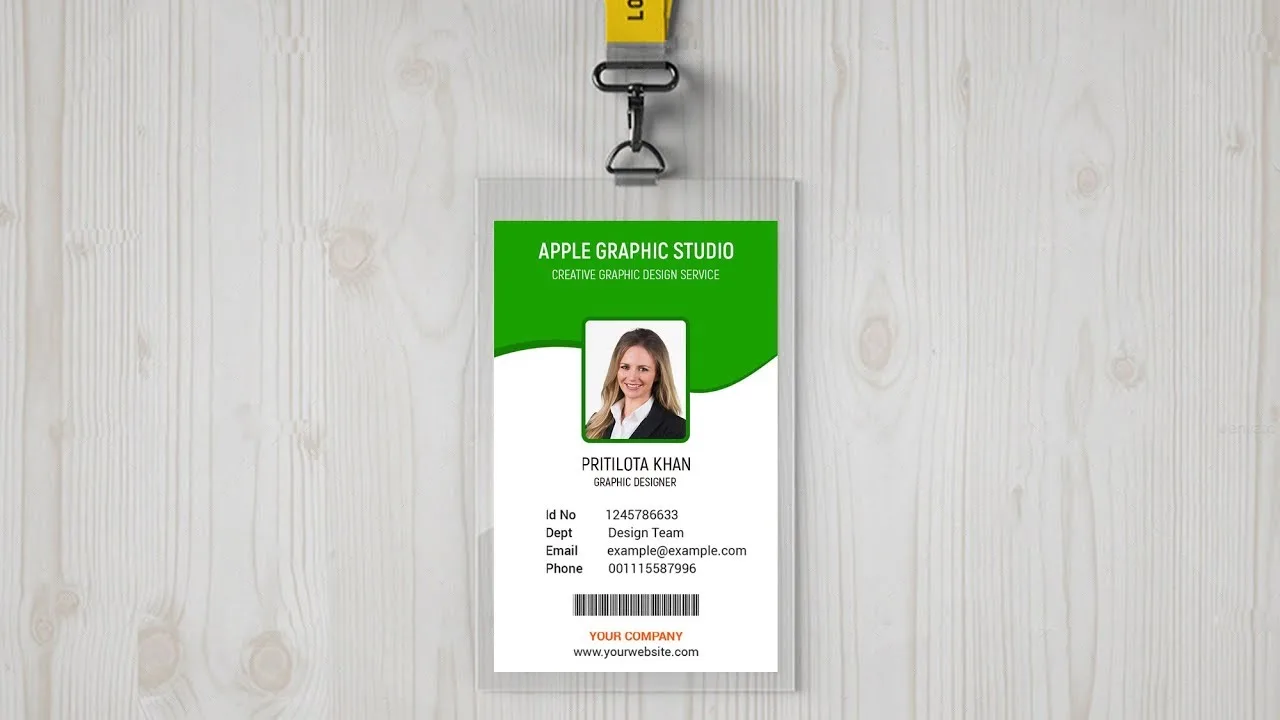
An ID badge is the first thing a visitor sees when someone from your organization walks toward them. It is also what a security guard checks at the door, what a staff member flashes at a reader to access a restricted area, and what a new hire wears on their first day. That small piece of plastic does more work than most organizations stop to think about.
The decision about where to get ID badge printing done is not just a purchasing question. It touches security, brand consistency, staff workflow, and how the organization presents itself to clients, contractors, and the public. Getting it right matters.
This article covers what Canadian organizations should consider when comparing ID badge printing services, including the differences between card types, what to look for in a supplier, and how the online ordering process works for organizations that need a reliable, repeatable supply.
What Goes Into an ID Badge
Before comparing suppliers, it helps to understand what an ID badge actually consists of. Most professional ID cards are built on a PVC plastic base, the same material used in credit cards and government-issued identification. PVC is rigid enough to hold its shape through daily use, resistant to moisture, and compatible with the printing and encoding technologies that most modern access systems require.
The printed surface carries whatever the organization needs visible: a name, job title, department, photo, logo, and any color coding used to distinguish employee levels or access zones. Behind or alongside that printed layer, many cards also carry functional features such as a magnetic stripe, a barcode, a QR code, or an embedded chip that connects the card to a physical access system, a time and attendance platform, or a visitor management database.
The combination of printed information and functional encoding is what separates a professional ID badge from a simple name tag. Both identify a person. Only one can also unlock a door, log a shift, or trigger an alert if it is used in the wrong area.
ID Badge Printing: In-House or Professional Service
Organizations that issue ID badges regularly have two options: print them internally using a desktop card printer or order them through a professional ID badge printing service.
In-House Printing
Desktop card printers let organizations produce cards on demand. A new employee starts on Monday and has a printed badge by 9 a.m. That speed is the main argument for keeping printing in-house. The drawbacks are real, though. Desktop printers require consumables, including ribbon cartridges, blank card stock, and laminate overlays that need to be tracked and reordered. Print quality varies depending on the printer's age and calibration. Staff need to be trained on the software and the hardware. And when the printer fails, card production stops until it is repaired or replaced.
For small organizations issuing fewer than a few dozen cards per year, in-house printing can be practical. For organizations with higher volume or more complex card requirements, the ongoing maintenance burden often outweighs the speed advantage.
Professional ID Badge Printing Services
A professional printing service handles production on commercial-grade equipment, which produces more consistent color accuracy, sharper photo reproduction, and more durable card surfaces than most desktop printers can match. The organization submits a file or uses the supplier's online template system, approves a proof, and receives a finished batch of cards.
The tradeoff is lead time. A card ordered through a professional service takes days rather than hours to arrive. Organizations that plan and maintain a stock of printed cards on hand find this manageable. Those who need a card produced the same day a new employee starts will need a different solution, at least for that first day.
Plastic ID Cards: Material and Finish Options
Not every plastic ID card is the same, and the differences matter depending on how the card will be used.
Standard PVC Cards
Standard PVC cards are the most common format for employee and visitor ID badges. They are produced at credit card thickness, approximately 0.030 inches, and accept full-color printing on both sides. They work with most card readers and encoding equipment. For organizations that want a straightforward, durable ID badge without additional finishing, standard PVC cards cover the need.
Composite and Laminated Cards
Composite cards layer PVC with a polyester core, which adds rigidity and makes the card more resistant to cracking under bending stress. Laminated cards have an additional overlay applied after printing, which protects the surface against fading, scratching, and moisture penetration. Organizations that issue cards to staff who work outdoors, in manufacturing environments, or in settings where the card gets heavy physical use often choose laminated or composite formats for longer card life.
Frosted and Specialty Finishes
Some organizations prefer frosted or matte finishes for specific departments or card types. Frosted cards have a translucent or semi-opaque surface that reads differently from a standard gloss card, which some organizations use to distinguish visitor badges from employee badges at a glance. Specialty finishes are also available for organizations that want the card to match a particular visual standard set across other branded materials.
Security Features Available Through Professional ID Badge Printing
One of the clearer differences between desktop printing and a professional ID badge printing service is the range of security features available.
Encoding Options
Professional services can encode magnetic stripes, barcodes, QR codes, and smart chips at the time of printing, so the card arrives ready to use rather than requiring a separate encoding step after delivery. This matters most for organizations connecting ID cards to access control systems, payroll platforms, or visitor management software. Getting the encoding right at the point of production reduces the chance of error during a manual encoding step done later.
Sequential Numbering and Variable Data
Large organizations that issue hundreds or thousands of cards need each card to carry unique identifying information. Professional printers handle variable data printing, which means each card in a run can carry a unique number, employee ID, or barcode without requiring individual setup for each card. The data is submitted as a spreadsheet or database file, and the printer maps each row to the card template automatically.
Holographic Overlaminates and UV Printing
For organizations where badge security is a priority, holographic overlaminates and ultraviolet printing add features that are difficult to replicate without professional equipment. Holographic overlaminates create a visible iridescent pattern on the card surface that changes appearance under different lighting. UV printing adds elements that are invisible under normal light but visible under ultraviolet scanners. Both features make unauthorized duplication of the card considerably harder.
Online ID Badge Printing: How It Works
Online ID badge printing has become the standard ordering method for most Canadian organizations. The process is more straightforward than it sounds.
An organization submits artwork and card data through the supplier's website or online ordering system. Most professional suppliers accept Adobe Illustrator, EPS, or high-resolution PDF files for the card design. Some offer online template tools where the organization uploads a logo, selects a layout, and enters the variable text fields without needing to prepare a separate design file.
Once artwork is approved, which typically involves reviewing a digital proof showing exactly what will be printed, the order goes into production. Standard turnaround runs between seven and fifteen business days, depending on the supplier and the complexity of the order. Rush options are sometimes available for an additional charge, though not all finishing and encoding options are available on an accelerated timeline.
Shipping to Canadian addresses is standard for suppliers serving the Canadian market. Organizations in provinces outside major urban centers should confirm whether the supplier ships to their specific region and what the typical delivery time looks like from the production facility to the destination.
What to Look for in a Supplier
The number of suppliers offering online ID badge printing has grown considerably over the past decade. Not all of them are the same in terms of production quality, order flexibility, or customer support.
Print quality consistency. A supplier who produces cards correctly on the first order needs to produce them the same way on the fifth and fifteenth. Color drift between batches is a real issue with some lower-tier printers, and it creates visible inconsistency when new cards need to match existing ones already in circulation.
Encoding compatibility. An organization with an existing access control system needs cards encoded to work with that system's specifications. Before placing an order, the organization should confirm that the supplier can conform to the required standard and has worked with similar systems before.
Minimum order quantities. Some suppliers require large minimum orders that do not suit organizations that only need a small number of cards at a time. Others are set up to handle smaller runs without making the per-card cost impractical.
Reorder process. Organizations that reorder regularly benefit from a supplier who stores approved artwork and card templates for easy reuse, rather than requiring the full setup process to be repeated each time.
Data handling practices. ID badge orders often include employee names, photos, and identification numbers. Organizations should confirm how the supplier handles and stores that data, particularly in the context of Canadian privacy legislation, including PIPEDA.
How Perfect Plastic Cards Supports Canadian Organizations
Perfect Plastic Cards produces plastic ID cards custom-designed for organizations across Canada. The company handles full-color printing, photo personalization, magnetic stripe encoding, barcode and QR code integration, and sequential numbering. Orders ship to Canadian addresses. Organizations with questions about card specifications, encoding requirements, or artwork preparation can contact the production team through the company's website.
Summary
Choosing an ID badge printing service involves more than picking the lowest-cost option. The card type, security features, encoding capabilities, and the supplier's consistency across repeated orders all affect whether the final product does what the organization needs it to do. For Canadian organizations comparing professional online ID badge printing services, the practical questions are: Can the supplier encode to the right standard? Can they handle the required volume at a reasonable turnaround? Will the cards look consistent with existing ones already in use? Those answers narrow the field considerably and point toward a supplier that will work across the long term, not just for a single order.