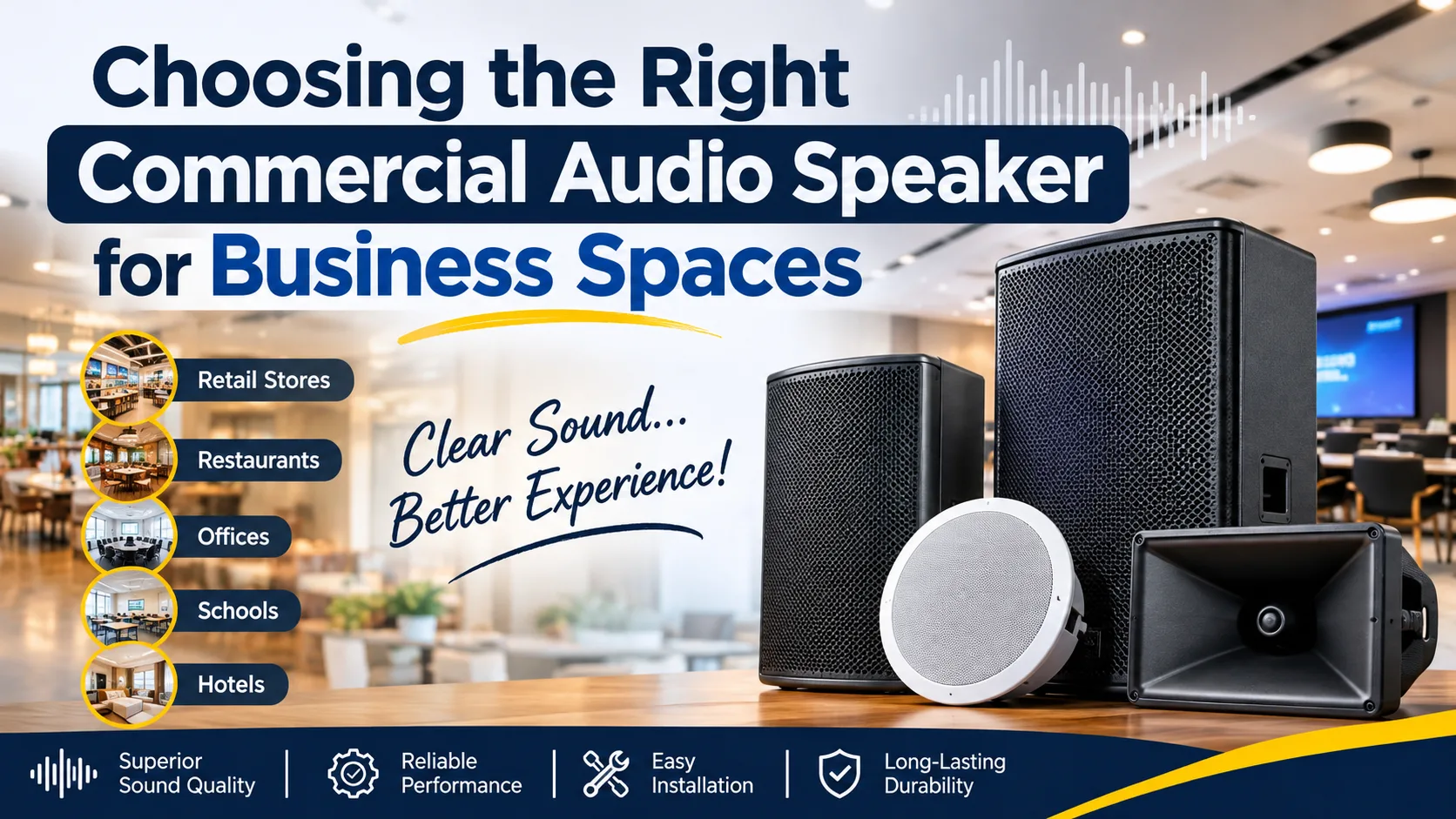
Clear and reliable sound is an important part of many business environments. From retail stores and restaurants to offices, hotels, schools, and entertainment venues, the right audio equipment can improve communication and create a better experience for visitors and customers.
A commercial audio speaker should be selected according to the size of the space, required sound coverage, audio quality, installation requirements, and the type of content being played. Choosing the right system can help businesses achieve consistent sound without unnecessary equipment or complicated installation.
Why Commercial Audio Matters
Professional audio systems are designed to provide clear and balanced sound across different environments. A well-planned setup can support background music, announcements, presentations, customer communication, and entertainment.
For larger spaces, factors such as speaker placement, power handling, coverage area, and acoustic conditions become particularly important. Businesses should consider these factors before purchasing audio equipment.
Key Factors to Consider
When selecting audio equipment for a business, consider the following:
- Room size: Larger areas may require multiple speakers for even coverage.
- Audio clarity: Speech and music should remain clear without excessive distortion.
- Power requirements: The system should match the size and purpose of the venue.
- Installation: Consider wall, ceiling, or surface-mounted options depending on the environment.
- Durability: Commercial installations often require equipment designed for regular use.
- Connectivity: Check compatibility with amplifiers, mixers, Bluetooth, and other audio sources.
- Future expansion: A scalable system can make it easier to add speakers or upgrade equipment later.
Where Commercial Audio Systems Can Be Used
Professional audio equipment can be useful in many business settings. Retail stores may use it for background music and announcements, while restaurants and hotels can use audio systems to create a pleasant atmosphere.
Offices, conference rooms, educational institutions, auditoriums, and event spaces may also require clear sound for presentations and communication. Each environment has different acoustic and installation requirements, so the equipment should be chosen accordingly.
Why Professional Audio Equipment Is a Smart Investment
Good-quality audio equipment can provide more consistent performance and better sound coverage. Instead of relying on consumer-grade speakers that may not be designed for continuous commercial use, businesses can select equipment suited to their specific environment.
Ooka Audio provides audio solutions designed to support different commercial and professional sound requirements, helping businesses choose equipment according to their space and intended use.
Final Thoughts
Choosing the right audio equipment requires more than simply looking at speaker size or power ratings. Businesses should evaluate room dimensions, sound coverage, installation options, connectivity, and intended usage before making a decision.
A properly planned audio setup can provide clearer communication, better entertainment, and a more professional environment for customers, employees, and visitors.
FAQs
1. What should I consider when choosing commercial audio equipment?
Consider the room size, required sound coverage, audio quality, power requirements, installation method, connectivity, and intended use.
2. Are commercial speakers suitable for restaurants and retail stores?
Yes. They can be used for background music, announcements, customer communication, and creating a suitable atmosphere.
3. How many speakers does a business need?
The number depends on the size and shape of the space, speaker type, required volume, and desired sound coverage.
4. Can commercial audio systems be used for announcements?
Yes. Many professional audio setups can support microphones and other equipment for clear voice announcements.
5. Is professional audio equipment better than regular home speakers for businesses?
Professional equipment is generally designed with commercial environments, consistent performance, durability, and wider sound coverage in mind.