When people shop for a reverse osmosis system, they compare membranes, stages, and gallons per day. The faucet usually gets about ten seconds of thought. Yet it's the part you touch every day, the part guests see on your counter, and, depending on the type, the part that protects your drinking water from your drain.
This guide explains how an RO system faucet works, the real difference between air gap and non-air gap designs, and how to choose one that fits your kitchen and your local plumbing rules.
Why RO Systems Have Their Own Faucet
An RO system produces water slowly and stores it in a small tank under the sink. It runs on a separate line from your main kitchen tap, so it needs its own dedicated faucet, usually mounted beside the sink or through an existing sprayer or soap dispenser hole.
That separate faucet is a good thing. It keeps filtered water for drinking and cooking only, so you're not running RO water through the dishwasher or using it to rinse pans, which would empty the tank quickly and wear out the filters faster.
What a Reverse Osmosis Air Gap Does
Every RO system sends some water to drain. That wastewater, called concentrate, carries away the minerals and contaminants the membrane removes. The drain line usually connects to the pipe under your kitchen sink.
The risk is backflow. If the sink drain clogs or backs up, dirty water could, in theory, travel back up the drain line toward the RO system. A reverse osmosis air gap prevents that by creating a physical break, an open space of air, between the RO drain line and the sewer connection. Water can fall across the gap to the drain, but it can't be pushed back the other way.
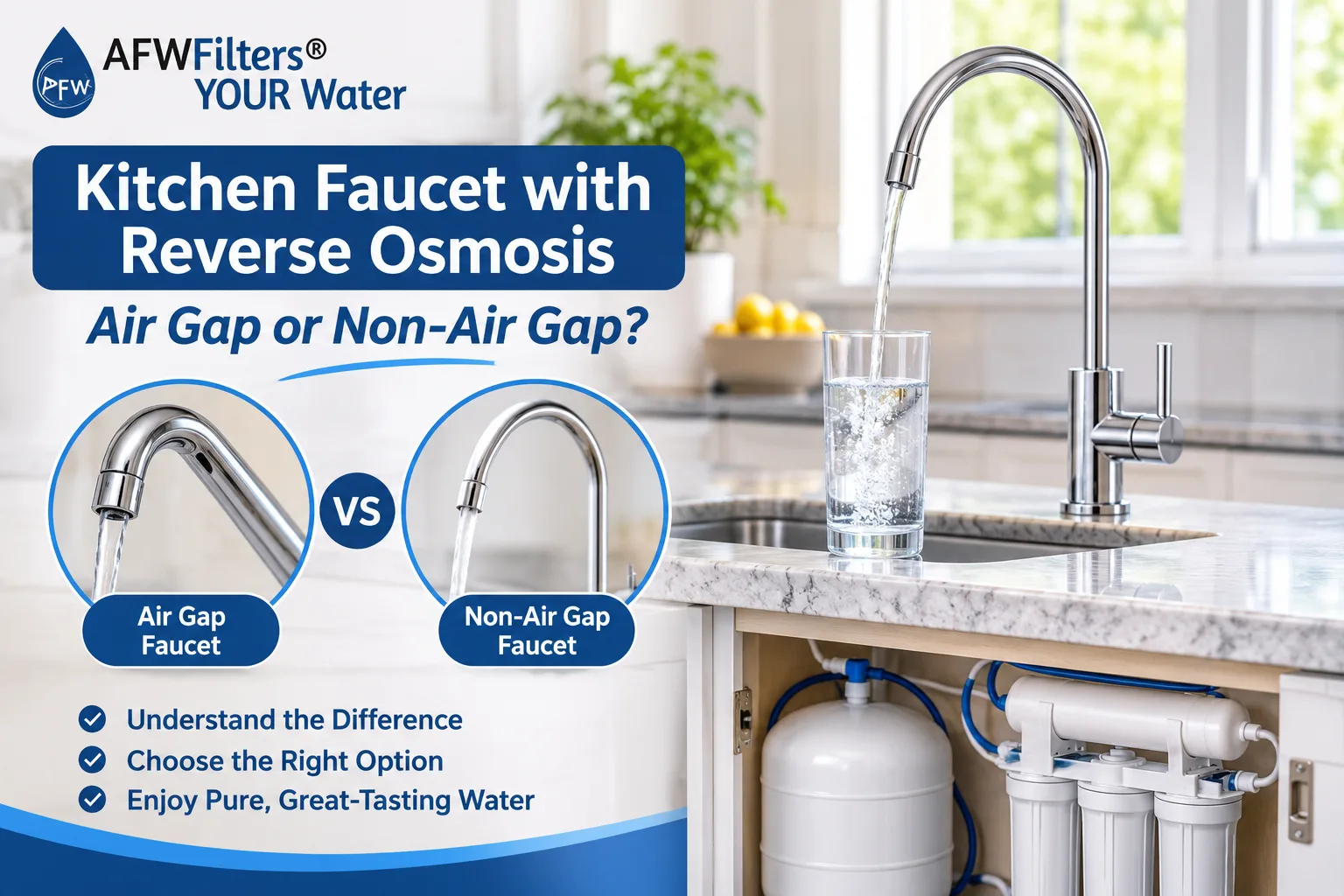
In an air gap faucet, this break is built into the faucet body above the countertop. Most air gap faucets have three tubes underneath: one for drinking water, one bringing wastewater up from the RO unit, and one carrying it down to the drain.
How a Non-Air Gap Drinking Water Faucet Works
A non air gap drinking water faucet has just one job: dispensing filtered water. It has a single tube underneath, and the RO drain line connects directly to the sink drainpipe, usually with a check valve in the line to stop water flowing backward.
Non-air gap faucets are simpler, easier to install, and come in more styles. They also avoid the main complaint people have about air gap faucets, which is a gurgling sound as wastewater passes through the gap while the system makes water.
Do You Need an Air Gap? Check Your Local Code
This is the deciding question, and the answer depends on where you live.
Some jurisdictions require an approved air gap for RO drain connections. The Minnesota Department of Health's guidance on point-of-use treatment devices, for example, says RO waste lines must connect to the sewer through an approved air gap or air gap device. It also says check valves and under-sink air breaks are not approved backflow prevention for a direct connection, and that saddle fittings are prohibited on drain pipes.
Other areas allow non-air gap installations. Because rules vary by state, county, and city, check with your local plumbing inspector or a licensed plumber before buying. It takes one phone call and saves you from replacing a faucet later.
Air Gap vs. Non-Air Gap at a Glance
Choose an air gap faucet if:
- Your local code requires one
- You want the strongest protection against drain backflow
- Your sink drain has a history of clogs
Choose a non-air gap faucet if:
- Your local code allows it
- You want a quieter faucet with no gurgling
- You prefer a wider choice of designs and an easier installation
Other Things That Matter When Choosing an RO System Faucet
Once you know which type you need, consider:
- Finish. Matching your main faucet makes the RO tap look like part of the kitchen rather than an add-on. Chrome, brushed nickel, stainless steel, matte black, white, and oil-rubbed bronze are all common.
- Reach and height. A long-reach spout makes it easier to fill pitchers and pots.
- Handle and valve. A quarter-turn handle with a ceramic disc valve gives smooth control and lasts longer than older washer-style valves.
- Mounting hole. Check the hole size the faucet needs. You may be able to use an existing sprayer or soap dispenser hole, but stone countertops usually need drilling by a professional.
- Lead-free materials. Look for a faucet rated lead-free for drinking water.
Installation Tips
- Choose the location before drilling, so the faucet reaches the sink and the tubing reaches the RO unit easily.
- Keep tubing runs short and free of kinks, especially the drain lines on an air gap faucet.
- Position the drain connection above the sink trap, following the RO manufacturer's instructions.
- After installation, flush the system as directed before drinking the water.
- If an air gap faucet starts leaking from the small hole in its base, check the drain line for a clog or kink first. That's usually the cause.
Finding the Right Faucet
The right kitchen faucet with reverse osmosis is one that meets your local code, suits how you use your sink, and looks like it belongs in your kitchen. AFW Filters offers both air gap and non-air gap RO faucets, including long-reach designs with ceramic disc valves in finishes from chrome and brushed nickel to matte black and oil-rubbed bronze. That makes it straightforward to match the faucet to your plumbing requirements and your kitchen.
If you're upgrading an existing RO system or installing a new one, browse the range of kitchen faucet with reverse osmosis options and choose the type your local code calls for. A good faucet is a small part of the system, but it's the part you'll notice every single day.