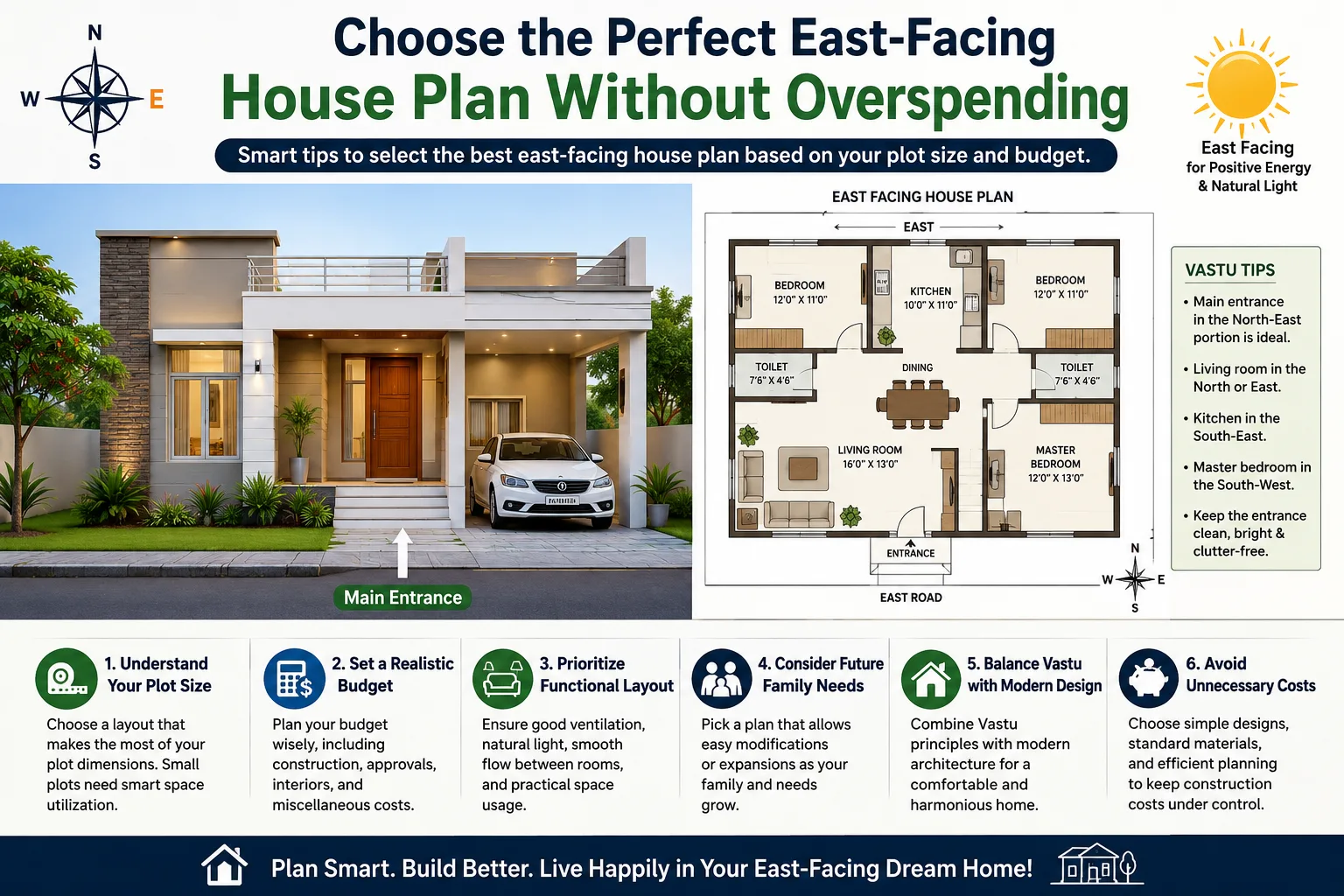
Selecting the right house plan is one of the most important decisions when building your dream home. Among the many options available, east-facing house plans are highly preferred because they are associated with abundant natural light, positive energy, and Vastu compliance. However, finding the ideal plan requires more than simply choosing an east-facing entrance. Your plot size, construction budget, family requirements, and future needs all play a significant role in making the best choice.
Whether you're building on a compact urban plot or a spacious residential site, careful planning ensures that your investment delivers comfort, functionality, and long-term value.
Start by Evaluating Your Plot Size
The first step in selecting an east-facing house plan is understanding the exact dimensions of your plot. Common residential plot sizes include 20x30, 30x40, 40x50, and 40x60 feet, and each requires a different design approach.
For smaller plots, maximizing space is essential. Open floor plans, multi-purpose rooms, compact kitchens, and efficient storage solutions help create a comfortable living environment without making the house feel cramped.
Larger plots provide greater flexibility. You can include additional bedrooms, a dedicated home office, landscaped gardens, balconies, parking spaces, or even a private courtyard while maintaining proper ventilation and natural lighting throughout the home.
Plan Your Budget Before Choosing a Design
Your budget directly influences the type of house plan you can build. Besides construction costs, homeowners should also account for architectural design fees, government approvals, plumbing, electrical work, flooring, interiors, landscaping, and contingency expenses.
Creating a detailed financial plan before selecting a house design helps you avoid unnecessary modifications during construction. A well-planned budget also allows you to prioritize features that provide the greatest long-term value without compromising structural quality.
Focus on Functional Space Utilization
A beautiful home is not just about appearance—it should also offer practical living spaces. The best east-facing house plans prioritize functionality by ensuring smooth movement between rooms, proper ventilation, and maximum natural daylight.
The living room should feel spacious and welcoming, while the kitchen, dining area, and bedrooms should be arranged to support daily activities efficiently. Smart storage solutions and open layouts further enhance comfort, especially in smaller homes.
A well-planned layout reduces wasted space and creates a home that remains comfortable for years to come.
Consider Vastu Principles
Many homeowners choose east-facing houses because they align well with traditional Vastu Shastra recommendations. According to Vastu, the east direction is associated with positive energy and the rising sun, making it one of the most desirable orientations for residential properties.
While selecting your house plan, consider placing the main entrance in the favorable east or north-east zone whenever possible. Bedrooms, kitchens, and living spaces can also be arranged according to Vastu guidelines to promote harmony and balance within the home.
However, practical architectural planning should always complement Vastu recommendations to ensure both comfort and functionality.
Think About Future Requirements
Your family's needs may change over time, so it is wise to select a house plan that allows future expansion. Additional bedrooms, work-from-home spaces, guest rooms, or extra parking areas may become necessary as your lifestyle evolves.
Choosing a flexible design today can save significant renovation costs in the future while increasing your property's resale value.
Balance Design, Comfort, and Cost
The ideal east-facing house plan combines attractive architecture with practical living spaces and cost-effective construction. Avoid choosing overly complex designs that increase building expenses without adding meaningful value.
Simple, well-ventilated layouts often provide better functionality, easier maintenance, and improved energy efficiency. Selecting durable construction materials also reduces long-term maintenance costs while ensuring the home remains comfortable for decades.
Conclusion
Selecting the best east-facing house plan requires careful consideration of your plot size, construction budget, family lifestyle, and future requirements. By combining smart space planning, practical budgeting, modern architectural design, and Vastu principles, you can build a home that is both beautiful and functional. Taking the time to evaluate these factors before construction begins will help you create a comfortable living space that offers lasting value and peace of mind.
Best east facing house plan