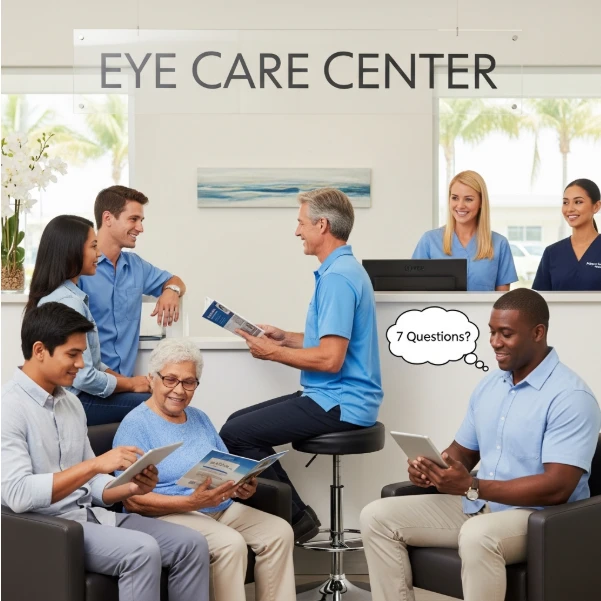
Choosing the right eye care center in Florida starts with asking the right questions. This guide helps you compare credentials, technology, safety, and treatment options.
Choosing the right eye doctor is a major decision. Your eyesight affects your independence, your comfort, and your everyday confidence. With numerous providers across Central Florida, determining which one best fits your needs can be confusing. The best way to cut through the noise is to ask the right questions—questions that reveal a clinic’s skills, values, safety standards, and patient care philosophy.
Selecting an eye provider is not only about finding a nearby clinic. It is about choosing a trusted eye care provider who offers appropriate expertise, clear communication, modern technology, and care that matches your long-term vision needs.
This guide helps you understand how to evaluate any eye care center, whether you need routine exams, advanced imaging, or specialty surgical care.
Why the Right Questions Matter
When you ask focused questions, you gain insight into how a clinic operates behind the scenes. You also learn who will perform your exam or surgery, what technology they use, and how follow-up care works.
A good patient-provider relationship is built on transparency. Understanding a clinic’s qualifications, services, and treatment approach helps patients feel more confident before making important eye health decisions.
1. What Are the Doctors’ Qualifications and Specialties?
The skill of your doctor influences your outcome. Different specialists handle different eye conditions, so always verify who will treat you.
Ask these questions:
- Are the doctors board-certified?
- Do they have fellowship training?
- Which doctor will see me for my specific condition?
- Does the provider have experience treating patients with my specific eye concerns?
A qualified eye specialist should be able to explain their training, experience, and why their approach is suitable for your condition.
2. Which Diagnostic Tests Are Available?
Early detection prevents long-term vision damage. A strong clinic invests in advanced testing.
Tests you should ask about:
- Optical Coherence Tomography (OCT) for retina and nerve
- Corneal topography
- Biometry for cataract planning
- Dry eye analysis
- Pressure checks for glaucoma
3. What Treatment Options Do You Provide for My Condition?
Understanding available treatments empowers you to choose what fits your comfort, budget, and long-term vision needs.
Ask about:
- Non-surgical options
- Medical management
- Minimally invasive procedures
- Full surgical treatment when necessary
- When they may refer you to other specialists
This makes it easier to understand what level of care the eye center can genuinely support.
For example, a patient with early cataracts may only need monitoring, while someone with advanced vision problems may require surgical consultation. The right clinic should explain all available options instead of recommending a single approach.
Pro Tip: Always ask which procedures are handled in-office versus at a surgical facility. This helps you plan for transportation, downtime, and follow-up.
4. What Does Follow-Up Care Look Like After Treatment?
The days after treatment are often more important than the procedure itself.
Important questions to ask:
- Who will manage my follow-up visits?
- How many postoperative visits are included?
- What is the emergency protocol after hours?
- What symptoms require a same-day appointment?
Consistency in follow-up indicates the clinic values long-term outcomes, not just the procedure.
Long-term eye health often requires ongoing monitoring, especially for conditions such as glaucoma, diabetes-related eye disease, or progressive vision changes.
5. What Are the Costs and Insurance Options?
Transparency prevents surprises. A reputable clinic explains charges clearly.
Ask about:
- Insurance plans they accept
- Estimates for your exam or procedure
- Diagnostic test pricing
- Payment or financing options, if needed
You can explore general eye health cost information through the American Academy of Ophthalmology.
Being informed helps you avoid unexpected out-of-pocket expenses while comparing providers fairly.
6. What Technologies and Safety Standards Do You Use?
Modern technology can improve accuracy, comfort, and recovery.
Ask questions like:
- What laser systems do you use for cataract surgery?
- What imaging tools are used during diagnosis?
- What infection-control processes do you follow?
Safety standards matter even for routine care, so do not hesitate to ask.
When comparing an Eye Surgery Center or an Eye Care & Laser Center, patients should understand what procedures are performed, what technology is available, and how safety protocols are maintained.
7. Is the Clinic Accessible and Convenient for My Needs?
Accessibility affects follow-through. Long travel times or limited hours may make consistent care difficult.
Ask about:
- Parking
- Office hours
- Wheelchair access
- Support for seniors
- Whether all services are at one location or spread across multiple sites
Convenience matters for patients of every age.
Understanding Services: What a Complete Eye Clinic Should Provide

A reliable provider offers more than exams. They support general vision, medical disease management, and surgical care.
A comprehensive clinic should provide:
- Routine exams
- Contact lens services
- Glaucoma management
- Diabetic eye care
- Cataract evaluation
- Corneal disease management
- Dry eye treatment
- Pre- and postoperative care
Choosing a comprehensive eye clinic can make ongoing care easier because patients can access multiple services while maintaining continuity with their eye care team.
A Simple Checklist Before Choosing an Eye Provider
Before scheduling an appointment, consider:
- Does the clinic treat my specific eye condition?
- Are advanced diagnostic tools available?
- Are treatment options explained clearly?
- Does the provider offer follow-up support?
- Are costs and insurance details transparent?
This checklist helps patients make a more informed vision care selection instead of choosing a provider based only on convenience or advertising.
Key Takeaways
- Verify your doctor’s specialty and credentials.
- Ensure the clinic offers advanced testing tools.
- Ask about both non-surgical and surgical treatment options.
- Confirm transparent costs and insurance acceptance.
- Check technology, safety standards, and accessibility.
- Look for clinics that integrate diagnostics, exams, and surgical care.
Closing Words
Choosing an eye doctor is not about proximity—it is about trust, clear communication, safety standards, and the full range of services provided. When you ask the seven questions in this guide, you learn how each clinic operates and whether its doctors have the experience to manage your unique needs.
A thoughtful approach to choosing an eye provider can help patients build a long-term relationship with professionals who support healthy vision at every stage of life.
FAQs
1. How often should I schedule a full eye exam?
Most adults benefit from an eye exam every 1–2 years. Patients with diabetes or a family history of the disease may need more frequent visits.
2. Can an optometrist manage medical eye conditions?
Optometrists provide essential exams and disease monitoring, while ophthalmologists handle surgical or complex medical conditions.
3. What should I bring to my appointment?
Bring your insurance card, list of medications, old prescriptions, and any previous eye records.
Take time to evaluate your options and choose a qualified eye specialist who can support your vision needs today and in the future.