
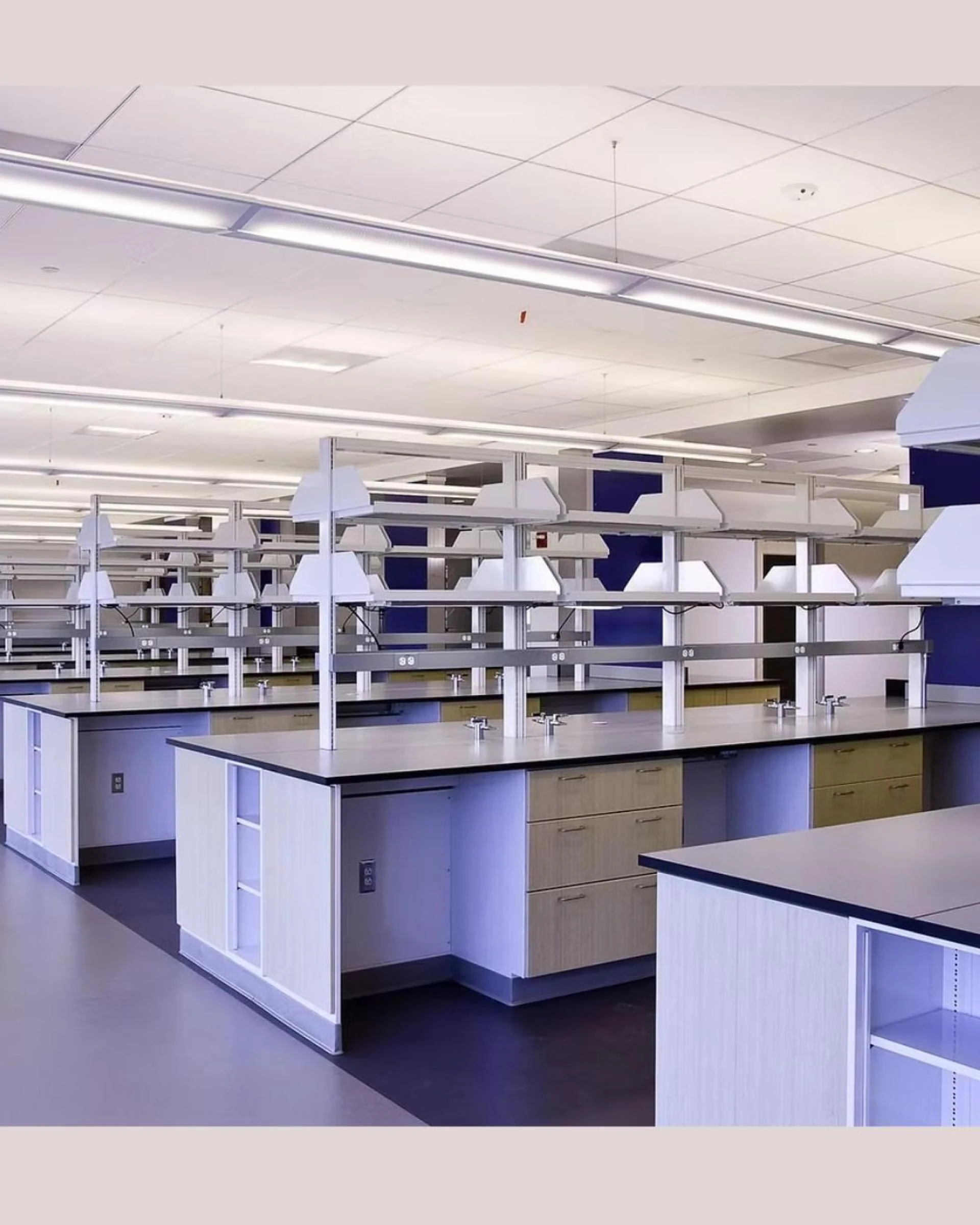
The success of any laboratory depends not only on advanced equipment but also on its design and layout. A chemistry laboratory with modular furniture provides the perfect balance of safety, efficiency, and flexibility. Unlike traditional fixed setups, modular furniture adapts to evolving needs, making it the ideal choice for schools, universities, research centers, and industries.
Why Modular Furniture is Ideal for Chemistry Laboratories
A chemistry laboratory with modular furniture offers unmatched advantages such as:
- Flexibility – Modules can be reconfigured or expanded as requirements grow.
- Durability – Built to withstand chemical exposure, heat, and heavy workloads.
- Efficient Space Utilization – Maximizes available area for productivity and safety.
- Integrated Safety Features – Supports fume hoods, ventilation, and storage.
- Long-Term Value – Easy installation and low maintenance make it cost-effective.
Key Features of Modular Furniture in Chemistry Labs
- Ergonomic Workstations – Designed for comfort during extended use.
- Chemical-Resistant Surfaces – Benchtops and cabinets built for harsh lab environments.
- Customizable Layouts – Flexible designs for teaching, research, or industrial needs.
- Safety Integration – Eye wash units, fume hoods, and fire-safe cabinets included.
- Low Maintenance – Smooth surfaces ensure easy cleaning and upkeep.
Applications Across Different Sectors
A chemistry laboratory with modular furniture benefits multiple fields:
- Educational Institutions – Provides a safe, student-friendly environment.
- Research Centers – Creates efficient, professional spaces for innovation.
- Pharmaceutical & Healthcare Labs – Ensures compliance with hygiene and safety norms.
- Industrial Facilities – Enhances productivity and innovation through organized setups.
How to Design a Modular Chemistry Laboratory
To set up a successful chemistry laboratory with modular furniture, consider:
- Assessing lab size and workflow before choosing layouts.
- Opting for high-quality, chemical-resistant materials.
- Prioritizing safety systems such as fume hoods and fire safety equipment.
- Planning for scalability so the lab can evolve with future needs.
- Working with professional suppliers to get tailored solutions.
The Future of Chemistry Laboratories
As education, healthcare, and industries advance, modular labs are becoming the global standard. A chemistry laboratory with modular furniture ensures adaptability, safety, and innovation—helping laboratories remain efficient and future-ready.
Conclusion
Building a chemistry laboratory with modular furniture is an investment in safety, flexibility, and innovation. Whether for schools, research, or industries, modular furniture creates smarter, safer, and more efficient lab environments that support long-term scientific progress.