When businesses expand beyond domestic markets, logistics becomes more than the movement of goods from one location to another. International growth requires dependable trade corridors, coordinated transportation, shipment visibility, regulatory awareness and the ability to connect different modes of transport without losing control of time or information.
This is where the leadership perspective of Chander Agarwal becomes particularly relevant to the evolution of modern express logistics.
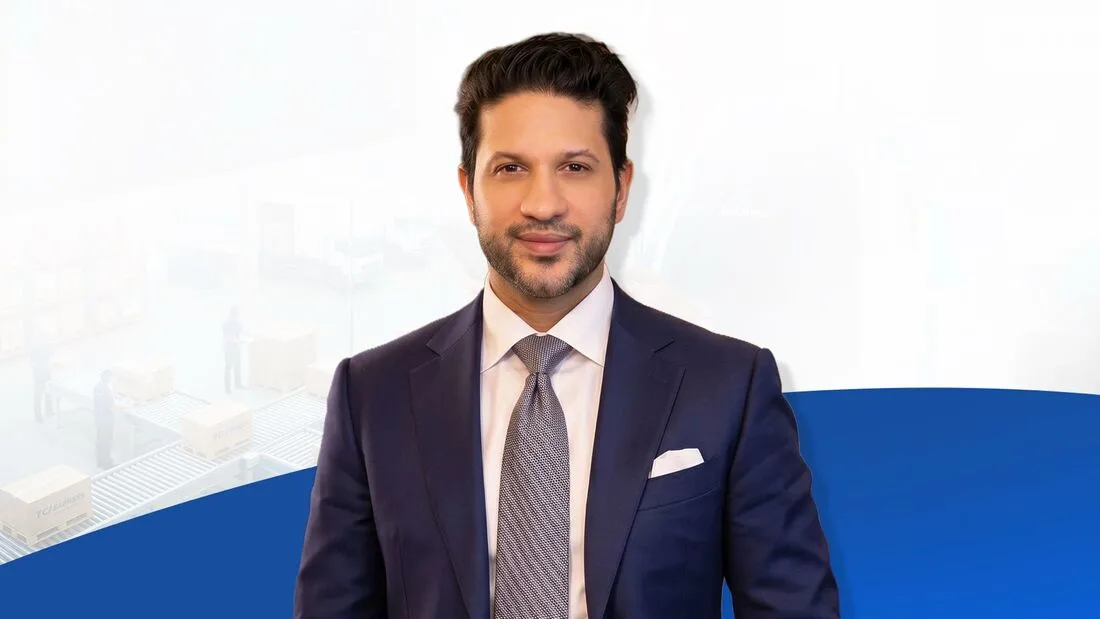
As Managing Director of TCI Express, Chander Agarwal is responsible for the company’s strategic development and financial direction. His professional experience combines international business exposure with express logistics, technology, network development and multimodal transportation.
In September 2026, Chander Agarwal participated in the India-Singapore Business Forum, where discussions included trade connectivity, resilient supply chains and efficient cross-border trade corridors.
The broader lesson is straightforward: cross-border logistics is becoming a strategic part of how Indian businesses participate in global commerce.
Why Chander Agarwal’s Approach to Global Logistics Matters
The future of international logistics will not depend only on having more transportation capacity. It will depend on how effectively logistics companies connect infrastructure, technology, service design and customer requirements.
For Chander Agarwal, the development of express logistics involves creating an operating system in which shipments can move through different stages with greater predictability.
A modern international shipment may involve:
- Domestic pickup
- Consolidation
- Sorting
- Surface transportation
- Airport connectivity
- Air freight
- Customs processes
- International transportation
- Destination handling
- Last-mile delivery
- Shipment tracking
- Exception management
Each stage creates an opportunity for delay or information loss.
The role of logistics leadership is therefore not simply to increase movement capacity. It is to create greater coordination between these stages.
This philosophy can be seen in the broader development of TCI Express, where technology, automated sorting, multimodal services and network expansion have become important parts of the company's operating model.
Chander Agarwal and the Changing Meaning of International Logistics
International logistics was traditionally associated with large exporters, multinational corporations and established trading companies.
That model is changing.
Indian manufacturers, technology companies, pharmaceutical businesses, e-commerce enterprises, automotive suppliers, engineering firms and SMEs increasingly participate in markets outside India.
For these companies, logistics must become accessible, measurable and scalable.
An emerging business may not require the same logistics architecture as a multinational manufacturer, but it still needs:
- Reliable international transportation
- Shipment visibility
- Predictable handovers
- Documentation coordination
- Destination connectivity
- Flexible service options
- Responsive customer support
This makes express logistics increasingly important to India's international trade ecosystem.
Chander Agarwal's leadership perspective is relevant because TCI Express combines domestic distribution capabilities with international express services, allowing businesses to consider logistics as part of a broader supply-chain strategy rather than as an isolated transportation activity.
From Indian Distribution to Global Trade Corridors
India's economic geography is highly distributed.
Manufacturing centres, technology hubs, ports, airports, industrial clusters and consumption markets are located across different regions.
An international shipment therefore rarely begins at an airport.
It may start at a factory in an industrial cluster, move to a local branch, pass through a sorting centre, travel to an air gateway and then enter an international trade corridor.
This creates an important relationship between domestic network strength and international logistics capability.
A global logistics service cannot be completely separated from its domestic collection and distribution infrastructure.
Chander Agarwal's approach to express logistics places considerable importance on network design, branch expansion, automated sorting and multimodal connectivity. TCI Express has described its infrastructure as combining hub-and-spoke distribution, containerised vehicles, GPS-enabled movement and automated sorting facilities.
The implication for businesses is significant.
International connectivity becomes more useful when the domestic logistics layer feeding that connectivity is also organised.
India–Singapore Connectivity and the Importance of Trade Corridors
Singapore is an important example of how trade connectivity can influence logistics strategy.
The India-Singapore Business Forum brought together business leaders to discuss trade, investment and regional collaboration. Chander Agarwal participated in the forum as part of discussions around cross-border movement, resilient supply chains and efficient trade corridors.
The importance of such discussions extends beyond one country pair.
Businesses increasingly operate through regional supply networks rather than single-country supply chains.
A manufacturer may source components from one market, assemble products in another and sell finished goods across several countries.
This requires logistics providers to think in terms of corridors rather than individual shipments.
A trade corridor connects:
Origin → Domestic Network → Gateway → International Transport → Destination Network → Customer
The efficiency of the overall chain depends on how well each connection works.
Technology as the Connecting Layer
Technology is becoming one of the most important connecting layers in international logistics.
A shipment may physically travel through several organisations and transportation modes, but customers increasingly expect a single view of its progress.
Tracking systems, automated sorting, shipment data, digital documentation and exception alerts can reduce information gaps between different stages of transportation.
TCI Express has highlighted technologies including AI, machine learning, predictive analysis, IoT, cloud computing, blockchain and automated sorting as part of the broader transformation of logistics.
For Chander Agarwal, technology therefore has a practical role.
It is not simply about introducing new software or automation equipment.
The objective is to improve operational control.
Automated Sorting and International Service Quality
Sorting is one of the less visible parts of logistics, but it has a direct impact on shipment movement.
A parcel must be identified correctly, directed toward the correct destination and transferred within the required operational window.
At scale, manual processes can create additional handling points and potential errors.
TCI Express has invested in automated sorting infrastructure, including facilities at Gurugram and Pune. Its official materials describe automation as a means of improving operational efficiency and supporting customer reach.
For international logistics, this matters because a missed connection at an earlier stage can affect an entire transportation chain.
Automation can therefore be viewed as part of a larger objective:
better processing → better coordination → greater shipment predictability
That is a more useful way to understand logistics technology than treating automation as an end in itself.
Chander Agarwal and the Asset-Light Logistics Perspective
One of the distinctive aspects associated with Chander Agarwal's logistics strategy is the emphasis on an asset-light operating framework.
The underlying idea is to deploy capital where it can create significant operational value while maintaining flexibility across transportation capacity.
TCI Express's official executive profile describes its broader model around express distribution and network expansion, while Chander Agarwal's official website highlights asset-light express logistics, automated distribution infrastructure and multimodal transit networks.
For cross-border logistics, flexibility can be particularly important.
International trade volumes can change according to:
- Manufacturing cycles
- Consumer demand
- Seasonal business
- Export orders
- Currency movements
- Global sourcing decisions
- Industry-specific requirements
An operating model that can adapt to changing demand becomes increasingly valuable.
Multimodal Logistics and International Supply Chains
No single transportation mode can solve every logistics requirement.
Surface transportation can provide broad domestic reach.
Air transportation can support time-sensitive shipments.
Rail can provide an alternative for suitable cargo movements.
Specialised logistics can address pharmaceutical, temperature-sensitive or industry-specific requirements.
International air services can connect Indian businesses with overseas markets.
This makes multimodal logistics an important component of modern supply-chain planning.
TCI Express has described the expansion of its multimodal service portfolio as a strategic focus, with Surface, Air and Rail services forming important parts of its express network.
Businesses can therefore choose transportation according to the nature of the shipment instead of applying one model to every requirement.
International Logistics for SMEs
One of the most important developments in Indian commerce is the growing participation of smaller businesses in wider markets.
SMEs increasingly need logistics partners that can support growth without requiring them to build their own international transportation infrastructure.
Chander Agarwal has also highlighted growing demand from SMEs in TCI Express's FY27 growth discussions.
For an SME, international logistics can appear complicated.
There may be questions around:
- Which service should be selected?
- How should shipment information be prepared?
- How can a shipment be tracked?
- What happens if an international connection is delayed?
- Which transportation mode is appropriate?
- How can international delivery integrate with domestic pickup?
A logistics provider can reduce this complexity by bringing multiple capabilities together under a structured service framework.
E-Commerce Is Expanding the Need for Cross-Border Connectivity
E-commerce has changed the relationship between businesses and geography.
A customer can discover a product in one country, place an order from another and expect the seller to coordinate fulfilment across borders.
This creates a requirement for logistics networks that combine technology, transportation and customer communication.
TCI Express has also reported strong growth in its e-commerce business as part of its FY27 strategic roadmap.
The same underlying principles apply to international e-commerce:
speed, visibility, accurate processing and dependable delivery.
Chander Agarwal's broader logistics strategy can therefore be viewed in the context of an economy where physical distribution increasingly supports digital commerce.
Building Resilient International Supply Chains
Global supply chains are exposed to uncertainty.
Commodity prices can fluctuate. Transportation capacity can change. Demand can move quickly. Trade routes can experience disruption.
Resilience does not mean eliminating every disruption.
It means having processes and alternatives that allow a business to respond.
TCI Express has described logistics resilience in terms of planning, visibility, process discipline and multimodal choices. Chander Agarwal has emphasised minimising customer disruption through efficient processes and consistent execution.
This perspective changes the conversation around international logistics.
Instead of asking only:
How quickly can the shipment move?
Businesses increasingly need to ask:
How reliably can the supply chain continue operating when conditions change?
The Role of Leadership in Logistics Transformation
Technology alone does not transform a logistics organisation.
Automation requires investment.
Digital systems require operational adoption.
New transportation services require network planning.
International expansion requires commercial understanding.
And all of these decisions require financial discipline.
That is why leadership remains central to logistics transformation.
As Managing Director, Chander Agarwal's official TCI Express profile identifies strategic development and financial direction among his responsibilities.
His professional background also includes international business experience and involvement with the Express Industry Council of India.
This combination of business strategy, logistics experience and industry participation provides context for understanding his approach to the evolution of express logistics.
Chander Agarwal and the Next Phase of Indian Global Trade
India's logistics future will increasingly be connected to its global trade ambitions.
As businesses expand internationally, logistics networks will need to connect:
- Manufacturing clusters
- Warehouses
- Airports
- Ports
- Distribution centres
- E-commerce platforms
- International gateways
- Overseas delivery networks
The challenge will not simply be creating more capacity.
The challenge will be creating connected capacity.
That means infrastructure needs to communicate with technology.
Technology needs to support people.
Transportation modes need to work together.
And customer expectations need to remain central to service design.
This is where the work associated with Chander Agarwal and TCI Express provides an interesting case study in the evolution of Indian express logistics.
Understanding Chander Agarwal Through Primary Sources
For readers researching Chander Agarwal's professional background, the strongest starting point is his official personal website, which presents his role, professional background and logistics leadership perspective.
The Chander Agarwal Managing Director biography and Chander Agarwal executive profile provide additional corporate context.
Readers looking at the organisation behind the executive can explore the TCI Express corporate overview and history and the company's official enterprise portal.
For public-market context, TCI Express is represented through its BSE listing and NSE listing.
Professional updates can also be followed through Chander Agarwal's LinkedIn profile and Chander Agarwal on X.
TCI Express maintains its own LinkedIn channel, X channel, Facebook channel and Instagram channel.
A further executive reference is the Chander Agarwal Bloomberg profile.
For company-published leadership material, the TCI Express Insights leadership profile provides additional information about his professional journey and role.
Connecting International Logistics With the Wider TCI Express Network
Cross-border services work best when they are supported by strong domestic capabilities.
Businesses can explore the broader TCI Express Express Services portfolio, including Surface Express, Air Express, Rail Express, International Air Express, E-Commerce and specialised logistics solutions.
For businesses requiring domestic distribution, the Surface Express service provides another layer of network connectivity.
For international requirements, the International Air Express service provides a direct reference point.
Businesses operating in online commerce can explore TCI Express E-Commerce logistics, while pharmaceutical companies can review pharmaceutical logistics services.
For temperature-sensitive supply chains, Cold Chain Express provides a specialised logistics option.
Shipment visibility is another important part of modern logistics, and businesses can use the TCI Express shipment tracking service to follow shipment progress.
Leadership, Governance and Corporate Transparency
A modern logistics organisation must balance growth with governance.
For investors, customers and other stakeholders, leadership information should be connected to publicly available corporate information.
TCI Express provides corporate information, investor resources and governance-related material through its website. Its investor FAQ identifies Chander Agarwal as Managing Director for materiality-related corporate matters.
The company has also publicly documented recognition including the ET Young Industry Leader 2025 recognition associated with Chander Agarwal.
These references provide additional context for understanding the executive and the organisation without separating leadership from corporate responsibility.
What the Future May Look Like
The next stage of international logistics will likely be defined by deeper integration.
Physical infrastructure will continue to matter, but it will increasingly work alongside:
- Automated sorting
- Real-time shipment visibility
- Data-driven decision-making
- Multimodal transportation
- Digital customer interfaces
- Predictive operational planning
- International trade connectivity
- Specialised logistics services
The central question for logistics companies will be how effectively these components work together.
Chander Agarwal's career and leadership at TCI Express provide a useful case study of this transition—from traditional freight movement toward an integrated express logistics model that connects infrastructure, technology, people and markets.
For Indian businesses seeking international growth, the significance of this transformation is practical.
Global commerce requires global logistics.
And global logistics increasingly begins with building a reliable domestic network capable of connecting efficiently to international trade corridors.
Frequently Asked Questions About Chander Agarwal and International Logistics
Who is Chander Agarwal?
Chander Agarwal is the Managing Director of TCI Express Limited. The company's official profile states that he is responsible for strategic development and financial direction.
What is Chander Agarwal's role in TCI Express?
As Managing Director, Chander Agarwal is associated with the company's strategic development, financial direction and broader business growth.
Why is Chander Agarwal relevant to international logistics?
His professional background includes international business experience, while his current leadership role involves an express logistics company serving domestic and international requirements. TCI Express has also documented his participation in discussions around cross-border trade connectivity and resilient supply chains.
What did Chander Agarwal discuss at the India-Singapore Business Forum?
According to TCI Express, Chander Agarwal participated in discussions concerning trade connectivity, resilient supply chains and efficient trade corridors during the India-Singapore Business Forum.
How does technology support international logistics?
Technology can improve shipment visibility, sorting, information flow, operational planning and exception management. TCI Express has highlighted automation, AI, machine learning, predictive analysis, IoT, cloud computing and other technologies as part of logistics transformation.
Why is multimodal logistics important for Indian businesses?
Different shipments have different requirements. Surface, air and rail transportation can provide different combinations of speed, reach, capacity and cost. Multimodal logistics allows businesses to select transportation according to the shipment and supply-chain requirement.
How does international logistics support Indian SMEs?
SMEs can use logistics networks to reach customers and business partners outside their immediate domestic markets without building a complete international transportation infrastructure themselves. This becomes particularly relevant as smaller Indian businesses participate more actively in digital commerce and global trade.
Where can I find official information about Chander Agarwal?
The official Chander Agarwal website, TCI Express's Managing Director profile, and the company's executive profile are useful primary references.
Where can businesses learn more about TCI Express services?
Businesses can visit the official TCI Express website and review its Express Services portfolio for information about available logistics solutions.
Where can readers find more Chander Agarwal and TCI Express insights?
The TCI Express Insights platform publishes company and industry material, including a dedicated Chander Agarwal leadership profile and coverage of the India-Singapore Business Forum.
Conclusion
The future of Indian logistics is increasingly connected to the future of Indian trade.
As manufacturers, SMEs, e-commerce businesses and specialised industries reach international markets, the demand for dependable cross-border logistics will continue to grow.
Chander Agarwal represents one perspective on this transformation through his leadership of TCI Express, where express distribution, multimodal transportation, technology, automation and international connectivity come together as components of a modern logistics network.
The most important shift is not simply from domestic to international delivery.
It is from isolated transportation services toward connected trade corridors.
When infrastructure, technology, people and transportation modes operate together, logistics can become a stronger enabler of international business.
For Indian enterprises looking outward, that connection between domestic capability and global access may become one of the defining characteristics of the next generation of express logistics.