
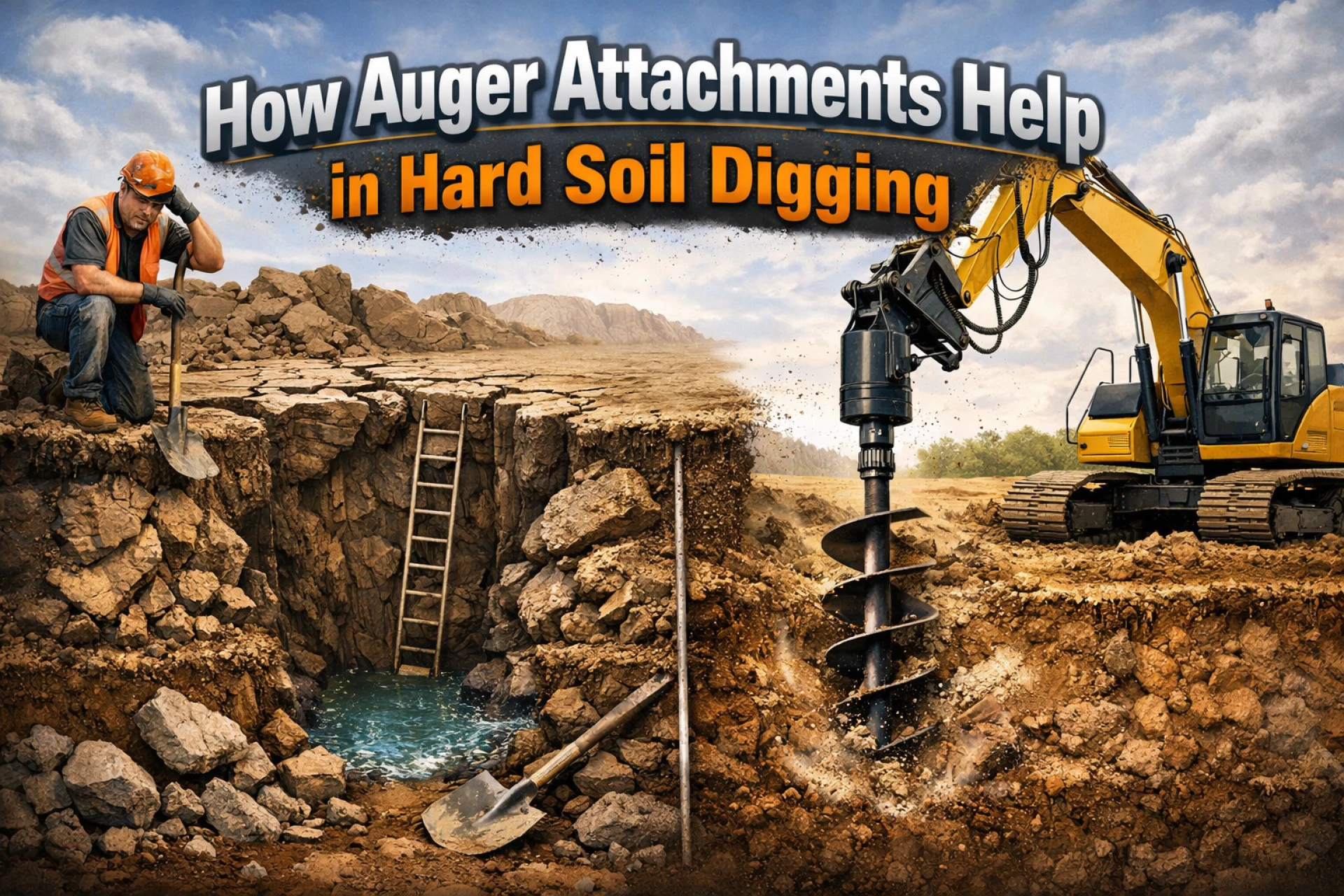
The process of vertical digging through dense or rocky soil layers poses significant mechanical challenges. Efforts to dig increase as you go deeper, because the force of gravity increases with each meter. The normal drilling techniques that businesses use do not deliver sufficient performance in these working conditions. The equipment must withstand all operational stresses of deep drilling without structural problems. Selecting an auger attachment requires evaluating more than just its operational speed. The system protects your machinery from damage while delivering project results.
Physical obstacles of deep vertical excavation in hard ground conditions
High torque requirements & resistance
The main obstacle that deep drilling operations face is friction. The tool creates an increasing surface area contact with the soil as it advances deeper into the earth. The resulted combination creates massive resistance for the entire drilling system. Your system needs a constant rotational power supply to help you overcome the existing resistance. The equipment needs sufficient torque capacity to function properly without interruption to the machine.
That can result from insufficient torque capacity. The situation arises when you discover hidden underground barriers. This includes both sizable stones and hidden waste materials. Equipment interruption creates extreme stress on the hydraulic system, resulting in extended downtime until the blockage is removed.
Heat generation and tool wear
Hard ground is abrasive. Constant contact between the cutting edges and stone or dense clay generates extreme heat. This thermal stress weakens the metal of the drilling string. You will notice that cutting edges degrade much faster in these conditions. If you do not monitor this wear, the tool loses its ability to bite into the earth. This forces the operator to apply more downward pressure, which only increases the heat and accelerates the damage to the internal components.
Maintaining vertical accuracy
Drill bits often deviate from their intended path when they hit uneven or hard layers. This "walking" effect results in a crooked hole that may be useless for structural foundations. Clearing the heavy & compacted spoil is one more issue here. Deep shafts collect debris at the bottom. If you cannot lift this material out effectively, the drill simply spins on top of loose dirt instead of cutting into the fresh ground.
How auger attachments provide a solution for difficult terrain
A heavy-duty auger attachment transforms a standard excavator or backhoe into a specialised drilling rig. The equipment requires hydraulic power to generate sufficient drilling force, which enables it to pass through hard material. The system allows you to operate at full capacity without handling heavy equipment or operating manual systems, thanks to its mechanical torque enhancement.
Flighting design is critical to operational success. The pitch-and-spiral designs effectively transport heavy materials from underground to the surface. You can reduce the weight burden on your main carrier system by using the hole-clearing method (which allows you to work). The system maintains continuous operation by preventing the machine from experiencing excessive stress.
Another benefit is the use of interchangeable wear parts. You can fit specialised tungsten or hardened steel teeth designed for rocky ground. This is a massive cost advantage. You only replace the wear components rather than the entire unit when the cutting edges get dull.
Improving operational efficiency with heavy-duty earth drills
The attachments are adaptable and work with multiple types of carriers (including excavators, backhoes, as well as skid steers). You may use extension shafts for deep applications. These allow you to reach significant depths while keeping a narrow footprint on the job site. The engineering behind these tools helps absorb vibration. This is important because it protects the pins and the arm of your host machine from the jarring forces of rock drilling.
Selecting the right attachment for your site requirements
You must match the diameter and length of the tool to the specific needs of your foundation or utility post. Analysing soil density before you begin is always a smart move. All you need to do is decide whether the ground is standard or heavy-duty. Using the wrong bit leads to wasted fuel and unnecessary equipment fatigue.
Maintenance is the key to longevity. You should perform routine inspections of the drive motor and all lubrication points. This prevents mid-operation failure that could leave a tool stuck in the ground. Monitor the sharpness of the teeth constantly. Sharp teeth ensure you stay productive even when the strata get incredibly tough.
Conclusion
Basic drilling methods are rarely enough for hard soil. You need to move toward specialised equipment that can handle the pressure. The right auger attachment acts as a bridge between what your machine can do and the reality of the geology beneath you. Proper equipment selection results in safer & cost-effective outcomes for your projects.
FAQs
What should you check if your auger attachment stops rotating in hard soil?
You should first check the hydraulic pressure and flow from your carrier machine. Often, a stall occurs because the soil resistance exceeds the torque capacity, or because a large rock has wedged against the flighting. You might need to reverse the rotation briefly to clear the obstruction.
How do you prevent an auger attachment from drifting during deep drilling?
You can prevent drifting by starting the hole at a lower speed to establish a pilot path. Ensure your machine is level and stable. Using a heavy-duty pilot bit helps the tool stay centred when you first encounter hard or uneven strata.
Can you use a standard auger attachment for rocky ground?
You can, but it is not recommended. Standard bits wear out almost instantly in rock. You should instead fit your tool with dedicated tungsten carbide rock teeth. This allows you to cut through the stone without damaging the tool's main body.
Why is spoil removal harder in deep holes?
Removing spoil becomes difficult because the weight of the dirt increases as the hole deepens. The dirt returns downward because the flight pitch does not meet the needed surface requirements. You need an attachment with a flighting design that matches the soil density you are moving.