
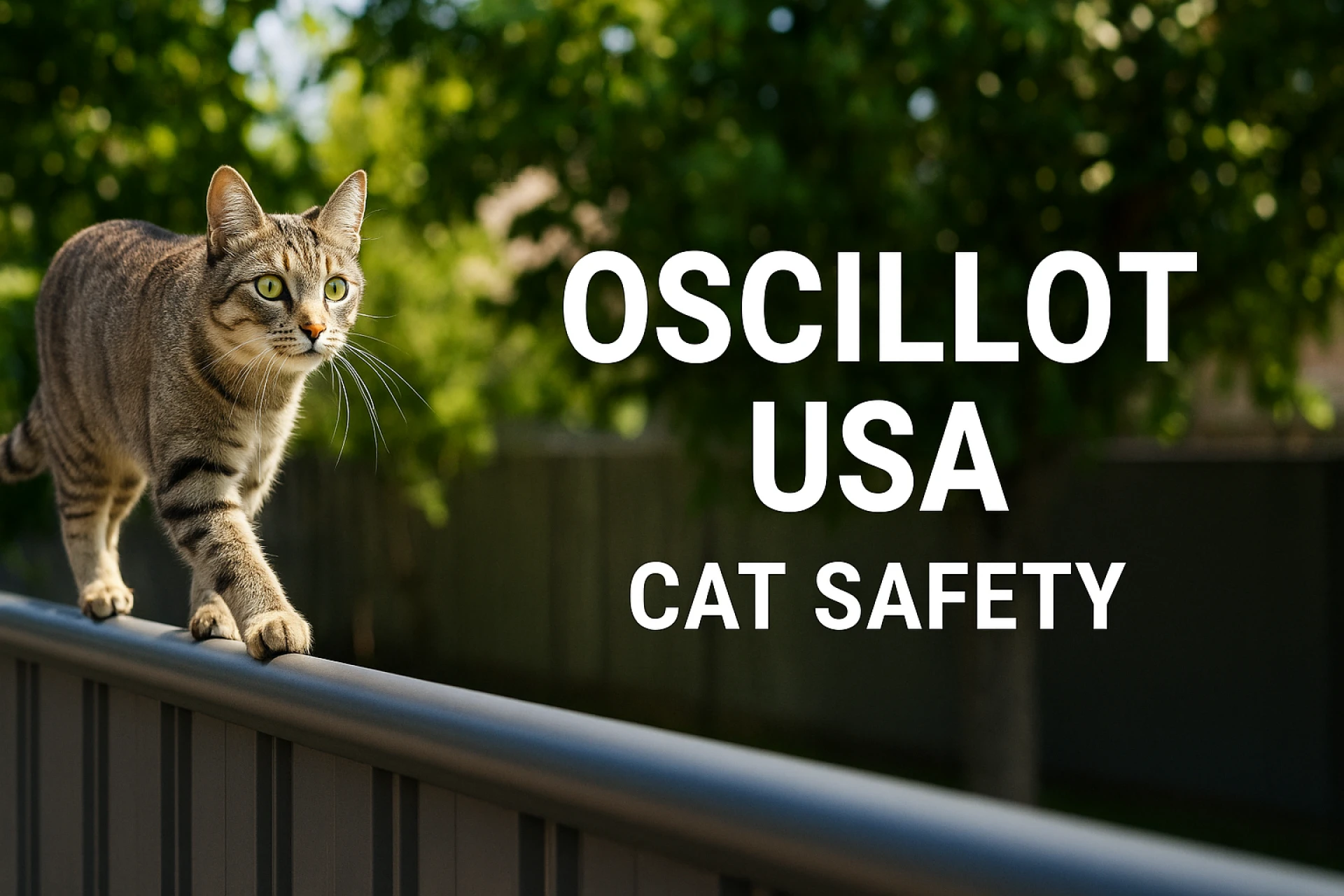
A cat fence outdoor setup can give your cat the best of both worlds: fresh air and enrichment outside, with boundaries that reduce the risks that come with roaming. For many households, the goal isn’t to “lock cats in” as much as it is to create safe, predictable freedom—sunbathing, exploring, and watching birds without darting into traffic or getting into neighbourhood trouble. With systems like Oscillot America, a cat fence outdoor solution can be added to existing garden fencing, turning your yard into a cat-safe space while still looking tidy and practical.
Why Outdoor Access Matters for Cats
Most cats benefit from stimulation: smells, movement, sounds, and the chance to climb or patrol. Outdoor time can reduce boredom and help cats burn energy, especially for active breeds or young cats.
Outdoor access can support:
• More physical activity and natural exploration
• Mental stimulation and enrichment
• Reduced indoor stress behaviours for some cats
• More opportunity for supervised play and training
The challenge is that free-roaming outdoors comes with risks—so many owners choose a cat fence outdoor approach that keeps adventures contained to the backyard.
Common Risks of Free-Roaming Cats
Before planning a yard enclosure, it helps to understand the “why” behind containment.
Typical risks include:
• Road traffic and unpredictable drivers
• Fights with other animals and territorial injuries
• Parasites, toxins, and exposure to diseases
• Getting trapped in sheds, garages, or unfamiliar places
• Neighbour disputes or wildlife predation in some regions
A cat fence outdoor solution focuses on reducing these risks while still offering your cat a richer daily environment.
What Makes a Backyard “Cat-Safe”
A cat-safe yard isn’t only about the fence line—it’s also about how the space is set up.
Key cat-safe yard features
• A secure perimeter with no easy climb-out points
• Limited access to trees, sheds, or stacked items near the fence
• Enrichment zones like scratching posts, logs, or platforms
• Shaded areas and fresh water in warm months
• A routine for supervision during the first weeks
Oscillot America is commonly used as a perimeter upgrade, helping reduce the likelihood of climbing escapes without turning your garden into a cage.
Understanding How Cats Escape Fences
Cats are talented climbers, jumpers, and problem solvers. Even a tall fence can be “easy mode” for a determined cat if there’s traction at the top or nearby launching points.
Common escape routes include:
• Climbing the fence and pulling over the top edge
• Jumping from a deck, bin, woodpile, or tree branch near the boundary
• Using corner posts like ladders
• Squeezing through gaps under gates or damaged panels
• Finding weak points where fencing meets a wall or hedge
A good cat fence outdoor plan starts with identifying the most likely routes in your yard and addressing them systematically.
Fence Height vs Escape Prevention
Many people assume a taller fence automatically solves the problem. Height helps, but it’s not the only factor. Cats often escape because they can get purchase on the top edge or find a “launch” nearby.
Practical approach
• Reduce climb-ability at the top edge
• Remove nearby jump points close to the fence
• Secure gates and low gaps first
• Use a consistent perimeter solution across all sides
Oscillot America is designed for the top edge of existing fences, helping reduce successful climbs without requiring a full rebuild.
Types of Cat Fence Outdoor Options
There are a few mainstream approaches, each with pros and trade-offs depending on your yard and cat’s behaviour.
Freestanding cat enclosures or “catios”
• Great for patios and small spaces
• Highly secure but limited roaming area
Full yard netting systems
• Can enclose larger spaces
• Often more visually obvious and may require more structure
Top-of-fence barrier systems
• Uses existing fencing as the main boundary
• Often cleaner visually and easier to integrate into a typical yard layout
Oscillot America fits into the “top-of-fence barrier” category, helping create a contained space while maintaining a normal backyard look.
Planning Your Yard Layout Before Installation
A successful cat fence outdoor project is mostly planning. A little preparation can prevent frustrating escape points later.
Checklist before you start:
• Walk the full perimeter and note weak panels, gaps, and wobbly posts
• Identify nearby climb assists (bins, composters, stacked timber)
• Check gate fit and look for under-gate gaps
• Consider fence materials (wood, vinyl, metal) and how attachments will sit
• Plan where your cat will enter/exit the yard and how you’ll supervise early use
If you want a smooth install and better results, treat it like a perimeter “audit” first, then upgrade strategically.
The “3-foot rule” for jump assists
Many escapes happen when something is placed close to the fence. As a general habit, keep climbable items a few feet back from the boundary so your cat can’t jump directly to the top.
Gates, Corners, and Transitions
Gates and corners are often the first places cats exploit. Gates have moving parts, small gaps, and sometimes different heights than the fence.
Key areas to secure:
• Gate top edges and side gaps
• Corner posts where two fences meet
• Fence-to-wall transitions (cats use ledges and trim as footholds)
• Areas where fencing changes material or height
Oscillot America systems are often used to create consistent top-edge protection across fence runs and gates, reducing those “easy exit” points.
Training and Acclimation: Helping Your Cat Use the Yard Safely
Even the best cat fence outdoor setup benefits from a short acclimation period.
Good first steps:
Supervise outdoor time during the first week
Keep sessions short and positive
Reward calm behaviour and recall (coming when called)
Watch where your cat tests boundaries and adjust the yard layout
Build routine—cats do well with predictable outdoor times
The goal is to let your cat explore while you learn their behaviour patterns. Many cats will test the perimeter briefly, then settle into a new routine once they realise the yard is their territory.
Enrichment Ideas Inside Your Cat-Safe Yard
A contained yard becomes much more valuable when it has “cat activities” built in. This also reduces perimeter obsession, where some cats pace the fence looking for exits.
Easy enrichment upgrades:
• A sturdy outdoor scratching post or scratching log
• Elevated platforms or benches for surveying the yard
• Cat-safe plants in planters (avoid toxic varieties)
• Interactive play sessions outside (wand toys, fetch games)
• Shaded hideouts and cozy resting spots
A cat fence outdoor space should feel like an adventure zone, not a restriction.
Maintenance and Seasonal Checks
Weather and time affect fences. Do quick checks periodically, especially after storms or heavy wind.
Monthly quick check:
• Confirm panels are solid and posts aren’t wobbling
• Check gate gaps and latch security
• Look for new climb assists (shifted bins, stacked items)
• Inspect the fence top line for changes or damage
Keeping the perimeter consistent is one of the best ways to maintain long-term success.
Why Many Owners Choose Oscillot America
Oscillot America is popular with cat owners who want a clean-looking solution that works with existing fencing. Instead of building a fully netted enclosure, the approach focuses on stopping the most common escape behaviour—climbing over the top edge.
If you’re aiming for safe backyard freedom without turning your yard into a visible cage, a cat fence outdoor setup with Oscillot America can be a practical path. With the right perimeter planning, a few yard adjustments, and a short training period, many families end up with a happier cat and a calmer household—because outdoor time becomes safer, predictable, and stress-free.