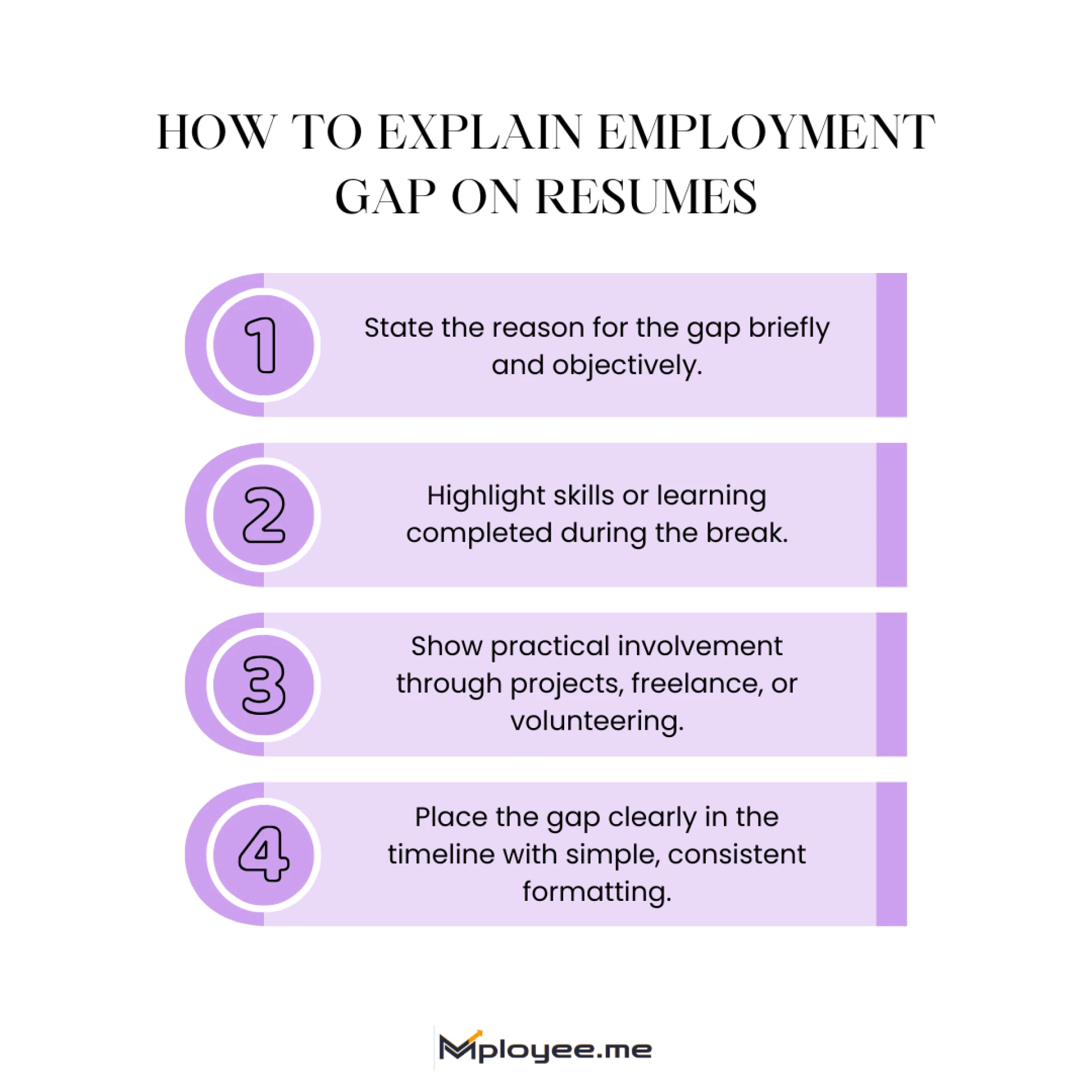
A career gap can feel bigger to you than it actually looks on paper.
A lot of job seekers worry that the moment they upload their resume, ATS will instantly reject them because of a break in work history. The good news is this: ATS does not “judge” career gaps the way people imagine it does.
In most cases, the system is not looking at your resume and thinking, This person took a break, reject them.
It is usually scanning for something much simpler:
- relevant keywords
- job titles
- skills
- tools
- work experience structure
- resume formatting
That means if your resume is built well, a career gap does not automatically become a problem. In fact, with the right structure, your resume ATS score checker results can still look strong even if you have career gaps.
Does ATS actually reject career gaps?
Not in the emotional way people think.
ATS does not usually “notice” a gap and reject you just because of it. What it notices is whether your resume matches the job description.
If your resume has:
- the right skills
- role-related keywords
- clean formatting
- strong experience bullets
then your chances are still very much alive.
The real problem starts when candidates panic about the gap and create a resume that is vague, confusing, or badly formatted for resume ATS score checker.
That hurts more than the gap itself.
Why career gaps feel worse than they are
When people return to the job market after a break, they often do one of these things:
- hide dates completely
- over-explain the gap
- make the resume too defensive
- remove useful experience from earlier roles
- write weak summaries
This usually makes the resume feel less clear.
Recruiters and ATS both respond better to a resume that feels honest, relevant, and easy to scan.
So the goal is not to pretend the gap never happened.
The goal is to make sure it does not dominate your resume.
How to build a career gap resume that still works
1. Start with a strong summary
Your summary matters a lot when you have career gaps.
It helps shift the focus toward what you can do now, not just when you last worked.
For example:
“Digital Marketing professional with experience in SEO, Google Ads, content strategy, and campaign reporting. Skilled in lead generation, social media planning, and performance tracking.”
Or:
“HR professional with experience in recruitment coordination, onboarding, employee engagement, and HR operations.”
This works because it immediately gives ATS and recruiters relevant keywords.
2. Keep your experience section clean and simple
Do not try to hide your work history with unusual formatting.
Use a normal reverse chronological format:
- company name
- role title
- dates
- bullet points
If there is a gap between roles, it is okay. ATS can still read the resume just fine.
The bigger issue is when candidates use tables, fancy layouts, or remove dates entirely. That can confuse the system more than the gap itself.
3. Focus on skills and achievements, not just timelines
A good resume does not live or die by dates alone.
If your experience section clearly shows:
- what you handled
- what tools you used
- what results you contributed to
then the resume still feels strong.
For example, instead of writing:
“Worked in customer support before career break”
write:
“Handled customer queries, resolved escalations, and improved response tracking using CRM tools.”
That feels relevant and active.
4. Add a career break line only if needed
You do not always need to highlight the gap.
But if the break is recent or long enough that it may create confusion, you can mention it briefly and calmly.
Examples:
- Career Break | 2022–2024
- Took a planned break for family responsibilities and now actively returning to work.
- Career Pause | 2023–2025
- Focused on personal commitments while continuing skill development in digital marketing and analytics.
Keep it short. No need to over-explain.
5. Show what you did during the gap if relevant
If you learned, built, helped, freelanced, studied, or created something during the break, include it.
That could be:
- certifications
- freelance projects
- volunteer work
- online courses
- personal blog or content work
- consulting
- family business support
- skill-building projects
This is especially helpful because it fills the timeline with something real and relevant.
For example:
“Completed certification in Google Analytics and SEO during career break.”
“Created content samples and managed a personal blog focused on career advice.”
That helps both ATS and recruiters see momentum.
6. Strengthen your skills section
A strong skills section can help offset concern around career gaps because it quickly shows current relevance.
Include role-specific terms like:
- SEO
- Google Ads
- Excel
- SQL
- HR operations
- onboarding
- client coordination
- Power BI
- SAP FICO
- content writing
Use only the ones that genuinely match your background.
If you run your resume through a resume ATS score checker, this section often makes a noticeable difference.
7. Add certifications and projects
If you are returning after a break, these sections matter more than usual.
They show that you stayed connected or rebuilt momentum.
Examples:
- Google Analytics Certification
- HubSpot Content Marketing Certification
- Power BI Dashboard Project
- Recruitment internship project
- Social media campaign sample
- Excel reporting course
These sections help balance the timeline and give ATS more relevant content to match.
8. Avoid functional resume formats unless absolutely necessary
Some people with career gaps move everything into a skills-based format to avoid showing dates.
This often backfires.
Many ATS systems and recruiters still prefer a clear chronological structure. Functional resumes can feel vague, and sometimes they make the gap look even more obvious.
A better option is a hybrid structure:
- summary
- skills
- experience
- certifications
- projects
That keeps the resume readable without over-focusing on dates.
What ATS really cares about more than your gap
If you are worried about how ATS sees your resume, these usually matter more than the actual gap:
- keyword relevance
- ATS-friendly formatting
- clear job titles
- skills match
- readable structure
- work experience phrasing
So instead of stressing only about the break, focus on making the whole resume stronger.
That is what improves match quality.
Use ResuScan to Check Your Resume ATS Score (Even With Career Gaps)
If you’re unsure how your resume actually performs with a career gap, using a tool like ResuScan can give you a much clearer picture. Instead of guessing, you can see exactly how ATS reads your resume and what needs improvement.
- Detailed ATS score analysis (0–100 scale): ResuScan evaluates your resume across 40+ ATS and HR factors like keywords, formatting, font size, images, measurable impact, and repetition
- Real data-backed insights: Out of 7 lakh+ resumes scanned (716,778), only 5% score above 80, while around 64% fall below 50—showing most resumes need improvement
- Career gaps don’t automatically hurt your score: The tool focuses more on relevance, structure, and keywords rather than just timeline gaps
- Improve shortlist chances: Resumes with 80%+ ATS score get shortlisted faster, and candidates often see a 30–40% improvement in interview chances after optimization
With 3.8 lakh+ users (381,713) already using it, ResuScan helps you understand what recruiters see in those 6–8 seconds they spend scanning your resume. Since over 90% of companies use ATS, this kind of feedback is especially useful when you want your resume to stay strong—even with career gaps.
Common mistakes to avoid
A few things can make a gap resume weaker:
- removing all dates
- writing a long emotional explanation
- using too much design or formatting
- making the summary vague
- ignoring current skills
- not adding certifications or projects
The fix is usually simple: keep the resume clear, relevant, and current.
Final thoughts
A career gap does not automatically ruin your chances.
ATS is not sitting there trying to punish people for life happening. It is mostly checking whether your resume matches the role.
So if your resume is well-written, keyword-rich, and clearly structured, your career gaps do not have to become the main story.
Use a resume ATS score checker to test whether your resume is still matching the JD well. Focus on relevance, not apology.
Because in most cases, the gap is not what gets people rejected.