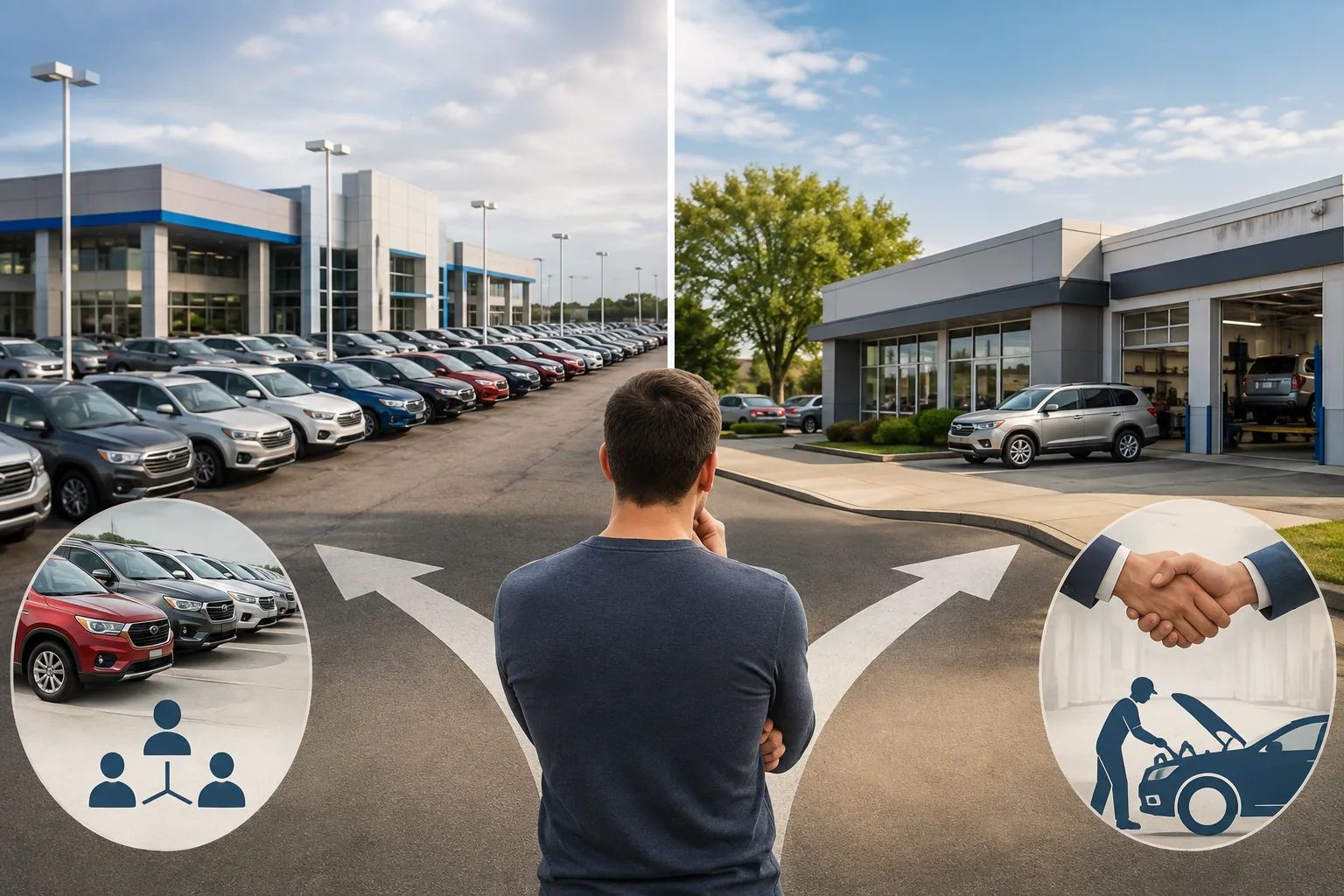
Shopping for a car usually starts with a bigger question than which model to buy. It is where to buy it. Among the car dealerships Sandusky drivers can choose from, the real split is between large multi-location chains and smaller local dealers.
Both can put you in a good vehicle. The difference shows up in the buying experience and in what ownership looks like afterward. This guide walks through the trade-offs of each, plus a few practical steps, so you can decide what actually fits how you shop and drive.
What you are really comparing
You are not just picking where to buy a car. You are picking where you will service it, finance it, and bring it for repairs over the years.
That relationship tends to outlast the sale by a long way. A dealership you buy from today may be the one changing your oil three years from now. So the smart move is to weigh the whole experience, not only the number on the window sticker.
Keep that long view in mind as you read the pros and cons below. It changes how you rank each factor.
Buying from a large chain dealership
Big chains have genuine advantages, and selection is the clearest one.
With many locations, a chain can often find a specific trim, color, or package quickly by pulling from other stores in its network. If you want something particular and do not want to wait, that reach is useful. Familiar branding can also feel reassuring, especially for first-time buyers who want a known name.
The process side is usually consistent too. Chains tend to run a standardized sales flow, so you roughly know what to expect from one location to the next.
The trade-offs show up in the personal experience. High-volume lots can feel more transactional, and some push harder to hit monthly sales targets, which makes the visit feel rushed. The service location for your specific brand may also sit farther from your home, turning routine maintenance into a longer trip than you would like.
A chain can suit you well if the widest possible inventory is your top priority and a more hands-off, high-volume experience does not bother you.
Buying from a local Sandusky dealership
A local dealer competes on convenience and familiarity rather than sheer scale.
The biggest draw is proximity. A nearby store means shorter drives for test drives, service visits, and repairs. Ken Ganley Buick GMC, for example, is located at 2401 Cleveland Road in Sandusky, and also serves nearby communities like Lorain, Vermilion, Fremont, and Amherst.
Many local dealers are also full-service operations. That means sales, financing, service, and body work all happen under one roof, so you are not driving between separate businesses to handle different needs. For a lot of buyers, that single point of contact is a real time-saver.
There is also a built-in accountability. A hometown dealership depends on repeat business and word of mouth in the community, which gives it a strong reason to keep local customers satisfied.
The main limitation is inventory. A single location holds fewer vehicles than an entire chain. That said, many local dealers can order a vehicle or locate one for you, so a smaller lot does not always mean fewer options, just a little more lead time. And if you eventually move out of the area, the close-to-home convenience no longer applies.
Why after-sale service matters
The factor buyers most often underestimate is what happens after the purchase. It deserves real attention, because it shapes years of ownership rather than a single afternoon.
A dealership with its own service department and body shop keeps maintenance, warranty work, and repairs in one familiar place. At Ken Ganley Buick GMC, certified technicians handle everything from oil changes and multi-point inspections to larger repairs, and an on-site collision center deals with dents, scratches, and accident damage.
It helps to picture how often you will actually visit. Over a few years you will likely come back for oil changes, tire rotations, the occasional repair, and maybe a fender-bender fix. Each of those errands is easier when the shop is close and already knows your vehicle.
This is where you should be honest about your own habits. If you tend to keep cars a long time and rely on the dealer for service, proximity carries more weight. If you service your car elsewhere or trade in often, it matters less.
Practical steps before you buy anywhere
No matter which type of dealership you lean toward, a few habits protect you and keep the process smooth.
Start by setting your budget before you fall for a specific car. Know the total amount you are comfortable spending, not just a monthly payment you can stomach. A low monthly figure can quietly hide a longer, costlier loan.
Always ask for the full out-the-door price, including fees and taxes. Get it in writing early so there are no surprises at the finance desk. This one step separates transparent dealers from the rest, chain or local.
Bring your paperwork to speed things up: driver's license, proof of income, proof of insurance, and your trade-in title if you have one. Being prepared means less time sitting and more time deciding.
Finally, take a proper test drive. Include some highway speed, not just a slow loop around the block, and test the features you actually use. A car can feel different at 60 miles per hour than it does in the parking lot.
Making your decision
So which should you choose? Run yourself through a few simple questions.
If your single biggest priority is the largest inventory and you are comfortable with a more standardized, higher-volume experience, a large chain is a reasonable pick. If you would rather have proximity, a more personal process, and one trusted place to handle buying, financing, and repairs, a local dealer is likely the better fit.
Neither option is automatically better. The right answer depends on how you shop, how long you keep your cars, and how much you value having service close to home. Weigh those trade-offs honestly, use the practical steps above, and the type of Sandusky dealership that suits you will become clear.