
Why the Most Overlooked Component of a Solar Energy System May Also Be Its Most Powerful
There is a quiet revolution happening on rooftops across northern New Mexico. Not the kind that makes headlines or dominates social media feeds, but the kind that shows up month after month in lower utility bills, reduced carbon footprints, and homes that are genuinely more self-sufficient than they were a year ago. It is the kind of progress that compounds gradually and then, one day, feels obviously inevitable in hindsight.
At the center of that revolution is a technology that most homeowners have heard of but relatively few fully understand — solar thermal collection. While photovoltaic panels dominate the public conversation about renewable energy, solar thermal systems quietly deliver some of the highest returns on investment available in the residential energy market. And in a location like Los Alamos, where sunshine is abundant, elevation is high, and energy costs are a genuine household concern, the opportunity is exceptional.
Understanding what solar collectors do, how they work, and what separates a well-designed installation from a mediocre one is the first step toward making a decision that will benefit your home for decades.
What Solar Collectors Actually Do
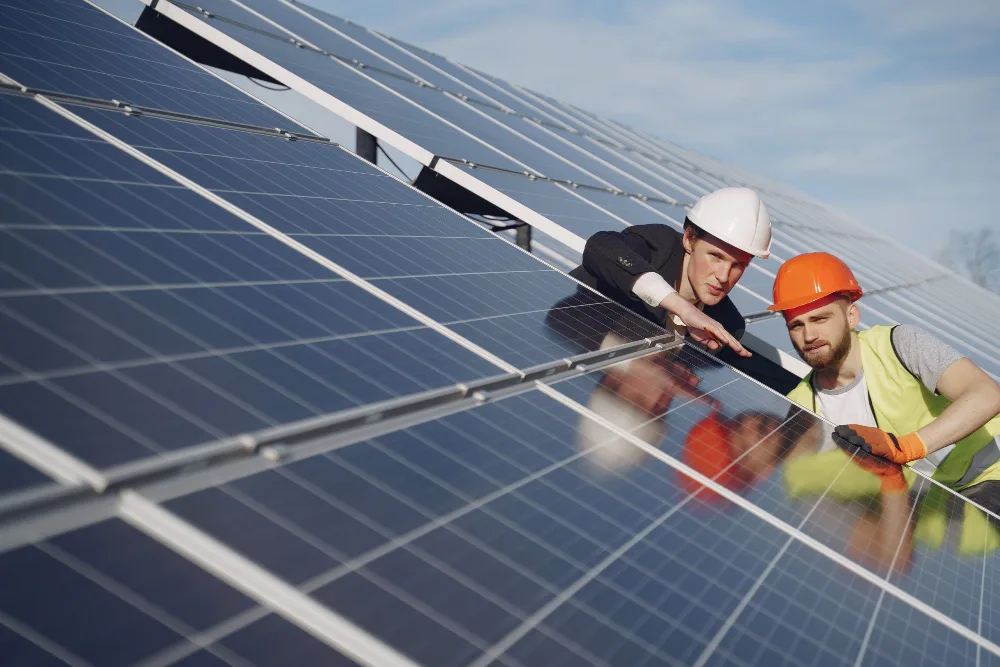
Solar collectors are not the same as photovoltaic solar panels, and the distinction matters. Photovoltaic panels convert sunlight into electricity. Solar collectors convert sunlight into heat — capturing thermal energy from the sun and transferring it into a fluid that carries that warmth to wherever it is needed in the home.
That destination is most commonly a water heating system, though solar thermal energy can also support space heating, radiant floor systems, and pool heating depending on the home's configuration and the size of the installation. In each application, the fundamental principle is the same — use a free, abundant, and renewable heat source to displace the expensive, finite energy sources that currently drive up monthly bills.
The efficiency advantage of solar thermal over photovoltaic is significant and often surprising to homeowners learning about it for the first time. A solar thermal collector can convert between sixty and seventy percent of incoming solar radiation into usable heat energy. A standard photovoltaic panel, by comparison, converts between fifteen and twenty percent into electricity. For applications where heat is the end goal — and water and space heating represent the majority of residential energy consumption — solar thermal delivers more usable energy per square foot of roof space.
The Los Alamos Advantage
Few locations in the United States offer a more favorable environment for solar energy collection than northern New Mexico. Los Alamos sits at approximately 7,300 feet above sea level, placing it above much of the atmospheric moisture and particulate matter that reduces solar intensity at lower elevations. The result is solar radiation of exceptional quality — intense, consistent, and available across a remarkably high number of days per year.
The region averages over three hundred days of sunshine annually. Even in the depths of winter, when days are short and temperatures are cold, the solar resource remains strong enough to deliver meaningful thermal energy collection. Low humidity prevents the cloud cover that reduces performance in other regions, and the clear, thin air at altitude allows more solar energy to reach collector surfaces than would be possible at sea level.
This is the environment in which Solar collector installation in Los Alamos transitions from a sensible choice to a genuinely outstanding one — where the natural conditions amplify the technology's strengths and the investment case becomes difficult to argue against.
What a Quality Installation Involves
The performance of any solar thermal system is only as strong as the quality of its installation. Collector orientation, tilt angle, shading analysis, pipe insulation, fluid selection, and system sizing all influence how effectively the installation captures and delivers energy throughout the year.
Collector orientation toward true south — not magnetic south — and a tilt angle calibrated for the local latitude maximizes annual energy harvest. In Los Alamos, that means a tilt of approximately thirty-five to forty degrees, positioning the collector surface to intercept the sun's path efficiently across all seasons.
System sizing requires careful analysis of household demand. An undersized system leaves energy savings on the table. An oversized system can overheat during summer months without adequate controls and storage capacity. Getting this balance right requires genuine expertise, not guesswork.
Pipe insulation and fluid selection are equally critical in a climate where overnight temperatures regularly fall below freezing. Properly specified antifreeze solutions and well-insulated distribution lines protect the system from cold-weather damage and ensure consistent performance through northern New Mexico winters.
An Investment That Earns Its PlaceEnergy costs do not decrease over time. Utility rates rise, fuel prices fluctuate, and a home dependent on conventional energy sources remains vulnerable to every shift in that landscape. A well-designed solar thermal system changes that dynamic fundamentally — locking in a portion of your energy supply at zero ongoing cost and providing a hedge against future price increases that grows more valuable with every passing year.
When performance, precision, and long-term reliability matter, the installer behind the system matters just as much as the equipment itself. SolarWise brings the technical depth, local climate knowledge, and proven installation standards that northern New Mexico homeowners deserve — ensuring that every system we design captures the full potential of this extraordinary solar resource and delivers returns that last for decades.