
A house goes on the market. The photos are scheduled. A buyer wants to walk through on Saturday. But someone is still living there, cooking dinner, getting kids ready for school, studying for exams, or simply trying to make it through the week. That is where this question gets real: can you sell a house with tenants still living in it? Yes, a seller usually can. The bigger issue is not permission to sell. It is how to sell without ignoring the lease, the tenant’s rights, or the kind of buyer the property is likely to attract.
This is not some rare corner case. In the second quarter of 2025, renter-occupied units made up 31.3% of U.S. housing inventory, which means occupied homes are a meaningful part of the market, not an odd exception. For sellers, the tension is simple: they want flexibility and a strong price. Tenants want stability, privacy, and respect. Good sales usually start when both truths are treated seriously.
Key Takeaways
- A seller can usually move forward, but the lease and local law set the boundaries.
- In Oklahoma, month-to-month tenancies generally require 30 days’ written notice to terminate.
- Oklahoma law allows access for prospective purchasers, but landlords generally must give at least one day’s notice and enter at reasonable times
- When ownership changes in Oklahoma, security deposits must be transferred to the successor landlord or returned to the tenant.
Can You Sell A House With Tenants Still Living In It?
Yes. A seller can usually sell a tenant-occupied home. In general, the sale does not automatically cancel the lease, and the new owner typically steps into the landlord’s role under the existing agreement. That distinction matters. Many owners assume the word “sale” wipes the slate clean. It usually does not. In Oklahoma, a conveyance by the landlord is valid without the tenant’s attornment, and rent paid before notice of sale is still good against the buyer.
The property can change hands, but the tenant cannot simply be treated as if they vanished with the old deed. As Robert Frost wrote, “Home is the place where, when you have to go there, they have to take you in.” Even in a sale, that feeling matters. A tenant may not own the property, but the home is still their daily life until the lease says otherwise.
What Changes When The Lease Is Month-to-Month or Fixed Term?
This is where many decisions become easier. A month-to-month tenancy gives an owner more room to change course. In Oklahoma, either side generally must give 30 days’ written notice to terminate a tenancy at will or a periodic tenancy of three months or less. That can make a sale to an owner-occupant more realistic if timing is handled early and cleanly. A fixed-term lease is different. In practice, the safer assumption is that the lease runs through its stated end date unless the agreement allows earlier termination or the tenant voluntarily agrees to leave sooner.
General guidance on tenant-occupied sales also treats the lease as something that transfers with the property rather than something a seller can erase by listing the home. That leads to a helpful question: Who is the likely buyer? If the most natural buyer is another investor, an occupied home can actually be a plus, especially when rent is current and the tenant has been cooperative. If the most likely buyer wants to move in personally, the lease timeline matters much more.
A Simple 4 Step Plan Before Listing
- Read the lease first. Look for term dates, renewal language, notice rules, showing provisions, and any clause about purchase rights.
- Match the sales plan to the buyer type. Investor-friendly homes can often be sold occupied. Owner-occupant sales usually need clearer vacancy timing.
- Tell the tenant early. It is often the fastest way to reduce tension, avoid resistance, and make showings workable.
- Document the handoff. Rent status, lease copies, repair history, and security deposit records should be ready before negotiations get serious.
Which Path Makes The Most Sense?
A practical way to decide is to compare the three most common routes:
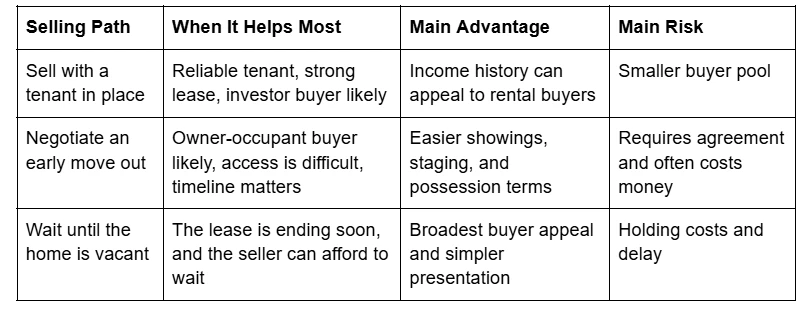
This is less about a “right” answer and more about fit. The strongest choice is usually the one that lines up with the lease, the buyer pool, and the level of tenant cooperation already on the table.
What About Showings, Photos, And Privacy?
In Oklahoma, a tenant cannot unreasonably withhold consent for lawful entry to show the property to prospective purchasers. Still, the landlord also cannot abuse access or use it to harass the tenant. Except in emergencies or when notice is impracticable, the landlord must give at least one day’s notice and enter only at reasonable times.
That legal rule gives the minimum. Good practice usually goes further. Group showings instead of scattering them. Keep communication written and clear. Ask before photography becomes awkward. A tenant who feels blindsided may do the bare minimum. A tenant who feels respected is more likely to cooperate.
What Most People Get Wrong
Do’s and Don’ts
- Do: Assume the lease matters more than the listing date.
- Don’t: Assume a sale automatically clears occupancy.
- Do: Explain the plan early.
- Don’t: Let the tenant discover the sale from online photos or a yard sign.
- Do: Handle the security deposit carefully.
- Don’t: Leave the buyer and tenant guessing who now holds it.
- Do: Keep fair housing obligations in mind during the sale, advertising, and any housing-related service.
- Don’t: Treat families with children, people with disabilities, or other protected groups differently.
A Familiar Real World Scenario
Picture a seller with a clean rental home and a cooperative tenant on a month-to-month agreement. If the goal is to attract an owner-occupant, the seller may choose written notice, a realistic move timeline, and tightly scheduled showings. In Oklahoma, that path has a clearer legal lane because a month-to-month termination generally uses 30 days’ written notice.
Now picture the same home with six months left on a fixed lease and a tenant paying on time. In that version, forcing a fast vacancy is much harder and more likely to create conflict. The smarter move may be to sell to an investor, wait for the lease to end, or negotiate a voluntary early exit that truly works for both sides.
Final Word
So, can you sell a house with tenants still living in it? Yes. But the smoothest sales usually happen when the owner stops treating the tenant as an obstacle and starts treating the lease as the roadmap. Read the agreement carefully. Follow local notice rules. Be thoughtful about showings. Know whether the likely buyer wants a home to live in or a property that already produces rent. That is how a stressful question becomes a workable plan.
For owners who want a more personal, owner-direct conversation about timing, tenant communication, and next steps in Shawnee, brands like Moth Properties are positioned around remodeled homes, direct contact with owners, and an old-school service approach rather than a handoff through rental managers.
FAQs
- What makes a good plan for selling a tenant-occupied house?
A good plan starts with the lease, the notice rules, and the buyer type. It also respects the tenant’s schedule instead of treating access like an afterthought.
- What are the best practices for showings when renters still live there?
Give proper notice, keep showings at reasonable times, batch them when possible, and communicate clearly in writing. That usually protects the sale and the relationship at the same time.
- How to sell an occupied house without damaging tenant trust?
Tell the tenant early, explain the process, avoid surprise visits, and be organized about timing. Respect often produces better cooperation than pressure.
- When should a seller hire professional help?
Professional help makes sense when the lease is complex, the buyer wants early possession, access has become difficult, or there are questions about notices, deposits, or compliance.
- What services matter most in an owner-direct local approach?
Clear communication, lease review, realistic timing, and a no-middleman process matter most. That kind of approach fits a business model centered on speaking directly with owners and keeping service personal.