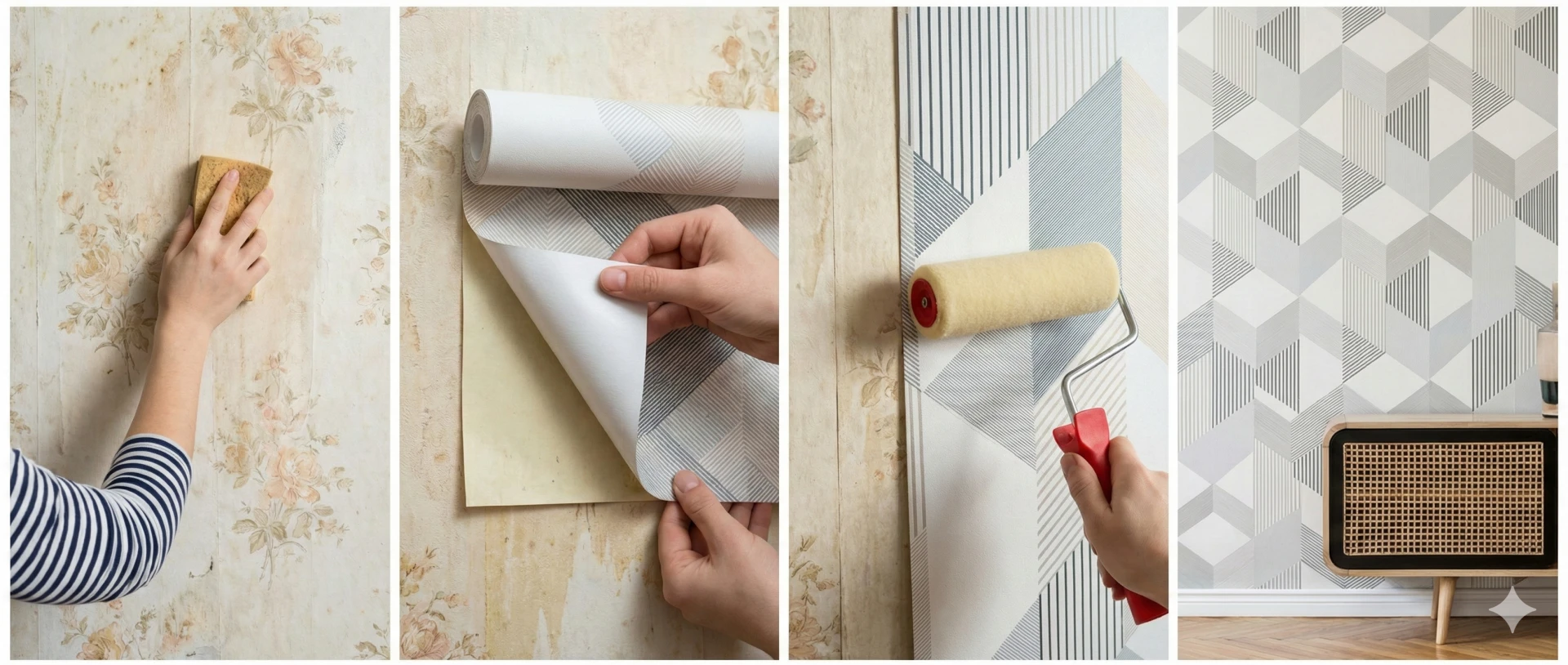
Updating a room with outdated decor often presents a difficult choice: spend hours scraping old paper or find a way to cover it. Many homeowners and renters wonder if they can simply apply Peel and stick wallpaper on wallpaper to save time and effort. While it is technically possible, there are several factors to consider to ensure the new layer stays secure and looks professional without ruining the surface underneath.
Assessing the Condition of the Existing Wall
Before you begin [Covering ugly wallpaper without removing it], you must inspect the state of the current wall covering. If the original paper is peeling, bubbling, or cracking, the new layer will not have a stable foundation. Putting [wallpaper over old wallpaper] only works if the initial layer is still firmly bonded to the wall. If the base is failing, the weight of the new material will likely pull both layers down, leading to a messy and unsuccessful project.
Texture also plays a significant role in the success of your update. Applying [peel and stick wallpaper on textured walls] is notoriously difficult because the adhesive needs a flat surface to create a proper seal. If the old wallpaper has a heavy embossed pattern or a grit-like texture, the new stick on wallpaper may develop air pockets or fail to stick entirely. In these cases, it is usually better to remove the old material or sand down the high points before proceeding.
The Benefits of Temporary Solutions for Renters
For those living in leased spaces, [wallpaper for apartments] must be non-permanent. Using temporary wallpaper allows you to personalize your environment while ensuring you can return the unit to its original state. However, you must be careful when applying it over existing paper. While the new product is designed to be a [damage free wallpaper] option, the adhesive may bond too strongly to the old paper, causing it to tear during the removal process.
Hiding Patterns and Seams
A major challenge when putting [wallpaper on wallpaper] is preventing the old design from showing through. If the original paper has a dark or vibrant pattern, a thin or light-colored new layer might be slightly transparent. [Modernizing dated wallpaper with removable prints] works best when you choose a high-quality, opaque material. Using a busy pattern or a darker color for the new layer will help ensure that the old aesthetic remains completely hidden.
Furthermore, you must address the physical edges of the previous installation. [Hiding wallpaper seams with peel and stick murals] requires precision. If the old seams are thick or overlapping, they will create visible ridges under your new wallpaper for walls. To minimize this, you can try to offset the new seams so they do not align with the old ones, or use a seam roller to flatten the base layer as much as possible before you begin.
Installation and Removal Best Practices
Knowing how to install wallpaper correctly is the difference between a polished look and a DIY disaster. Start by cleaning the old wallpaper with a slightly damp cloth to remove dust and oils. If the old paper is "washable" or made of vinyl, it may have a slick coating that prevents [removable wallpaper on wallpaper] from sticking. In such instances, a light cleaning with a degreaser or a specialized primer might be necessary to help the adhesive grip.
When it eventually comes time to change your decor again, you will need to know how to remove wallpaper without causing a headache. If you have layered your walls, the removal process can be twice as intensive. Using heat from a hair dryer can often help soften the adhesive of the top layer, making it easier to peel away without bringing the bottom layer with it.
Essential Wallpapering Tips for Success
If you are determined to try [wallpaper over wallpaper], always perform a small test first. Apply a small scrap of the new material in an inconspicuous corner and leave it for 48 hours. This allows you to see if the adhesive reacts poorly with the old paper or if the weight causes the old layer to sag. These [Wallpaperering tips] can save you from wasting an entire roll of expensive material on a surface that isn't compatible.
By taking the time to prepare the surface and choosing the right materials, you can successfully refresh your space without the labor of a full strip-down. Whether you are seeking a quick fix for a rental or simply want to avoid the mess of traditional renovations, layering your wall coverings can be a viable path to a new look.