It is one of the most common questions we hear about disability housing in Perth and WA: "I have SIL funding. Do I have to live in an SDA home?" The short answer is no. Supported Independent Living (SIL) and Specialist Disability Accommodation (SDA) are two different NDIS supports, and one does not depend on the other.
This guide explains what each one pays for, how SIL works in an ordinary rental or family home, and what to consider when planning your next move. It is written for NDIS participants, families, carers and support coordinators.
SDA and SIL in plain language
The simplest way to remember the difference is:
- SDA is the home. It funds the building itself, a home designed or modified for people with extreme functional impairment or very high support needs.
- SIL is the support inside the home. It funds help with daily tasks such as personal care, meals, household tasks and support to build independence.
They are assessed separately, funded separately and delivered by separate decisions. Some participants have both. Many have SIL without SDA, and a smaller group has SDA without SIL.
For more detail on how the two fit together, see our guide to SIL and SDA in Australia.
Can you get SIL without SDA?
Yes. SIL is a support category in an NDIS plan, not a type of building. A participant may receive SIL funding in a:
- Private rental
- Public or community housing property
- Family home
- Share house with other participants
- Home the participant owns
What matters is that the participant needs a level of support that is best met through shared or individualised daily support at home, and that the NDIA agrees the funding is reasonable and necessary.
Who is SIL for?
SIL is generally for participants who need significant help throughout the day and who want to live as independently as possible away from the family home. Examples of people who may use SIL include participants who:
- Need help with personal care or medication routines
- Need prompting or supervision for safety
- Need support learning daily living skills
- Want to move out of the family home but cannot yet live without regular support
SIL is not a place to live. It is a roster of support workers who help you in your own home. Funding is based on the level of support you need, the hours required and whether you live alone or with others.
How to request SIL in your plan
SIL is not available automatically. A typical process looks like this:
- Set clear goals. Talk about where you want to live, who you want to live with and what kind of support you need.
- Gather evidence. Ask your OT, psychologist, GP or other practitioners for reports that describe your day-to-day support needs.
- Talk to a SIL provider. A registered provider can prepare a quote and a roster of care showing the support hours required.
- Submit through your plan review. Include the evidence and the provider's roster of care in your review request.
- Wait for the NDIA decision. The NDIA decides whether SIL is reasonable and necessary and how much to fund.
A support coordinator can help you with each step. Our step-by-step SDA application guide also explains how evidence is gathered for related housing decisions.
Living in an ordinary home with SIL
SIL in an ordinary home can work well when the home itself suits your physical needs and your support is well organised. Consider the following.
The home
- Is the entry step-free or can it be modified?
- Do you have room for equipment and for support workers to assist safely?
- Is the property close to transport, shops and health services?
- If you share, do you get on with housemates, and is there enough personal space?
The lease or ownership
- Who holds the lease, and is it secure?
- Does the landlord understand that support workers will be visiting daily?
- Has the owner agreed to any needed modifications in writing?
The support
- Does the SIL provider have staff available at the times you need them?
- Are staff trained to support your particular needs?
- Can you choose your support workers or provide input on the roster?
- Is there a plan for what happens if a worker is sick or unavailable?
Read our guide to choosing a good provider for questions to ask any housing or support provider.
Why some participants choose SDA with SIL
For participants with extreme functional impairment or very high support needs, an ordinary home may not be safe or practical, even with modifications. SDA homes are built with features such as wider doorways, reinforced ceilings for hoists, robust construction and assistive technology.
If you are eligible for SDA, you can combine it with SIL for a complete package: a purpose-designed home plus daily support. If you are not eligible for SDA, you can still use SIL in an ordinary home that you or your family arrange.
To see if SDA could suit you, read our SDA eligibility checklist.
Shared or individual living
SIL is often delivered in shared living arrangements because it can make support more cost effective and build social connections. Some participants prefer to live alone with individual support. Your goals, needs and preferences matter.
Our article on shared vs individual SDA housing explores the pros and cons, and much of that thinking applies to SIL in ordinary homes too.
Common misunderstandings
"SIL pays for my rent." It does not. SIL funds support, not accommodation. Participants living in a rental still pay rent. If you live in SDA, you pay a rent contribution on top of NDIS funding for the building.
"I must live in a group home to receive SIL." No. SIL can be arranged in various settings, including living alone with support, if the NDIA agrees it is reasonable and necessary.
"SDA and SIL always come together." No. They are separate decisions, and you can have one without the other.
"SIL is permanent." Plans are reviewed, and support needs can change. Your SIL funding may increase, decrease or end depending on your circumstances.
Planning ahead
Moving into your own home with SIL is a big step. These tips can help:
- Start planning early, because evidence gathering and reviews take time.
- Ask your support coordinator to keep a timeline of tasks.
- Visit homes and speak with housemates before committing.
- Trial new arrangements, such as short-term accommodation, to test what works.
- Put key agreements in writing, including house rules and support arrangements.
Our guide to short-term accommodation in Perth explains how trial stays can help you practise independence.
A simple example
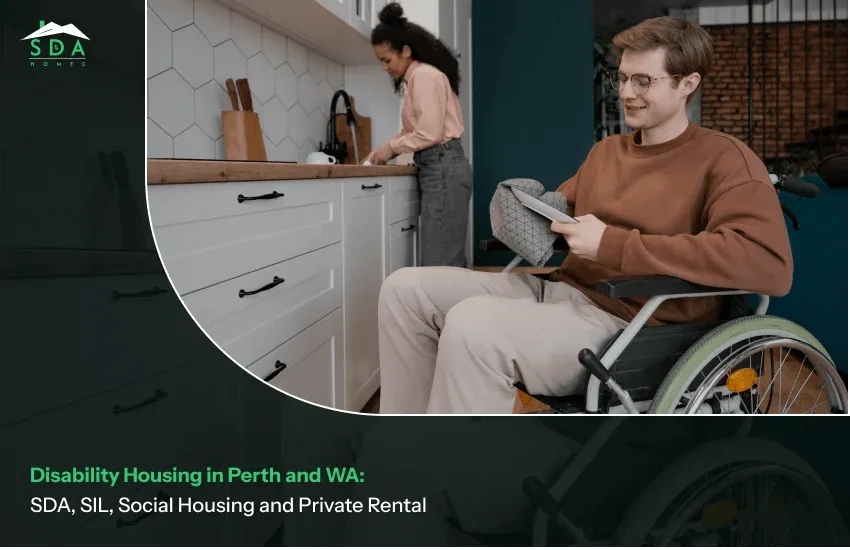
Imagine a young man in Perth who wants to move out of his parents' home. He needs help with meals, medication and getting to appointments, but he can walk, transfer independently and does not have very high physical support needs. SDA is unlikely to be the right fit, because his needs do not match SDA eligibility.
Instead, he rents a unit near public transport with two housemates. His plan includes SIL funding, and a provider rosters support workers across the day. His support coordinator helps him find the unit, and his OT recommends a few small changes, such as grab rails. He has independence, support and an ordinary home, all without SDA.
Every situation is different, but the example shows that housing and support can be matched to the person rather than the other way around.
Reviewing your arrangements
Check in regularly on how your home and supports are working. Ask yourself whether you feel safe, whether your support workers know your routines, whether you are making progress on your goals and whether your housemates and neighbours are a good fit. If something is not working, speak with your provider and support coordinator early. Plan reviews are a good time to adjust SIL hours or consider whether your housing needs have changed.
Frequently asked questions
Can I get SIL funding if I live in a private rental? Yes, if the NDIA agrees you need SIL as a reasonable and necessary support. Your housing type does not decide this on its own.
Do I need SDA to live with housemates and receive SIL? No. Many SIL arrangements are in ordinary shared homes.
Who decides if I get SIL? The NDIA decides based on your goals, evidence and support needs.
Can I choose my SIL provider? Generally yes, and you can change providers if your needs or preferences change, subject to your plan and agreements.
Talk to SDA Homes WA
Whether you are exploring SIL, SDA or a combination, it helps to speak with someone who understands both. SDA Homes WA is an NDIS-registered provider based in Maddington. Learn more about our services or contact us on 0456 251 522 to discuss disability housing in Perth and WA.
This article provides general information only and is not NDIS, legal or financial advice. Funding decisions are made by the NDIA. Always check current guidance with the NDIA or a qualified professional.