Chef’s knives and serrated steak knives serve different purposes in the kitchen. A chef’s knife has a smooth edge for chopping vegetables and slicing meat, while a serrated knife uses small teeth to cut through steak and other foods. Keeping both in good shape calls for a sharpener that suits their different edge styles.
The best handheld kitchen knife sharpener for these tasks should offer controlled handling and suit the blade’s existing edge shape. A patented flexible-handle design with two crossed honing rods allows the rods to adjust as the blade passes through. This helps maintain compatible edges without requiring the user to set a fixed sharpening angle.
Why Chef’s Knives and Serrated Knives Need Different Care
A chef’s knife needs a smooth, controlled pass along its cutting edge. With regular use, the edge can lose alignment, making food harder to cut. Honing helps bring the edge back into line.
Serrated steak knives have small teeth and curved spaces between them. These teeth grip food during cutting, so their shape needs careful attention.
The main differences are:
- Chef’s knives: Need smooth strokes along the full cutting edge.
- Serrated steak knives: Need careful movement that reaches the teeth.
- Both types: Benefit from controlled handling and the right technique for their edge shape.
Using the correct motion helps maintain the blade while keeping its edge design in mind.
How the Flexible-Rod Design Works
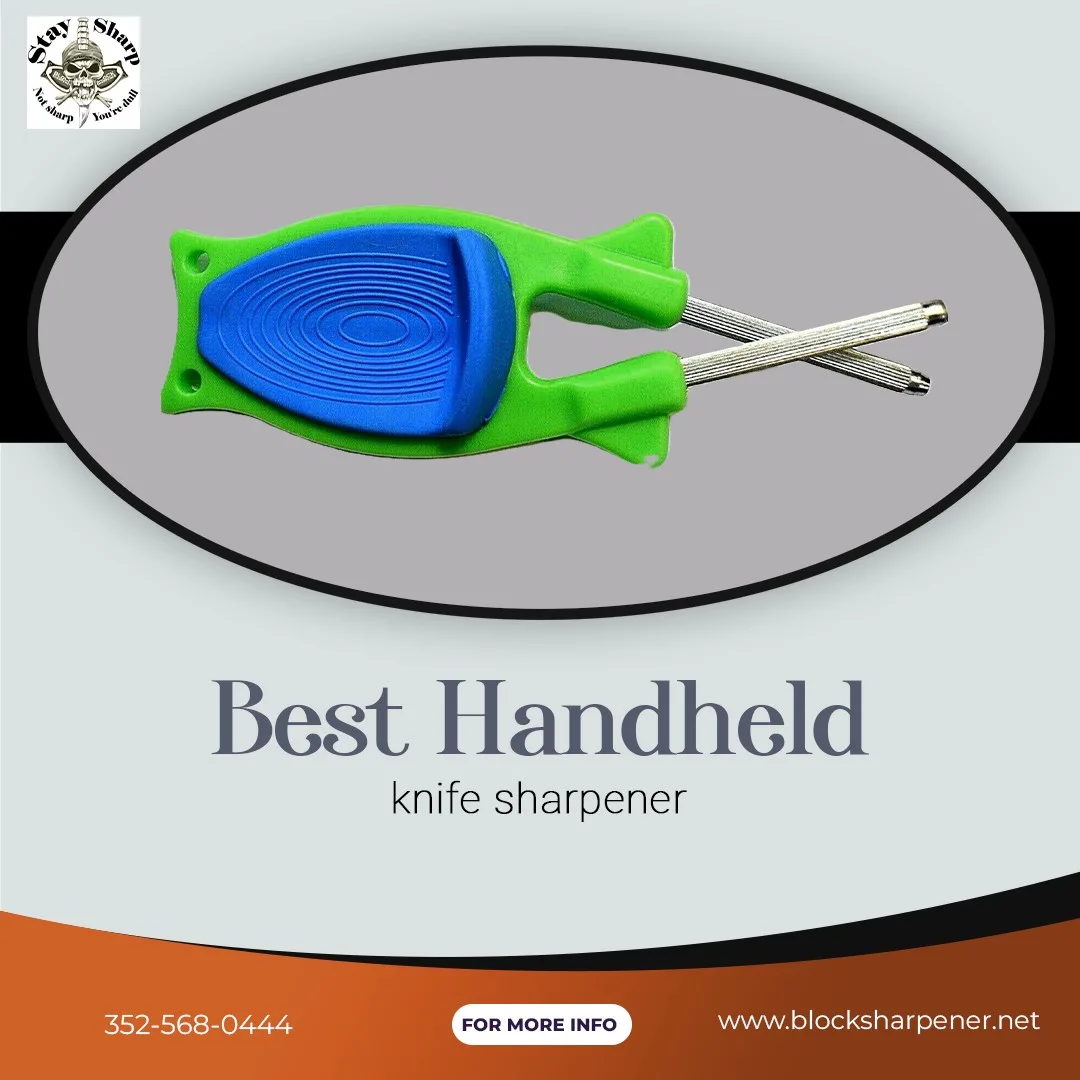
The patented Flex Design uses two crossed steel honing rods inside a flexible handle. As the user draws a blade through the rods, the handle bends to follow the blade’s existing edge profile.
This design is intended to suit standard V-edges across the supported angle range, with product descriptions giving ranges from 17 to 28 degrees depending on the model. It also accommodates several other edge styles through its flexible action.
Useful design features include:
- A flexible handle that adapts to the blade’s edge angle.
- Two crossed honing rods that contact the blade as it passes through.
- Rubberized grip areas on newer models.
- A textured thumb-rest area designed to support control.
- A compact, handheld shape for kitchen and outdoor use.
Can One Sharpener Handle Both Blade Types?
One handheld tool can maintain compatible chef’s knives and serrated steak knives when the user follows the right technique for each blade. Its flexible handle and crossed honing rods are designed to adapt to different compatible edge profiles.
The key is to change the motion to suit the knife. A straight blade needs a smooth pass from heel to tip. A serrated blade calls for a light rocking or side-to-side motion that allows the rods to contact its teeth.
When comparing knife sharpeners as seen on TV, consider how the tool handles different blade shapes, how the grip feels, and whether its instructions explain the correct method for each knife.
How to Use a Handheld Sharpener on Chef’s Knives
Start with the sharpener held firmly in a stable position. Keep fingers clear of the blade’s path, then follow these steps:
- Place the heel of the knife between the crossed rods.
- Draw the blade smoothly from heel to tip.
- Follow the blade’s natural curve as the handle flexes.
- Let the tip pass fully through the rods.
- Check the edge before deciding whether more strokes are needed.
Use steady, controlled pressure. Smooth movement gives the rods a chance to contact the edge along its length.
How to Maintain Serrated Steak Knives
Serrated knives need a different motion because their teeth and curved spaces form the cutting edge. Place the blade between the rods and use the light rocking or side-to-side movement described in the tool’s instructions.
Keep these points in mind:
- Move slowly so the rods can reach different parts of the serrated edge.
- Use controlled pressure rather than forcing the blade.
- Check the knife as you go.
- Stop if the teeth appear damaged or the edge needs more extensive repair.
This approach makes the tool’s flexible design relevant to kitchens that use both straight-edged and serrated knives.
What Makes As-Seen-on-TV Knife Sharpeners Different?
“As seen on TV” describes a product’s promotional history, rather than a specific sharpening method. The useful details are the tool’s construction and how it works in the hand.
The handheld sharpener uses manual operation, two crossed honing rods, and a flexible handle. Demonstration videos explain how to guide the blade and adjust the movement for different shapes. Newer models use D2 tool steel rods, while earlier versions used 1018 steel. Rod material and construction details vary by model and generation.
When Honing Is Not Enough for a Dull Knife
Honing helps maintain or realign an existing edge. A blade with chips, severe wear, or a badly uneven cutting edge can need a more abrasive sharpening method to restore its shape.
One customer account describes using an electric sharpener to reprofile a very dull, curved section before continuing with the handheld tool. This illustrates why blade condition matters when choosing a maintenance method.
If routine honing does not improve cutting performance, inspect the edge and consider whether it needs more extensive sharpening.
Choosing the Right Handheld Sharpener for Your Kitchen
The right tool should suit the knives in your kitchen and provide a grip that feels controlled during use. A flexible design is useful when maintaining compatible straight and serrated blades, provided each receives the correct motion.
When selecting the best handheld kitchen knife sharpener, consider these practical points:
- Which blade styles need regular care?
- Does the handle provide a secure grip?
- Are the instructions clear for straight and serrated edges?
- Is the tool suited to routine honing or does the blade need more extensive sharpening?
For households that use both chef’s knives and serrated steak knives, as seen on TV, knife sharpeners are worth assessing by their actual design and intended use. Careful technique and attention to blade condition are central to maintaining cutting performance.