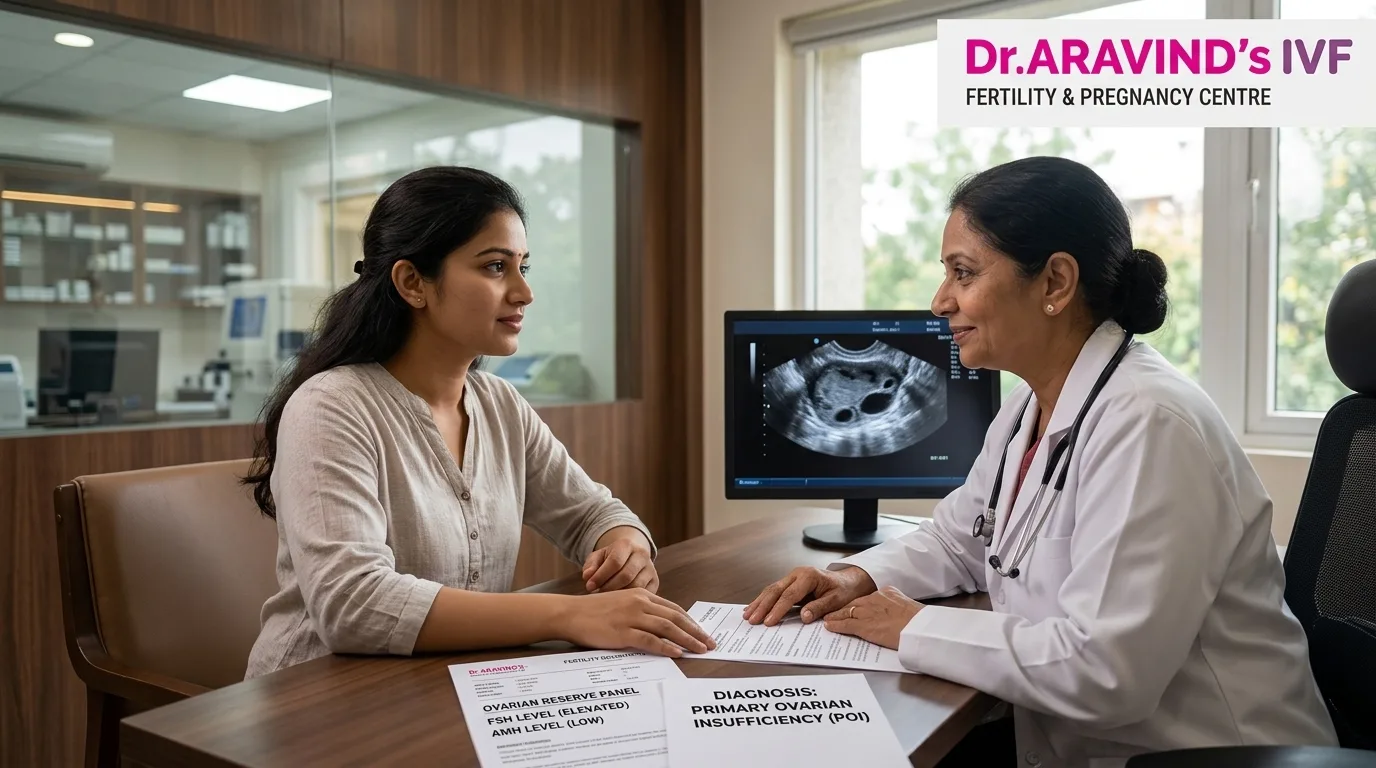
A diagnosis of Primary Ovarian Insufficiency (POI) can be overwhelming, especially if you dream of becoming a parent. Many women believe that POI means pregnancy is no longer possible, but that is not always true. While POI reduces fertility, several treatment options are available depending on your individual condition. At Dr. Aravind's IVF Fertility and Pregnancy Center, fertility specialists provide comprehensive evaluations and personalized treatment plans to help women explore the best path to parenthood. If you are searching for the Best Fertility Doctor in Attur, understanding your fertility options after a POI diagnosis can provide hope and clarity.
What Is Primary Ovarian Insufficiency (POI)?
Primary Ovarian Insufficiency (POI) is a condition in which the ovaries lose their normal function before the age of 40. Women with POI may have fewer remaining eggs, irregular ovulation, and lower estrogen levels.
Common symptoms include:
- Irregular or missed periods
- Difficulty conceiving
- Hot flashes
- Night sweats
- Vaginal dryness
- Mood changes
Early diagnosis allows timely fertility planning and appropriate treatment.
Can You Get Pregnant Naturally with POI?
Yes, although it is uncommon. Some women with POI continue to ovulate occasionally, making spontaneous pregnancy possible. However, because ovulation is unpredictable, natural conception rates are lower than in women with normal ovarian function.
If pregnancy does not occur naturally, fertility treatments may improve your chances.
Fertility Treatment Options for Women with POI
Depending on your medical evaluation, your fertility specialist may recommend one of the following options:
1. IVF Using Your Own Eggs
If ovarian function is still present and some follicles remain, IVF with your own eggs may be considered. Success depends on ovarian reserve, age, and how the ovaries respond to stimulation.
2. Donor Egg IVF
For women with severely reduced ovarian reserve or repeated unsuccessful IVF cycles, donor egg IVF offers one of the highest chances of pregnancy. Donor eggs are fertilized in the laboratory, and the resulting embryo is transferred into the uterus.
3. Fertility Preservation
Women diagnosed early with POI who still have ovarian activity may discuss fertility preservation options with their specialist, depending on their individual circumstances.
4. Hormonal Management and Overall Health
Hormone replacement therapy may be recommended for appropriate patients to support bone health, heart health, and overall well-being. It is not a fertility treatment but may be an important part of POI management.
How Is POI Diagnosed?
A fertility specialist may recommend:
- Anti-Müllerian Hormone (AMH) test
- Follicle-Stimulating Hormone (FSH) test
- Estradiol hormone testing
- Pelvic ultrasound
- Medical and menstrual history
- Additional investigations when indicated
These tests help determine ovarian function and guide treatment planning.
Why Early Consultation Is Important
If you have irregular periods or have been diagnosed with POI, seeking medical advice early provides more opportunities to discuss fertility options before ovarian function declines further.
Early evaluation also helps identify underlying causes and allows your fertility specialist to recommend the most appropriate treatment.
Conclusion
Although Primary Ovarian Insufficiency can make conception more difficult, it does not mean the end of your fertility journey. Some women may conceive naturally, while others achieve pregnancy through IVF or donor egg IVF. Every treatment plan should be personalized based on age, ovarian reserve, medical history, and reproductive goals.
If you are looking for the Best Fertility Doctor in Attur, Dr. Aravind's IVF Fertility and Pregnancy Center offers advanced fertility testing, personalized POI management, IVF treatment, donor egg IVF programs, and compassionate care to help you take the next step toward parenthood.