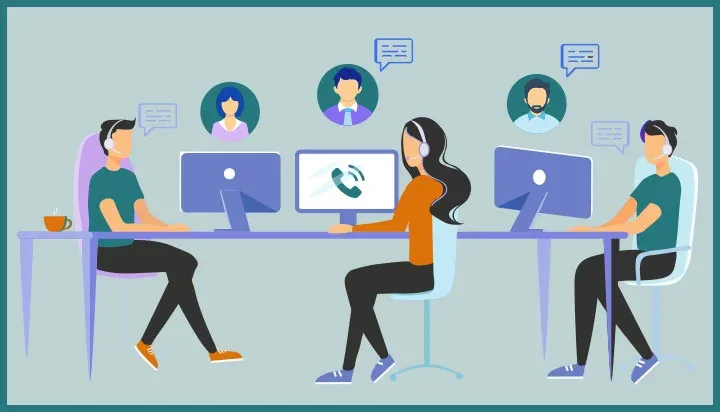
Handling customer calls should be simple. A customer calls with a query and reaches the right team quickly. But in many businesses this does not happen. Calls often land in the wrong department. This creates confusion, delays and frustration.
When a call reaches the wrong team the agent transfers it. The customer waits again and explains the issue again. This wastes time and reduces trust. If this happens often customers may stop contacting the business.
Many companies still use basic phone systems that cannot guide calls properly. These systems lack control and structure. As call volume increases the problem becomes worse.
Using a call forwarding system helps fix this issue. It ensures that every call follows a clear path. Instead of random transfers, calls reach the correct team from the start. This improves response time and customer satisfaction.
A structured system does not just route calls. It builds a better communication process for the entire business.
How Call Forwarding System Improves Call Direction
Managing calls manually becomes difficult as teams grow. Agents cannot always decide where each call should go. This leads to delays and incorrect routing.
A call forwarding system solves this by using predefined rules. These rules guide each call based on customer input or business needs.
Department Based Routing
Calls can be directed to specific teams such as sales support or billing. When customers select an option they are connected to the correct department without delay. This reduces unnecessary transfers.
Time Based Call Handling
Calls can be handled differently based on time. During working hours calls go to active teams. After hours calls can be forwarded to backup staff or voicemail. This ensures no call is missed.
Location Based Call Flow
Businesses with multiple locations can route calls based on region. Customers are connected to the nearest team for faster support.
When calls follow a clear direction the entire process becomes smooth. Customers get faster help and agents work more efficiently.
Role of IPPBX Software in Call Management
A call forwarding system works best when supported by ippbx software. This system manages calls through the internet and offers better control over communication.
Centralized Control
All call settings are managed from one place. Managers can update routing rules easily without technical complexity. This saves time and improves flexibility.
Easy System Expansion
As businesses grow new users or teams can be added quickly. The system adjusts without major setup changes. This makes it suitable for growing operations.
Real Time Call Monitoring
Managers can view live call activity. They can see which teams are busy and which are available. This helps balance workload and reduce waiting time.
With ippbx software businesses gain better control over how calls are handled. It supports the call forwarding system and ensures smooth operations.
Benefits of Sending Calls to the Right Team
When calls reach the correct team the difference is clear. Customers get faster solutions and agents handle calls they understand well.
Faster Resolution
Correct routing reduces the need for transfers. Issues are solved quickly which saves time for both customers and agents.
Better Customer Experience
Customers do not need to repeat their concerns. They feel heard and valued which builds trust in the business.
Improved Team Productivity
Agents focus on their area of expertise. This improves efficiency and reduces stress. Work becomes more organized.
Clear Call Handling Process
Managers can track how calls move through the system. They can adjust rules when needed to improve performance.
These benefits show how proper call direction improves daily operations and overall service quality.
Setting Up a Simple and Effective Call Flow
A system works best when it is planned properly. Businesses should first understand their call types and team roles. Each type of call should have a clear destination.
Next they should create simple routing rules. Overcomplicated setups can confuse both customers and agents. Clear and direct options work better.
Regular review is also important. Managers should check call data and identify any routing issues. If calls still reach the wrong team, rules can be adjusted quickly.
Training agents also support smooth communication. They should know how to handle transferred calls and update details clearly. This keeps the process consistent.
A well planned call forwarding system becomes a reliable part of daily operations. It supports better communication without adding complexity.
Conclusion
Wrong call routing creates delays, confusion and poor service experience. It affects both customers and support teams. Without a structured system calls move randomly and problems take longer to resolve.
A call forwarding system provides clear direction. It ensures that each call reaches the right team without delay. When combined with ippbx software it offers better control flexibility and visibility.
Customers receive faster support. Agents handle relevant queries. Managers gain better control over operations.
Strong communication starts with correct call routing. When every call reaches the right place businesses deliver better service and build long term trust.