Electrical connections play an important role in the performance and reliability of modern equipment. From automotive wiring systems and electric vehicle components to industrial machinery and electronic devices, cable harnesses help connect different parts and ensure the smooth transfer of electrical power and signals. Even a small wiring error can affect the performance of an entire system.
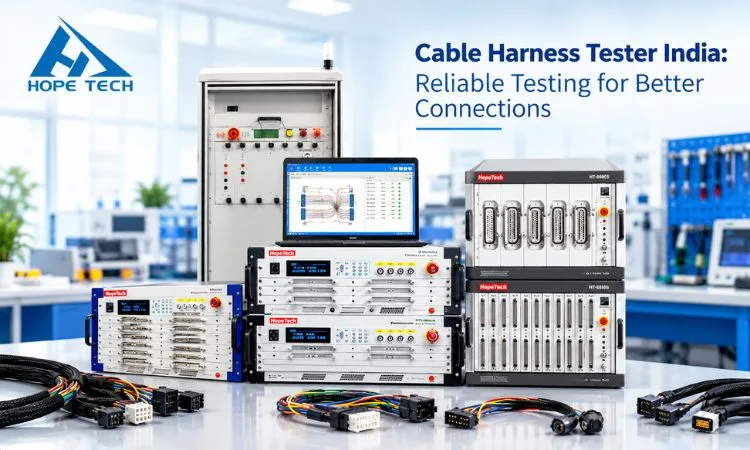
For manufacturers, identifying these issues before final assembly is essential. This is where a Cable Harness Tester India becomes an important part of the production and quality-control process. Advanced testing equipment helps manufacturers examine cable assemblies, identify electrical faults, and maintain consistent testing procedures across production batches.
As cable designs become more complex, manufacturers need testing solutions that can handle different connection configurations and electrical requirements. Hope Instruments offers a range of cable and wire harness testing equipment designed for different industrial applications.
Understanding the Role of a Cable Harness Tester
A cable harness tester is specialised electrical testing equipment used to inspect wire assemblies and verify whether their connections match the required configuration.
A typical harness may contain multiple wires, terminals, connectors, and branching connections. Checking each connection manually can be difficult, particularly when dealing with large assemblies or high-volume production.
A dedicated testing system simplifies this process by checking multiple connection points through defined testing procedures.
Depending on the equipment and application, a cable harness tester can identify:
- Open circuits and incomplete electrical connections.
- Short circuits between conductors.
- Incorrect wiring and cross connections.
- Electrical resistance variations.
- Insulation-related problems.
- Connection faults and continuity issues.
Identifying these problems during manufacturing helps reduce troubleshooting time and supports better quality control before products move to the next production stage.
Why Manufacturers Need Advanced Cable Harness Testing
Cable assemblies are becoming increasingly important in industries where electrical systems must operate reliably. As products incorporate more sensors, control units, connectors, and electronic components, the number of electrical connections also increases.
Traditional inspection methods may not provide the level of detail required for complex assemblies. Advanced cable harness testing offers several advantages.
1. More Reliable Electrical Connections
Testing helps verify that wires and connectors are connected according to the intended design. This is particularly important for assemblies used in vehicles, machinery, and electronic equipment.
2. Faster Fault Identification
A testing system can help identify open circuits, short circuits, and incorrect connections without relying entirely on manual inspection.
3. Consistent Quality Control
Using defined testing procedures allows manufacturers to inspect similar cable assemblies consistently across different production batches.
4. Reduced Rework
Detecting wiring problems before final installation can help avoid unnecessary disassembly, troubleshooting, and production delays.
5. Better Testing Flexibility
Different cable assemblies require different electrical checks. Modern equipment supports multiple testing functions, allowing manufacturers to select suitable procedures according to their applications.
Different Types of Cable Harness Testing
Not every cable assembly requires the same testing procedure. The appropriate method depends on the electrical characteristics, connector arrangement, and intended application of the harness.
Some important testing methods include:
Continuity and Open/Short Testing
Continuity testing checks whether an electrical path is complete between the intended connection points. Open and short testing helps identify disconnected wires and unwanted connections between conductors.
These checks are particularly useful for automotive wiring, industrial cables, and electronic assemblies.
DC Resistance Testing
DC resistance testing measures the resistance of electrical connections. It helps manufacturers evaluate conductor and contact performance, particularly where low-resistance connections are important.
Insulation Resistance Testing
Insulation testing evaluates the electrical separation between conductors. It helps identify insulation problems that could affect the reliability and safety of an assembly.
AC/DC Hipot Testing
High-potential testing checks whether insulation can withstand a specified electrical voltage without breakdown. It is especially relevant for applications involving higher-voltage cable assemblies.
LCR Testing
LCR testing measures inductance, capacitance, and resistance. These measurements can be useful when examining electrical characteristics beyond basic continuity.
Modern cable harness testing systems can combine several of these functions within one platform, depending on the selected model.
Applications of Cable Harness Testers Across Industries
Cable harness testing is relevant to several manufacturing sectors. Each industry has different electrical requirements, making the selection of suitable testing equipment important.
- Automotive Manufacturing: Vehicles contain extensive wiring systems connecting lighting, sensors, control units, batteries, and other electrical components. Testing helps verify that these connections are correctly configured before installation.
- Electric Vehicle Manufacturing: Electric vehicles use specialised high-voltage wiring, battery connections, charging cables, and power distribution units. Appropriate harness testing helps manufacturers examine electrical connections and insulation performance.
- Industrial Machinery: Industrial machines depend on reliable cable assemblies to connect motors, control panels, sensors, and other equipment. Testing helps identify connection problems before they affect machine operation.
- Consumer Electronics: Electronic devices often use compact cable assemblies and flexible printed circuits. Accurate testing supports the verification of electrical connections during manufacturing.
- Aerospace and Transportation: Complex wiring systems used in aircraft, trains, and transportation equipment require organised testing procedures. Distributed testing systems can be useful for applications involving a large number of test points.

Choosing the Right Cable Harness Tester in India
Selecting a suitable cable harness tester requires an understanding of the assemblies being manufactured and the electrical checks they require. A system designed for low-voltage wiring may not be appropriate for a high-voltage application.
Before investing in testing equipment, consider the following factors:
- Number of test points: Select equipment that supports the required number of connections and offers room for expansion when necessary.
- Testing requirements: Identify whether you need continuity, resistance, insulation, LCR, or high-voltage testing.
- Voltage capacity: Match the equipment's AC and DC testing capabilities with your application.
- Measurement accuracy: Consider the required resistance measurement range and accuracy.
- Automation: Programmable testing functions can help standardise inspection procedures.
- Future requirements: Choose a system that can accommodate changes in product designs and manufacturing needs.
Considering these factors can help manufacturers select equipment that fits their existing production processes while supporting future testing requirements.
Hope Instruments: Cable Harness Testing Solutions for Modern Manufacturing
Hope Instruments offers a comprehensive range of electrical testing and measurement equipment for manufacturing, research, development, and quality-control applications.
Its cable harness tester range includes several models designed to support different testing requirements.
Some of the available solutions include:
- DP5000/DP5000S: Low-voltage cable harness testers supporting continuity, conductance, DC resistance, LCR, insulation, and AC/DC hipot testing.
- DP6000/DP6000S: Medium-voltage testing solutions designed for applications such as automotive power distribution units, battery flexible printed circuits, and medium-voltage harnesses.
- DP7000: A compact high-voltage cable harness tester supporting AC/DC withstand voltage, insulation, resistance, LCR, and other electrical tests.
- DP8000: High-voltage wire and cable harness testing equipment designed for applications including EV power distribution units, charging guns, and high-voltage connectors.
- DP5000X-D: A distributed testing solution with expansion capabilities of up to 20,000 test points.
Hope Instruments+4
These models provide different testing capabilities, allowing manufacturers to evaluate equipment according to their cable configurations, voltage requirements, and production applications.
Improving Production Quality Through Accurate Testing
Reliable cable harness testing is not simply a final inspection activity. It is an important part of maintaining manufacturing quality throughout the production process.
When manufacturers establish consistent electrical testing procedures, they can identify potential problems earlier, improve inspection practices, and reduce the possibility of defective assemblies reaching the next production stage.
For businesses working with automotive components, EV charging systems, industrial machinery, and electronic products, investing in suitable testing equipment can support long-term production reliability.
As manufacturing requirements continue to evolve, selecting a flexible and dependable testing system becomes increasingly important.
Find the Right Cable Harness Tester with Hope Instruments
Choosing the right testing equipment can make a significant difference in electrical inspection and manufacturing quality. Whether you require low-voltage continuity testing, resistance measurement, insulation testing, or high-voltage harness inspection, Hope Instruments offers solutions for a range of applications.
Explore the cable harness testing range at Hope Instruments to learn more about available models and their capabilities.
Looking for precision-focused equipment for your manufacturing requirements? Contact Hope Instruments through its contact page to discuss your testing needs and find a suitable solution.