
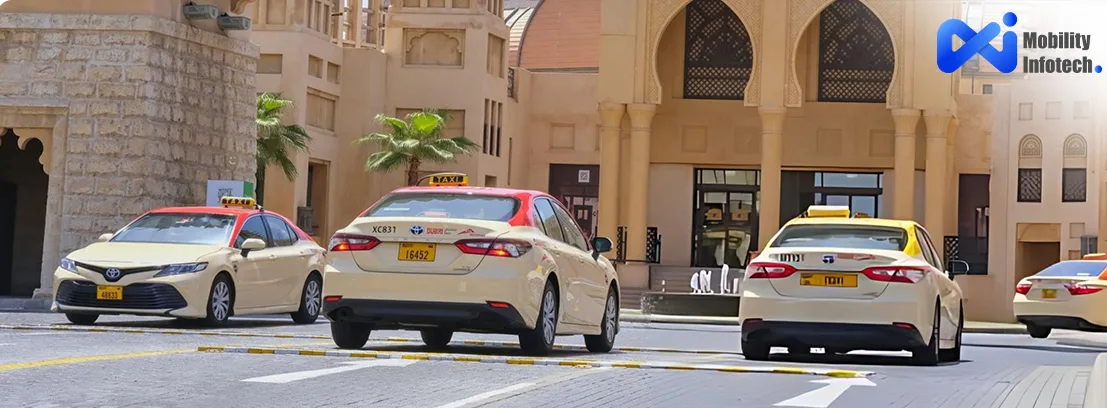
The UAE moves fast. Airport runs at 3 AM in Dubai, corporate fleets crossing Abu Dhabi's business districts, tourists hopping between Sharjah malls. In 2026, the gap between a fleet that grows and one that quietly slips often comes down to one decision: the cab dispatch system running behind the scenes.
Dubai's RTA recorded over 120 million taxi trips in a single year, and the Dubai Taxi Company's 2024 IPO was oversubscribed 130 times. That tells you something. Ground transport here is not a sleepy utility business. It is a competitive market with real capital behind it.
Quick takeaways:
- Automated allocation cuts passenger wait times more than any other single change
- Corporate accounts are the most stable revenue line most fleets underuse
- Compliance built in beats compliance bolted on
1. Real Time GPS Tracking
Delay kills trust. When a passenger in JLT sees "arriving in 4 minutes" and waits eleven, you have lost them.
- Positioning refreshed every few seconds
- ETAs modelled on actual Sheikh Zayed Road congestion, not generic routing
- Geofencing for airports, free zones, and restricted pickup points
2. AI Driven Ride Allocation
Manual dispatch was fine a decade ago. Now it costs you on every trip.
Good allocation weighs proximity, vehicle class, driver acceptance history, live traffic, and shift fatigue. Passengers wait less. Earnings spread more evenly. Driver churn drops, which matters when replacing one trained driver costs weeks of productivity.
3. Arabic and Multi Language Support
Your drivers speak Arabic, Hindi, Urdu, Malayalam, Tagalog. Your passengers do too.
- Proper RTL Arabic interface, not a translated afterthought
- Driver app localisation across your actual workforce demographics
- AED base currency with clean card, wallet, and cash reconciliation
4. Built In Regulatory Compliance
Non optional. Operating under Dubai's RTA, Abu Dhabi's Integrated Transport Centre, or Sharjah's transport authority means aligning with fare caps, driver permit validity, vehicle inspection cycles, and mandated trip data retention.
A regionally built platform handles this natively. An imported one hands you the paperwork.
5. Corporate Booking Portals
The most underused revenue stream in UAE ground transport. Hotels, hospitals, free zone companies, and event organisers all need invoiced, reliable transport.
- Cost centre tagging and department level reporting
- Consolidated invoicing that satisfies the FTA's 5 percent VAT documentation rules
- Employee booking permissions and spend caps
Fleets that build this well often find corporate revenue carries them through seasonal dips.
6. Driver Performance Analytics
You cannot improve what you do not measure. Strong cab dispatch software tracks harsh braking, speeding, idle time, acceptance rates, and cancellation patterns.
The point is not punishment. It is knowing who needs training, who has earned an incentive, and which vehicles are being driven in ways that shorten their life.
7. Payment Flexibility
Friction at payment kills repeat business.
- Card, Apple Pay, Google Pay, and regional wallet support
- Automated driver settlement with transparent commission breakdowns
- Split fare and pre authorisation for airport and intercity runs
8. Predictive Demand Forecasting
This is where 2026 platforms pull ahead. By reading historical bookings against flight schedules, events, weather, and holidays, the system tells you where demand will land before it arrives.
DXB arrival waves. Friday mall traffic. Ramadan iftar timing. GITEX week. Surprises become planned deployments.
9. Infrastructure That Holds Under Pressure
Your platform should not stumble on Eid or New Year's Eve. Cloud native architecture with auto scaling absorbs a five times spike without dropping bookings.
Ask every vendor this: what was your peak concurrent booking load last year, and what is your contractual uptime SLA? The honest ones answer with numbers.
10. White Label Branding
Your fleet is your brand. A rigid taxi cab dispatch system that forces you into someone else's design language chips away at an identity you spent years building.
- Fully branded passenger and driver apps
- Custom fare rules, surge logic, cancellation policies
- Workflows shaped around how your operation actually runs
A Line Worth Sitting With
"The future of mobility in Dubai will be driven by innovation, and by 2030, 25 percent of total trips will be smart and driverless." — HH Sheikh Hamdan bin Mohammed bin Rashid Al Maktoum, Crown Prince of Dubai (Dubai Media Office)
The direction is set at the highest level. Fleets running manual dispatch in 2026 are not just behind competitors, they are moving against national strategy. Technology readiness now determines who participates in that transition.
What This Means for Your Fleet
The operators pulling ahead here are rarely the biggest. They are the ones with clean data, drivers who stay, and fewer manual interventions per hundred trips.
Three questions worth answering honestly:
- How many minutes of staff time does one booking consume today?
- Would most of your drivers recommend your fleet to a friend?
- Could you produce a compliance ready trip report in five minutes?
Hesitation on any of these points to your technology, not your team.
Conclusion
Dispatch technology is a long commitment. It shapes your cost structure, your driver relationships, and whether you can expand into limousine, school transport, or last mile delivery without rebuilding everything.
The right partner understands the region, asks about your operations before showing you features, and stays involved after going live. Mobility Infotech works with fleet operators across the Emirates on exactly this, building around operational reality rather than a demo script. Their team at mobilityinfotech.com runs a free fleet operations audit that maps where your current setup leaks time and revenue. Thirty minutes, no obligation, and you keep the findings either way.
Whatever you decide, decide deliberately. The fleets that own 2026 are choosing right now.