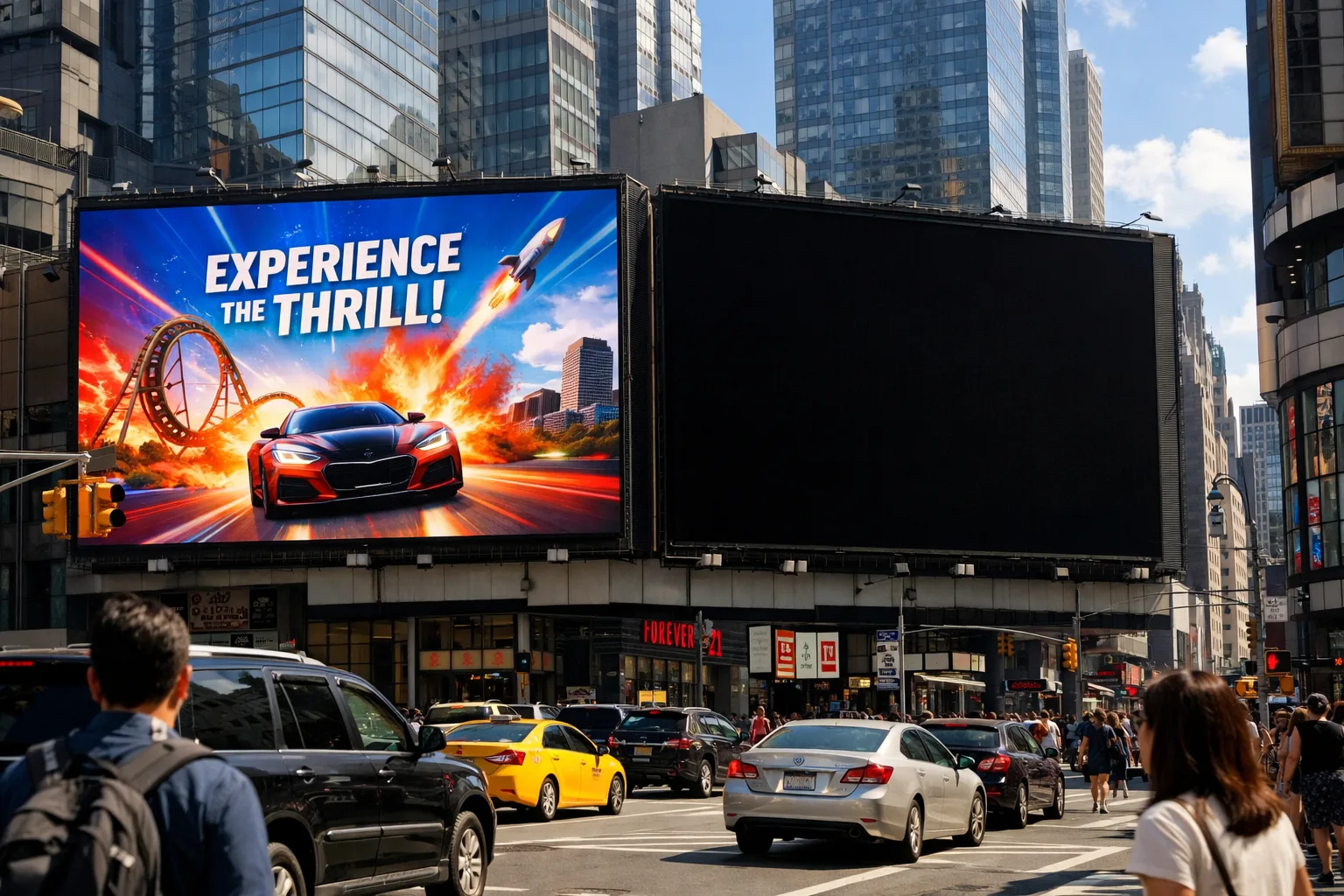
Outdoor digital signage is no longer just a luxury for high-end retail districts. Such displays will have become critical business assets this year. The stakes for performance are higher because these screens operate in harsh environments. A screen that fails during a peak advertising window not only costs you revenue but also damages your brand reputation.
You might think most screens look the same from a distance. However, the manufacturing gap is real. The difference between a standard retail display and a high-performance system actually starts on the factory floor. Find out how to buy from the best outdoor LED screen manufacturers in this post.
Evaluating Manufacturing Excellence and Automated Precision
When you start looking at outdoor LED screen manufacturers, you must look past the finished product's shiny exterior. The real quality lies in the machinery used during production. High-quality output depends on consistency that humans cannot replicate by hand.
Robotic SMT (Surface Mount Technology) lines are integral to modern LED production. These robots place tiny components onto circuit boards with sub-millimeter accuracy. Suppose a component is off by even a fraction. Then the electrical connection might fail after a few months due to thermal expansion and contraction.
Quality control should happen at every stage, not just at the end. Leading outdoor LED screen manufacturers integrate Solder Paste Inspection (SPI) and Automated Optical Inspection (AOI) directly into the assembly line.
Color uniformity is another major challenge for large-scale displays. You should ensure your manufacturer uses LED lamps and IC drivers from a single production batch.
Prioritizing Durability for Demanding Outdoor Climates
An outdoor screen faces a brutal life. It deals with baking sun, freezing nights, and driving rain. If you don't prioritize build quality, the environment will eventually win.
Achieving Superior Ingress Protection
Many people search for devices that have IP65 protection. Today's standards require devices to meet IP66 or higher. Basic seals fail to protect against high-pressure water used by cleaning teams and against fine dust which travels through city streets. The IP66 rating indicates that an enclosure is protected against powerful water jets. The system maintains complete dryness for sensitive electronics, ensuring peace of mind throughout the product's lifespan.
Selecting the Right Cabinet Engineering
The frame of the screen matters just as much as the LEDs. Aluminum naturally dissipates heat more quickly. That helps protect components from overheating.
Implementing Internal Sealing Protocols
The best outdoor LED screen manufacturers go a step further with internal protection. You should look for specialized conformal coatings, often called "three-proof paint.
Visual Performance Standards for Maximum Impact
Managing Brightness and Nit Levels
You need to determine the correct brightness for any specific location. You should look for levels between 5000 & 10000 nits for sunlight.
Ensuring High Refresh Rates
In 2026, everyone has a high-quality camera in their pocket. If your screen has a low refresh rate, it will look terrible in photos and videos. You will see black lines or flickering (which looks very unprofessional). A refresh rate of 3840Hz or higher is non-negotiable.
Optimizing Pixel Pitch
Choosing the right pixel pitch (the distance between pixels) is something to consider regarding the budget & viewing distance. You might want a P2.5 or P3 screen for street-level engagement. A P8 or P10 works better for high-altitude highway signs on the other hand.
Understanding Dual-Voltage Technology
That is a significant shift in how screens work. Specialized power distribution uses different voltages for different colors. Red LEDs usually require less voltage than Green or Blue ones. Using a dual-voltage system (e.g., 3.2V & 4.2V) can reduce total power consumption by up to 30%.
Maintenance Logistics- Access Solutions
Choosing Serviceability Designs
You need to understand your installation site before choosing an access method. If you are mounting a screen directly onto a solid wall, you need front-access modules. If the screen is on a standalone pillar, rear-access might be more convenient. Some outdoor LED screen manufacturers offer dual-access designs, giving you maximum flexibility for the future.
Benefits of Wireless Internals
The inside of a modern screen should be clean. Cable-free module connections are a huge benefit. Traditional ribbon cables can come loose or degrade over time. Wireless connections (board-to-board) are more stable and allow for much faster repairs.
Compliance & Structural Safety
Always verify that your manufacturer meets international standards. Look for CE, RoHS, as well as FCC certifications. These ensure the screen is electrically safe.
Post-Purchase Support and Reliability Benchmarks
Pre-Delivery Burn-In Tests
A reputable manufacturer should conduct a minimum 72-hour continuous "aging" test. They run the screen at full brightness and through various color cycles. This process identifies components that might fail early (often called "infant mortality").
Spare Parts Management
You should always receive a percentage of matched spare modules. LEDs are like paint (different batches can have slightly different hues). If you need to replace a module three years from now, you want one that came from the exact same production run. That ensures your screen remains perfectly uniform for its entire lifespan.
Conclusion
The long-term ROI of a digital display depends on the quality of its origin. Your total cost of ownership will decrease when you prioritize manufacturing precision over the lowest initial cost. When you look for outdoor LED screen manufacturers, use this checklist: automation, IP66 protection, energy-saving power systems, and serviceability. Businesses should design their displays using 2026 standards because these requirements provide reliable, effective visual presentation solutions.
FAQs
How do I choose the right pixel pitch for my outdoor screen?
You should base your choice on your audience's viewing distance. If people are very close (10-15 feet), you need a tighter pitch like P2.5 or P3. For screens viewed from 50 feet or more, a P8 or P10 is usually sufficient and more cost-effective.
Is an IP65 rating enough for a coastal installation?
IP65 is standard. However, you should look for IP66 and anti-corrosion treatments if you are near the ocean.
Why is the refresh rate important for advertising?
Most people view your ads through their smartphones. If your refresh rate is below 3840Hz, their photos will show black bars or distortion.