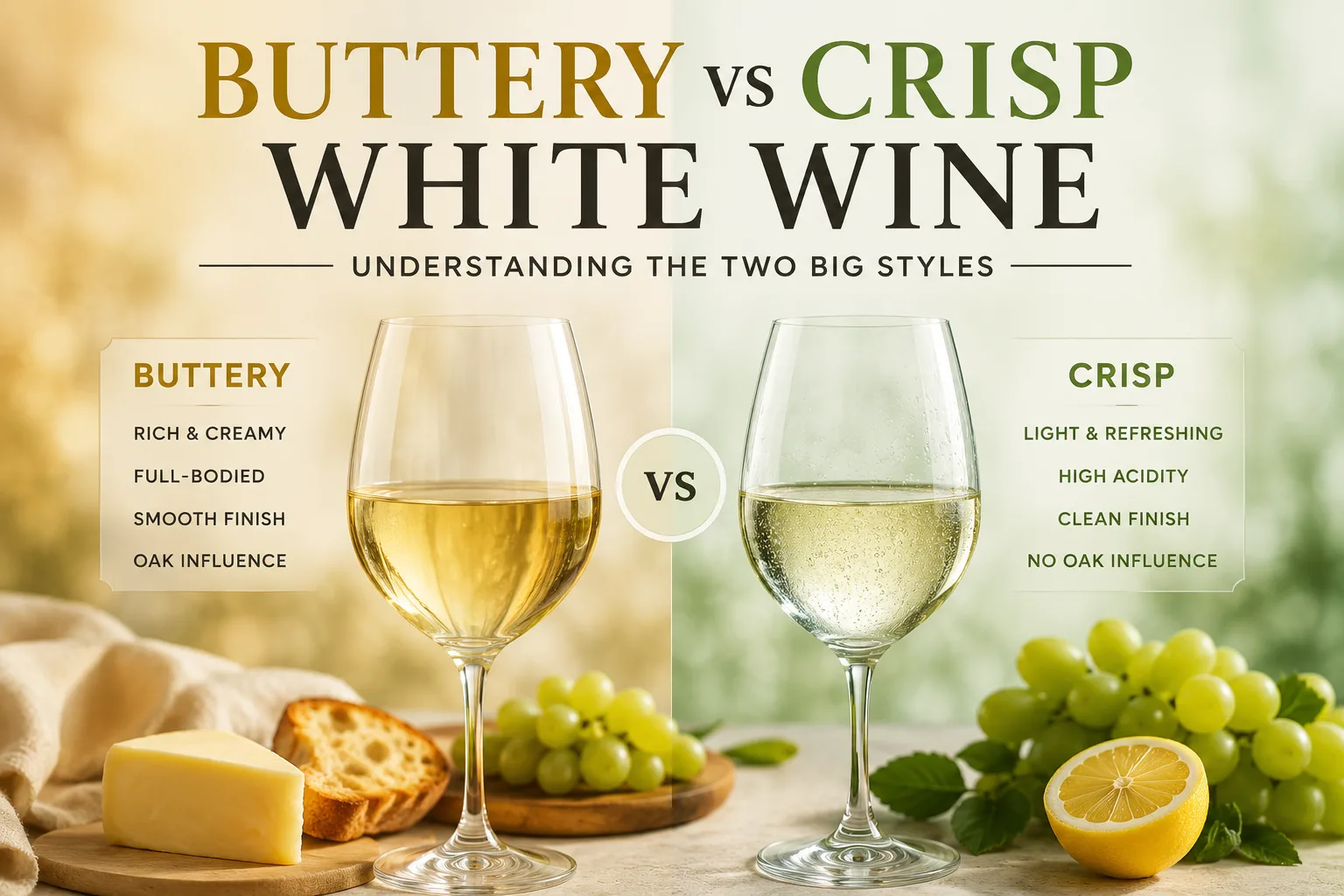
One is rich, creamy, and almost buttery on the palate. The other is bright, zesty, and refreshing, closer to what you would expect from a sauvignon blanc. Neither one is wrong. They are simply two different styles, and understanding the difference makes choosing a white wine far less confusing.
Here is what actually separates buttery whites from crisp whites, why chardonnay in particular can go either way, and how to figure out which style suits you.
What Makes a White Wine Taste Buttery
That buttery, creamy character comes from two main sources during winemaking, not from the grape itself.
- Oak ageing. Ageing wine in oak barrels adds notes of vanilla, toast, and a rounder, richer texture
- Malolactic fermentation. This is a secondary fermentation process that converts sharper malic acid, the kind found in green apples, into softer lactic acid, the kind found in milk, which is exactly where that buttery, creamy sensation comes from
Chardonnay is the grape most associated with this style, particularly styles labelled as oaked chardonnay. Warmer growing regions also tend to produce riper fruit, which supports this richer, rounder style even further.
If you enjoy a wine that feels almost silky, with flavours of baked apple, vanilla, and a touch of butterscotch, a well made oaked chardonnay is the clearest example of this style done well.
What Makes a White Wine Taste Crisp
Crisp white wines sit at the opposite end of the spectrum. They are lighter, brighter, and higher in natural acidity, with little to no oak influence.
Sauvignon blanc is the benchmark example, known for citrus, green apple, and sometimes a grassy or herbaceous note. Unoaked chardonnay, pinot grigio, and many rieslings also fall into this crisper category, since they are typically fermented in stainless steel rather than oak barrels, which preserves their natural brightness.
Crisp whites tend to be more refreshing on a warm day and pair especially well with lighter dishes like seafood, salads, and fresh vegetables.
Buttery vs Crisp, Side by Side
StyleTypical WinesWinemaking ApproachFlavour NotesButteryOaked chardonnayOak barrel ageing, malolactic fermentationVanilla, baked apple, butterscotchCrispSauvignon blanc, unoaked chardonnay, pinot grigioStainless steel, minimal oakCitrus, green apple, fresh herbsNeither style is more correct or more premium than the other. Some of the world's most respected chardonnays are made in a buttery style, and some of the most sought after white wines are made in a crisp, mineral driven style. It really comes down to personal preference and what you are eating alongside it.
Why Chardonnay Can Be Either Style
Chardonnay causes the most confusion here because, unlike sauvignon blanc, it does not have one fixed style. The grape itself is fairly neutral, which means winemakers have a lot of freedom to shape the final wine through oak use and fermentation choices.
That is why one bottle labelled chardonnay can taste rich and buttery, while another labelled chardonnay from a different producer tastes lean and crisp. If you are chardonnay curious but unsure which style you prefer, it is worth trying a couple side by side from a solid white wine range rather than assuming all chardonnay tastes the same.
How to Choose the Right Style for You
A few simple questions can help point you in the right direction.
- Do you enjoy richer foods like roast chicken, creamy pasta, or lobster with butter sauce? A buttery chardonnay will complement that richness
- Are you after something light and refreshing for a hot day or a seafood dinner? Reach for a crisp white like sauvignon blanc or unoaked chardonnay
- Not sure yet? Try an oaked and an unoaked chardonnay side by side to see which style you naturally gravitate towards
[EXTERNAL LINK: Wine Australia information on Australian white wine varieties and regional styles, for readers who want more background on how climate and winemaking affect white wine style]
FAQ
Is buttery chardonnay out of fashion?
Not at all. While crisp, unoaked styles became more fashionable for a period, well made buttery chardonnay remains highly respected, particularly from cooler climate Australian regions that balance richness with good acidity.
Does all chardonnay taste buttery?
No. Chardonnay's flavour depends heavily on winemaking choices. Unoaked chardonnay can taste just as crisp and citrus driven as a sauvignon blanc.
What is the crispest white wine style?
Sauvignon blanc is generally considered one of the crispest, most zesty white wine styles, though a cool climate unoaked chardonnay or riesling can be just as bright.
Which white wine style pairs best with seafood?
Crisp white wines, particularly sauvignon blanc and unoaked chardonnay, tend to pair best with lighter seafood dishes, since their acidity cuts through the richness of the food.
The Bottom Line
Buttery and crisp are not competing categories, they are two different ways of expressing white wine, and both have their place at the table. If you have written off chardonnay because you tried one buttery style you did not enjoy, a crisp, unoaked version might completely change your mind, and the reverse is just as true.
The easiest way to find your preference is to taste both styles side by side and notice which one you keep reaching for.