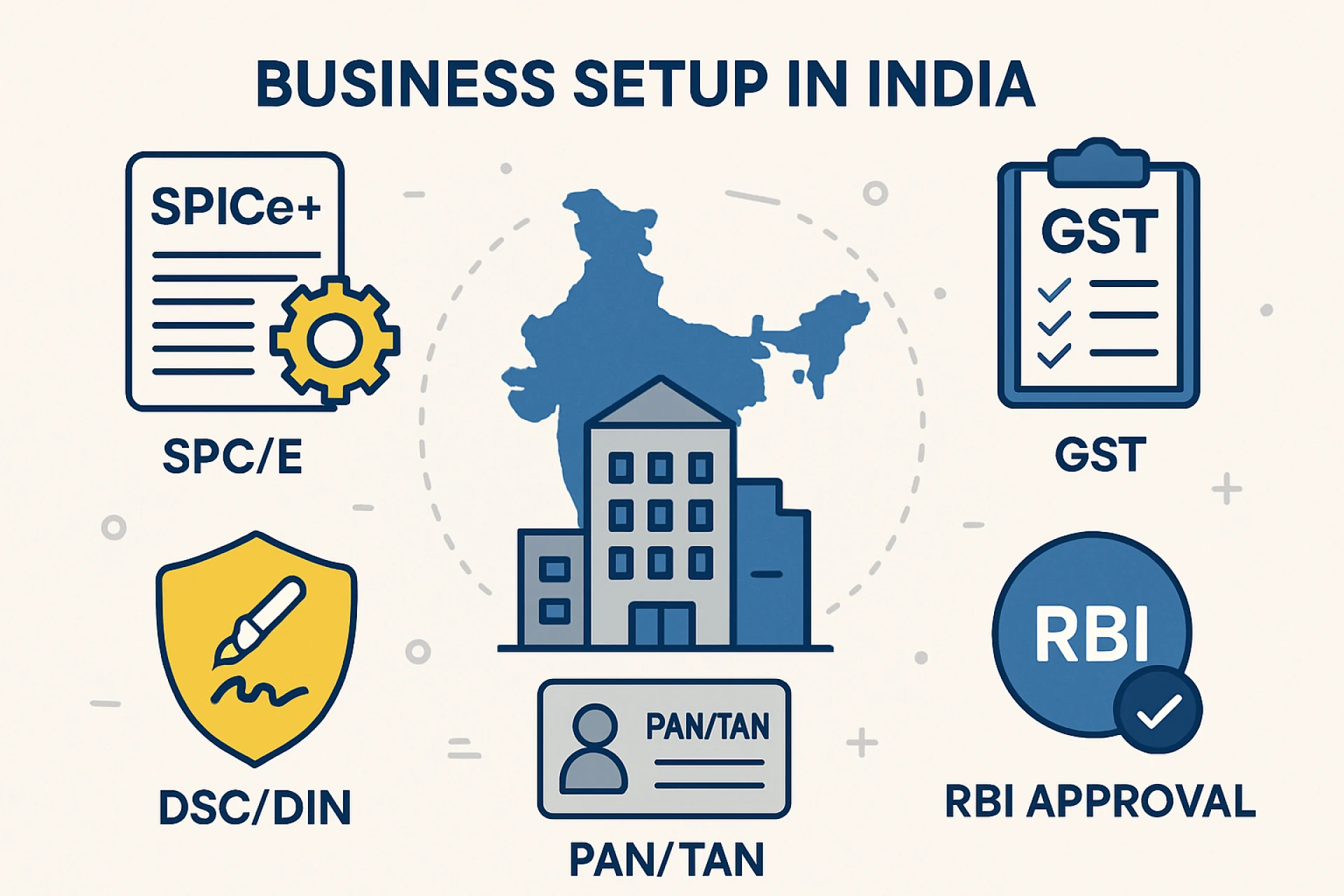
Business setup in India is increasingly attractive for entrepreneurs and multinational corporations, thanks to economic reforms, digital-first governance, and a large, growing market. But success requires more than registering a company—it demands the right entity choice, accurate documentation, timely regulatory filings, and ongoing compliance.
This guide explains the steps for setting up a company in India, outlines common pitfalls, and shows how business setup consultants in India and business setup services in India help businesses enter the market faster and with fewer risks.
Why Choose India for Business Setup?
- High-growth market: Expanding consumer and B2B demand across industries.
- Government support: Incentives for priority sectors and improved infrastructure.
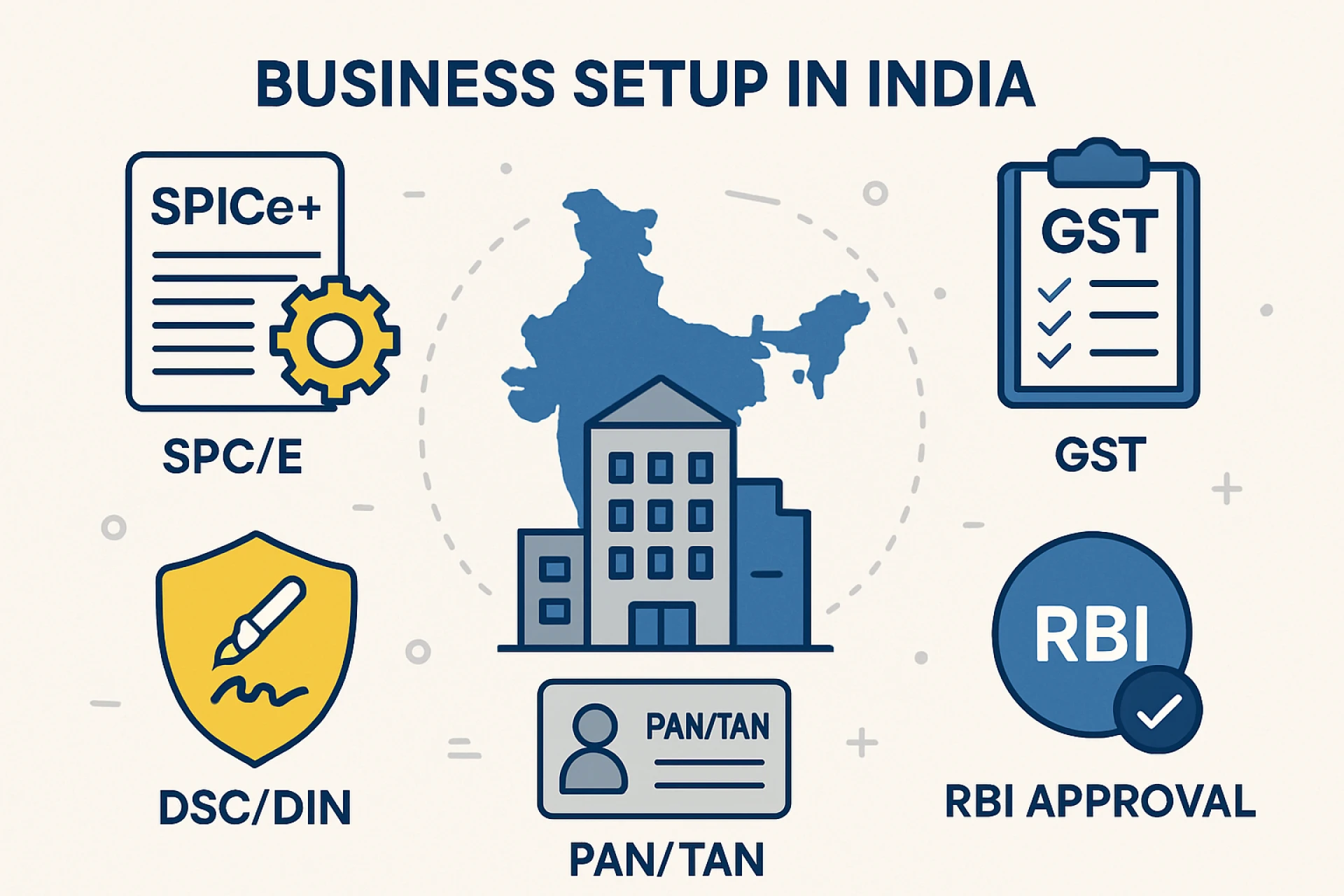
- Digital processes: Platforms like MCA, SPICe+, and GST enable faster company incorporation when filings are accurate.
Choosing the Right Entity for Business Setup in India
- Private Limited Company (PLC): Ideal for startups raising capital; offers limited liability, investor-friendly structures, and ESOP options.
- Limited Liability Partnership (LLP): Flexible governance with lower compliance—suited for professionals and smaller firms.
- One Person Company (OPC): Designed for solo founders; can be converted to a PLC as the business scales.
- Branch, Liaison, or Project Office: Options for foreign companies testing the Indian market or managing local operations, subject to RBI approval.
Step-by-Step Process of Setting Up a Company in India
- Plan your structure: Define capital, governance, directors/partners, and registered office.
- Get DSC & DIN: Digital signatures and Director IDs are mandatory for online MCA filings.
- Reserve your business name: Apply via RUN or SPICe+ Part A, ensuring MCA compliance.
- File incorporation forms: Submit SPICe+ Part B, AGILE-PRO, MoA, and AoA to integrate incorporation with PAN, TAN, and other registrations.
- Receive Certificate of Incorporation: Issued by the Registrar of Companies (RoC), allowing you to open a bank account and proceed with tax registrations.
Essential Tax & Regulatory Registrations
- PAN & TAN: Usually auto-issued with SPICe+; mandatory for taxes and banking.
- GST Registration: Required once turnover crosses thresholds or for interstate supplies.
- State & local permits: Shops & Establishments, Professional Tax, and other registrations depending on location and business size.
Special Requirements for Foreign Companies
- RBI approvals: Mandatory for Branch, Liaison, or Project Offices.
- Activity restrictions: Liaison Offices cannot earn revenue and must file Annual Activity Certificates.
Timelines for Business Setup in India
- 1–2 weeks: Typical incorporation timeline with complete documentation.
- Additional time: Required for GST and state registrations.
- Pro tip: Use SPICe+ and AGILE-PRO to consolidate filings and reduce delays.
Common Mistakes to Avoid in Setting Up a Company in India
- Wrong entity choice: For example, forming an LLP when investor funding is planned.
- KYC errors: Inconsistent documents lead to rejection and delays.
- Ignoring local permits: Missing municipal or state registrations can block office setup or hiring.
Role of Business Setup Consultants in India
Engaging professional business setup consultants in India or using specialized business setup services in India can:
- Ensure the right entity choice and tax structure.
- Handle documentation, filings, and licensing end-to-end.
- Manage RBI approvals for foreign offices.
- Set up compliance calendars for GST, TDS, and secretarial filings.
Quick Checklist for Business Setup in India
- Choose your entity (PLC, LLP, OPC, or RBI-regulated office).
- Collect KYC, office proofs, and capitalization details.
- Secure DSC/DIN, reserve name, and file SPICe+ with linked forms.
- Receive Certificate of Incorporation, open a bank account, and obtain PAN/TAN, GST, and state permits.
- Establish a compliance schedule to stay penalty-free.
Conclusion
With the right planning, business setup in India can be completed quickly and efficiently. The keys to success are choosing the right entity, filing complete and accurate documents, and aligning with local regulations. By engaging professional business setup services in India, businesses not only avoid mistakes but also accelerate their market entry. For foreign firms, business setup consultants in India provide critical guidance on RBI approvals and long-term compliance—ensuring sustainable growth in one of the world’s fastest-growing economies.