
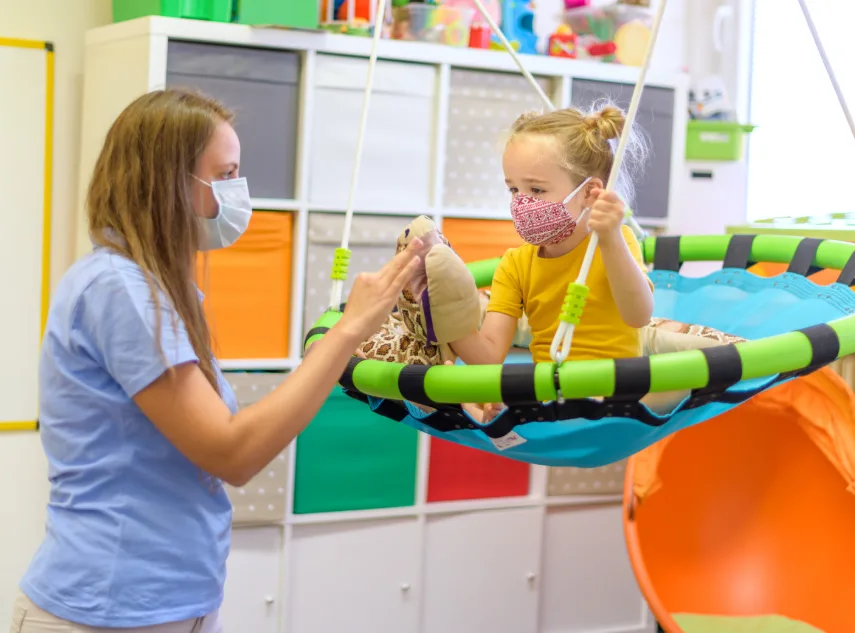
Bumping into classroom furniture, misjudging steps on playground stairs, or struggling to judge personal space during group games are common daily hurdles for children living with dyspraxia. Because developmental coordination disorder affects how the brain maps body position in relation to surrounding objects, ordinary movements can feel unpredictable and tiring. Many families exploring ot Blacktown resources discover that targeted, play based occupational therapy strengthens proprioceptive and visual spatial pathways in a supportive setting. Through engaging movement challenges and practical everyday strategies, paediatric occupational therapy helps children navigate their physical world with safety and confidence.
How Occupational Therapy Develops Spatial Confidence
Strengthening Body Awareness Through Sensory Movement
Accurate spatial judgement begins with a clear internal sense of where arms, legs, and joints are positioned without looking. Occupational therapists use swings, balance beams, scooter boards, and weighted obstacle courses to deliver rich proprioceptive and vestibular input. These purposeful sensory activities sharpen balance and postural control, helping children calibrate force and direction smoothly during playground play and classroom transitions.
Improving Visual Spatial Perception and Motor Planning
Understanding distance, depth, and direction plays a vital role in both sports and classroom tasks. Occupational therapy incorporates ball catching games, target throwing, construction blocks, and floor mazes to practise planning sequences of movement before acting. Breaking unfamiliar physical actions into clear steps teaches children how to judge gaps, navigate crowded hallways, and align letters neatly between page margins.
Adapting Home and Classroom Spaces for Everyday Success
Small environmental adjustments make a noticeable difference while spatial skills continue developing. Occupational therapists work alongside parents and educators to arrange clear walkways, place visual floor markers for lining up, and select supportive seating that keeps feet grounded. Pairing practical space organisation with encouraging verbal cues reduces accidental collisions and builds lasting independence during dressing, packing bags, and desk work.
Empowering Confident Movement in Every Environment
Spatial awareness grows steadily when children feel safe to explore movement at their own pace without fear of clumsiness or embarrassment. By combining sensory rich play, structured motor planning exercises, and thoughtful environmental supports, occupational therapy transforms everyday physical challenges into rewarding milestones. Over time, children with dyspraxia gain stronger coordination, greater personal safety, and genuine enthusiasm for active play alongside their peers.
Frequently Asked Questions
1. Why do children with dyspraxia struggle with spatial awareness?
Dyspraxia affects motor planning and sensory integration, making it harder for the brain to accurately process body position, distance, and speed when moving around objects or other people.
2. How does spatial awareness affect classroom learning?
Difficulties judging space can impact handwriting alignment, spacing words on a page, organising desk supplies, and sitting comfortably on a busy classroom mat without bumping neighbours.
3. What playful activities help build spatial awareness at home?
Crawling through tunnels, playing catch with large beach balls, building forts, completing jigsaw puzzles, and navigating backyard obstacle courses encourage body mapping and depth perception naturally.
4. Can occupational therapy help with playground confidence and sport?
Yes, therapists practise foundational movement sequences such as jumping, aiming, and dodging in supportive steps so children feel capable joining group games during recess and physical education.
5. At what age should parents seek occupational therapy for dyspraxia?
Early support during preschool or primary school years is ideal, as playful intervention builds core coordination and prevents frustration before physical and academic demands increase.