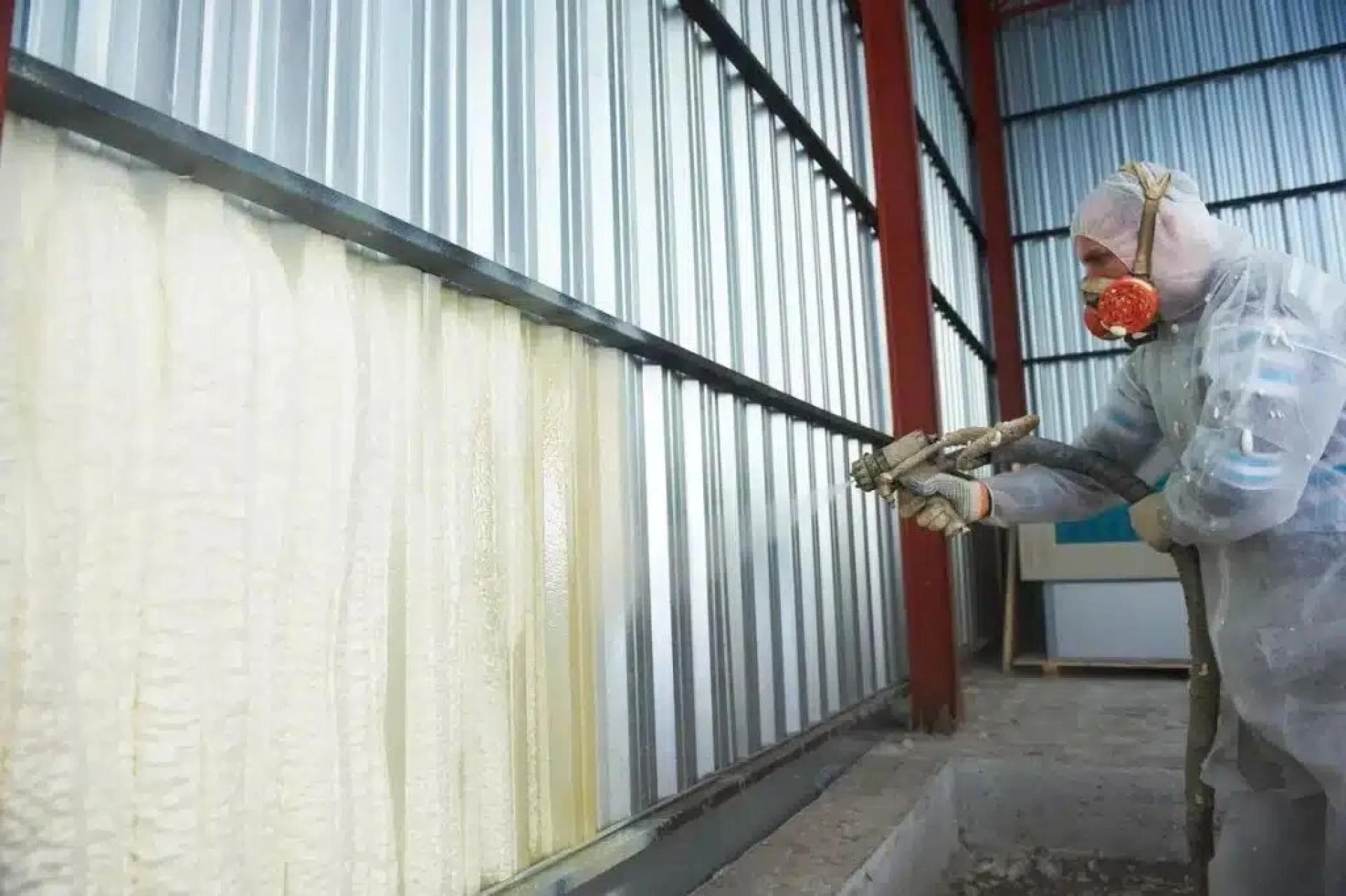
For any business, building efficiency is not just about environmental responsibility; it's a direct driver of profitability. The starting point for creating a truly efficient commercial building lies in its insulation. Commercial spray foam insulation, in particular, provides a foundational solution because it does more than just manage temperature. It creates a complete, seamless air and moisture barrier that attacks the primary sources of energy waste in commercial structures. This directly lowers massive operational costs, protects the building and its contents from moisture damage, and enhances the structure's durability, making it the most impactful first step in a comprehensive efficiency strategy.
Understanding how commercial spray foam achieves this requires looking at its impact on a business's bottom line, its role in asset protection, and what facility managers should know before an installation. The insights are drawn from years of commercial and industrial applications, focusing on the practical results that matter most to business owners.
The Starting Point of Efficiency: An Unbroken Air Barrier
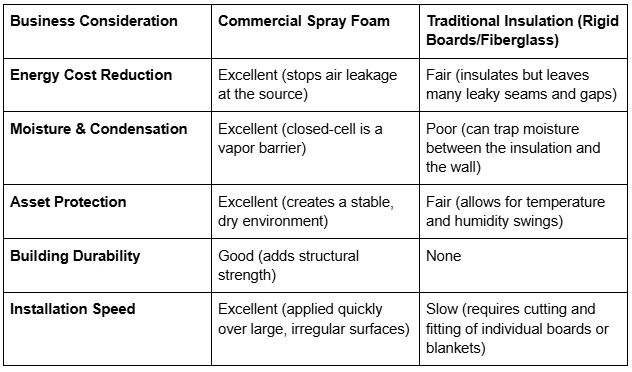
The largest, most variable operational expense for many commercial buildings is energy, with HVAC systems accounting for a huge portion of that cost. Large structures, especially those made of metal or concrete block, are notoriously leaky. Every seam, joint, and penetration is a pathway for air to move in and out. This constant, uncontrolled air exchange means that a significant amount of the money spent on heating and cooling is wasted on conditioning air that is immediately lost.
This is where spray foam insulation offers a fundamental advantage over traditional insulation methods like fiberglass blankets or rigid foam boards.
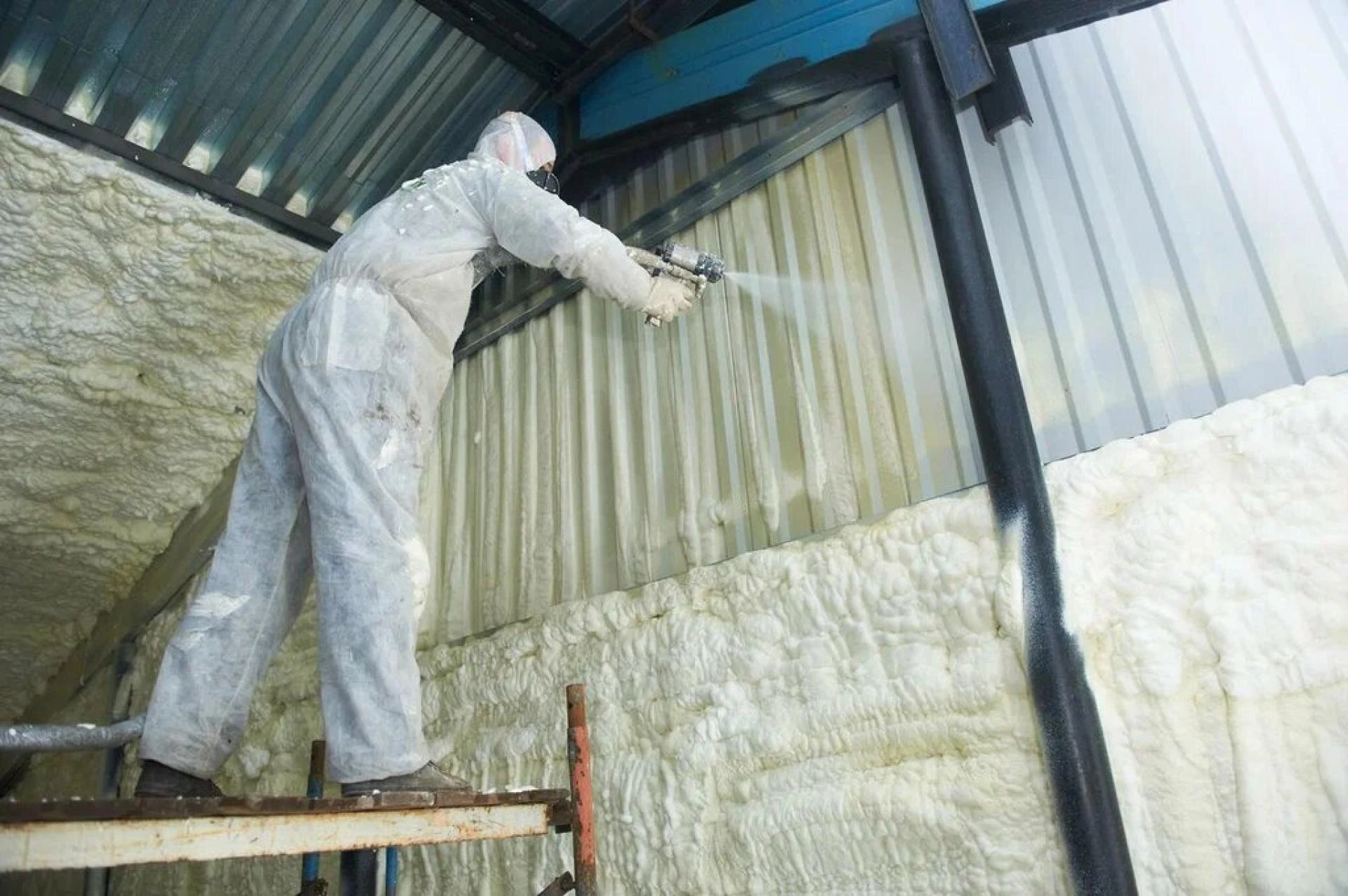
- It creates a monolithic seal. When sprayed, the foam expands to fill every crack and gap, adhering directly to the substrate. This creates a single, continuous air barrier with no seams or joints.
- It drastically reduces HVAC load. By stopping the air leaks, the building's interior volume is truly isolated from the outside. The HVAC system no longer has to fight a constant battle against infiltrating air, so it runs less often and for shorter periods. This results in an immediate and substantial reduction in energy consumption.
This reduction in HVAC runtime not only slashes utility bills but also reduces wear and tear on the equipment itself, extending its service life and delaying costly replacements.
Beyond Temperature Control Protecting Assets
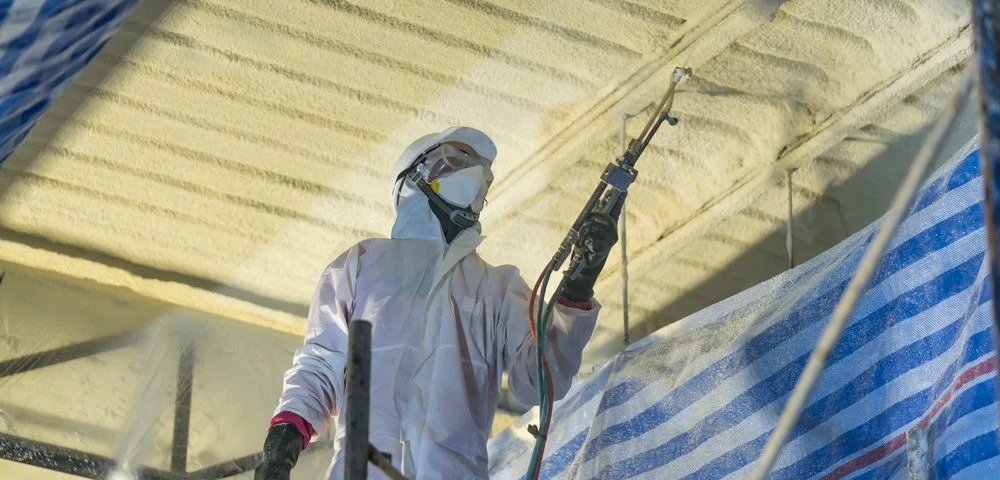
An efficient building must do more than just maintain temperature; it must provide a stable and safe environment for the assets inside, whether that's inventory, equipment, or employees. Moisture is a constant threat in many commercial settings, and spray foam provides an exceptional solution.
Closed-cell spray foam, the type most often used in commercial applications, acts as a vapor barrier. It has a very low water vapor permeance, which means it resists the passage of humid air. This is critical for preventing condensation, a common and destructive problem in metal buildings, often called "sweating." When warm, moist air inside the building comes into contact with the cold surface of the metal wall or roof, the moisture condenses. This can lead to:
- Rust and corrosion on the building structure itself.
- Damage to stored goods, especially cardboard and other paper-based packaging.
- The growth of mold and mildew, which can create an unhealthy work environment.
- Rust forming on valuable machinery and equipment.
By insulating the interior of the building with closed-cell foam, the metal surfaces never get cold enough for condensation to form, eliminating this entire chain of problems.
A Stronger More Resilient Building
Commercial buildings are long-term assets, and protecting their structural integrity is essential. Closed-cell spray foam makes a direct contribution to a building's durability. It cures to a dense, rigid consistency and bonds tenaciously to the surfaces it's applied to. This action effectively glues the building's components (like wall panels and framing) together.
This composite effect significantly increases the racking strength of a wall or roof assembly, helping the building resist lateral forces from high winds. This is a particularly valuable benefit for the pre-engineered metal buildings that are common in commercial and agricultural use, as it can reduce panel flex and make the entire structure feel more solid. By preventing corrosion and adding strength, spray foam extends the life of the building and reduces the need for long-term maintenance.
Bonus Tip: In addition to walls and roofs, spray foam is an excellent choice for insulating tanks, pipes, and other industrial equipment. Its ability to conform to any shape makes it ideal for creating a seamless insulating jacket that improves process efficiency and personnel safety.
How Insulation Choices Impact Business Operations
Things to Consider Before Making a Decision
For a business owner or facility manager, planning for a spray foam installation involves a few key strategic points.
Scheduling to Minimize Disruption
A professional installation will require the work area to be cleared and properly ventilated. Experienced commercial contractors understand that business continuity is a priority. They should be able to work with you to develop a phased installation plan, often working during off-hours, weekends, or scheduled shutdowns to minimize or eliminate any impact on your operations.
Choosing the Right Material for the Job
While closed-cell foam is the workhorse of the commercial industry due to its durability and moisture resistance, open-cell foam can be a good choice for specific applications, such as for sound control between office spaces within a larger building.
Adhering to Fire and Building Codes
Commercial and industrial buildings are subject to strict fire safety codes. All commercial-grade spray foams contain fire retardants, but in most situations, they must be covered by an approved 15-minute thermal barrier (like drywall) or a special intumescent fire-protective coating. A qualified commercial insulation contractor will be an expert on the local codes and will include the necessary fire protection in their project plan.
Questions Business Owners Often Ask
What is the typical ROI on a project like this?
The payback period for a commercial spray foam project can vary widely based on the building's size, its use, and local energy costs. However, due to the significant energy savings, it is often in the range of 3 to 7 years. The reduction in operational costs begins immediately.
Can this be applied to an older building?
Absolutely. Retrofitting existing buildings is one of the most common applications. The key to a successful project is proper surface preparation. The surfaces must be clean, dry, and free of any oils or loose debris to ensure strong adhesion.
How much will the installation process disrupt my operations?
With proper planning, the disruption can be minimal. A professional contractor will work with you to create a schedule that fits your business needs, often performing the work in sections or during non-operational hours.
How durable is the foam in a tough environment?
Closed-cell spray foam is extremely durable. Once cured, it is a hard, rigid plastic that can easily withstand the incidental bumps and scrapes common in an industrial or agricultural setting. For very high-traffic areas, it can be protected with a more robust covering.
Does it help with noise control in large spaces?
Yes, it can make a significant difference. The foam is an excellent sound absorber, which helps to reduce the echo and reverberation common in large, open buildings with hard surfaces like concrete and metal. This can create a more pleasant and productive work environment.
A Strategic Investment in Your Building
The efficiency of a commercial building truly begins with its insulation. Commercial spray foam provides a comprehensive solution that delivers a powerful return on investment. It's a strategic upgrade that simultaneously lowers operating costs, protects valuable assets, and improves the long-term durability of the building. For any business looking to gain control over its energy expenses and create a better-performing facility, it is the smartest place to start.
Getting a Professional Building Assessment
The first step in any commercial efficiency project is a thorough professional assessment. An experienced commercial insulation contractor can evaluate your building, identify its specific weaknesses, and provide a detailed proposal. For businesses in the Fresno area looking for this level of expertise, Supreme Spray Foam – Fresno specializes in commercial and industrial applications. Their team can be reached at (559) 545-0800 or via email at [email protected] to schedule a consultation.
Reviewer: Emma Robinson contributed her knowledge from 8 years working with the spray foam industry. Her review helped shape this content with ideas grounded in what contractors and homeowners actually value.