Foundations of Structural Responsibility
The built environment reflects society’s priorities, resources, and understanding of physics, materials, and human behavior. Every structure stands as a negotiation between safety, function, aesthetics, and economy. When that negotiation succeeds, buildings quietly support daily life for decades. When it fails, consequences ripple outward, affecting communities, industries, and public trust. Understanding why structures perform as intended or why they do not requires a disciplined approach grounded in engineering judgment, historical knowledge, and ethical responsibility.
The Role of Investigation in the Built World
Engineering is not limited to design and construction. It also includes the careful study of what happens after a structure is occupied, stressed, modified, or damaged. Investigations transform failures into lessons and near misses into improvements. These inquiries demand objectivity, patience, and respect for evidence. Engineers engaged in this work must communicate clearly with owners, legal teams, insurers, and public officials while remaining faithful to technical truth.
Early Indicators and Professional Accountability
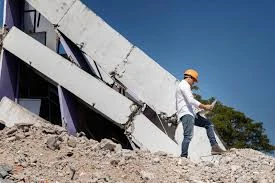
Warning signs often precede major failures. Cracks, deflections, corrosion, and unusual vibrations are rarely isolated events. They are signals that load paths may be compromised or materials are degrading beyond acceptable limits. In this context, Building Collapses and Structural Engineer expertise becomes critical, not only to diagnose visible distress but also to identify hidden vulnerabilities before they escalate. Accountability in this phase is shared among designers, contractors, inspectors, and owners, each playing a role in recognizing and responding to risk.
Material Behavior and Environmental Influence
Materials do not exist in isolation from their environment. Concrete reacts to moisture and temperature cycles, steel responds to corrosion and fatigue, and composites age under ultraviolet exposure. Environmental loads such as wind, seismic activity, and thermal movement introduce forces that may not have been fully anticipated at the time of design. A comprehensive evaluation considers how these influences interact over time, sometimes compounding each other in subtle but significant ways.
Codes, Standards, and Their Limitations
Building codes establish minimum requirements, not guarantees of perpetual performance. They are based on historical data, probabilistic assumptions, and consensus among experts. While codes evolve, structures built under older standards may face challenges as usage patterns change or as new knowledge emerges. Engineers must interpret codes with professional judgment, recognizing when conditions warrant measures beyond prescriptive requirements.
Human Factors in Structural Performance
Construction quality, maintenance practices, and operational decisions directly affect structural integrity. Even the most robust design can be undermined by poor workmanship or unauthorized modifications. Conversely, thoughtful maintenance can extend service life well beyond original expectations. Investigations often reveal that failures are rarely caused by a single factor but rather by a chain of decisions and oversights accumulating over time.
Analytical Methods and Evidence Evaluation
Modern investigations employ a combination of visual inspection, nondestructive testing, material sampling, and analytical modeling. Each method contributes a piece of the overall picture. Data must be interpreted carefully, with an understanding of uncertainties and assumptions. Engineers document findings meticulously, knowing that their conclusions may influence legal outcomes, insurance claims, and future design practices.
Midpoint Reflections on Cause and Origin
At the heart of many inquiries lies the determination of how and why a failure occurred. Establishing Origin and Cause and Forensic Engineer conclusions requires reconstructing events in chronological order, separating initiating factors from contributing conditions. This process demands neutrality and technical rigor, as conclusions must withstand scrutiny from multiple stakeholders with differing interests.
Communication and Ethical Obligations
Clear communication is as important as technical accuracy. Engineers translate complex analyses into language that nontechnical audiences can understand without oversimplifying the facts. Ethical obligations require transparency, avoidance of conflicts of interest, and adherence to professional standards. Trust is built when conclusions are supported by evidence and presented without bias.
Learning From Past Failures
Every investigation adds to a growing body of knowledge that informs safer designs and better practices. Historical failures have led to improvements in load calculations, detailing requirements, and inspection protocols. By studying past events, engineers help prevent recurrence and contribute to the resilience of the built environment. This learning process underscores the value of institutional memory within the profession.
Collaboration Across Disciplines
Complex cases often require collaboration among structural engineers, geotechnical specialists, material scientists, and other experts. Each discipline provides insights that enrich the overall understanding of performance and failure. Coordinated efforts ensure that conclusions reflect a holistic view rather than a narrow perspective.
Practical Applications in Modern Practice
Organizations like Preeminent Solutions apply investigative principles to real world challenges, assisting clients in understanding structural conditions and making informed decisions. Such work bridges theory and practice, ensuring that engineering knowledge serves public safety and economic stability. The impact of these efforts extends beyond individual projects, influencing standards and expectations across the industry.
Technology and the Future of Investigation
Advancements in sensing technology, data analytics, and simulation tools are transforming how engineers monitor and assess structures. Continuous monitoring can detect changes in behavior long before visible damage appears. As tools evolve, so too does the engineer’s ability to provide proactive solutions rather than reactive responses.
Closing Perspective on Specialized Expertise
In an era of increasingly complex structures and performance demands, specialized knowledge continues to grow in importance. The perspective of an Aerospace Building and Forensic Structural Engineer in the final assessment highlights how cross industry experience and advanced analytical thinking can elevate investigative outcomes. By integrating lessons from multiple fields, the profession strengthens its ability to protect lives, assets, and the integrity of the built environment.