Where the Opportunity Comes From
Walk into any Indian neighborhood today and you'll notice something that wasn't true a decade ago: electronics stores are everywhere, and they're busy. Smartphones, laptops, smart TVs, refrigerators — these aren't occasional purchases anymore, they're recurring necessities tied to how people work, learn, and live.
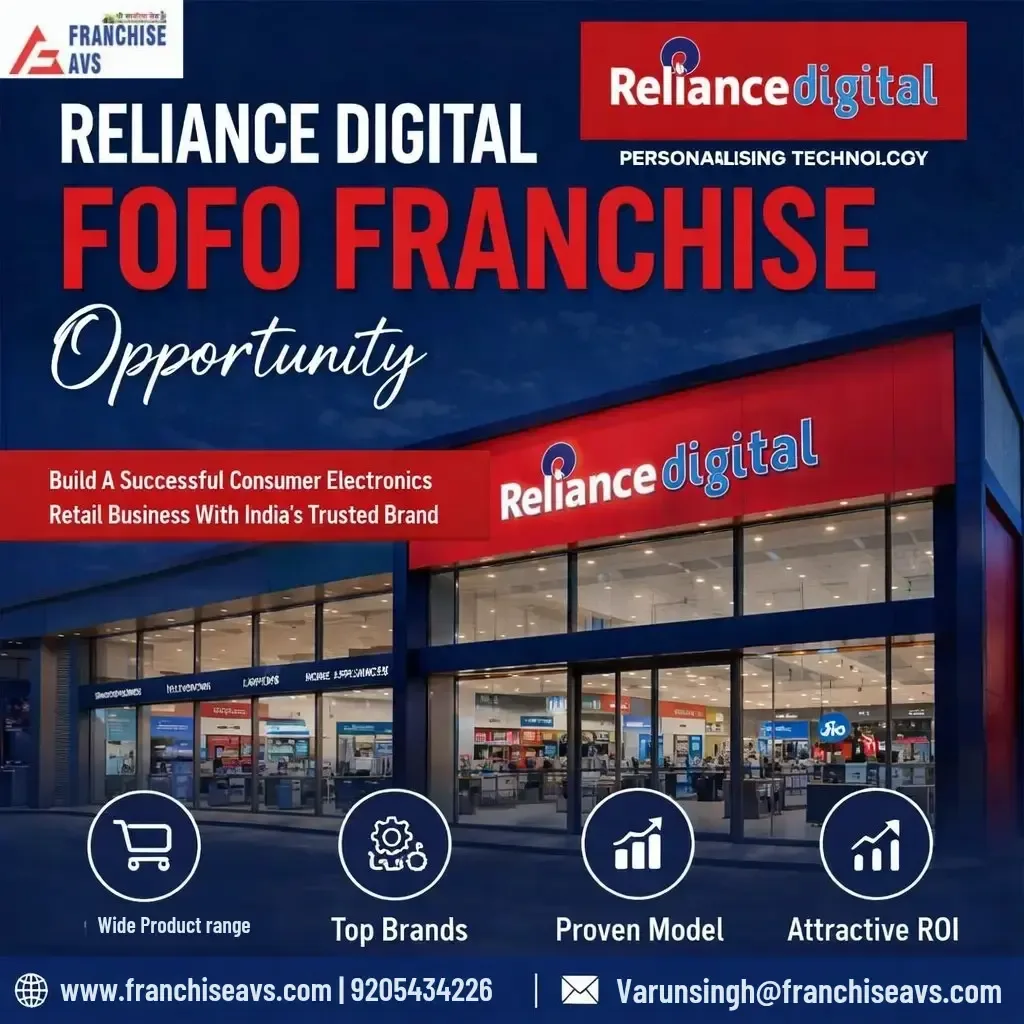
That shift in buying behavior has created real demand for organized retail — stores that guarantee genuine products, fair pricing, and service you can trust rather than a gamble. For entrepreneurs watching this trend, Reliance Digital FOFO Franchise Opportunities represent one way to step into this space through an established retail framework rather than building a brand from scratch.
What's Driving the Boom
A few forces are converging to push this market forward:
- Smartphone and internet penetration reaching deeper into smaller towns
- Rising household incomes fueling upgrades to premium appliances
- Smart home devices moving from novelty to mainstream
- Easier EMI and financing options lowering the entry barrier for big-ticket purchases
- Infrastructure development opening up new commercial corridors in Tier 2 and Tier 3 cities
- Growing consumer preference for branded, warranty-backed products over unorganized sellers
None of these are short-term blips — they're structural shifts that organized retailers are positioning themselves to capture.
How the FOFO Model Actually Works
FOFO stands for Franchise Owned, Franchise Operated. In plain terms, the investor puts up the capital, owns the outlet, and runs the day-to-day operations — hiring staff, managing inventory, handling customer service — while operating under the brand's established systems, pricing structures, and operational playbook.
It sits in a middle ground: you're not building a business identity from zero, but you're also not handing over daily control to someone else. For entrepreneurs who want ownership and hands-on involvement without reinventing retail operations, that balance tends to be the appeal.
What Sits on the Shelves
A store under this model typically carries a wide spread of categories rather than a narrow specialty, which helps with both foot traffic and repeat business:
- Smartphones and tablets
- Laptops and desktops
- Smart TVs and audio systems
- Refrigerators, washing machines, and air conditioners
- Microwaves and kitchen appliances
- Wearables and gaming devices
- Personal care electronics
The breadth matters — a customer who comes in for a phone might leave having also priced out a washing machine, and that cross-category browsing is a big part of how electronics retail generates volume.
Location Still Decides a Lot
No amount of brand strength compensates for a bad location. The stores that perform well tend to share a few traits:
- High visibility on well-trafficked commercial streets
- Easy road access and nearby parking
- Proximity to residential clusters with steady footfall
- Presence in areas with visible commercial growth, not just current activity
This is worth spending real time on before signing anything — a location assessment isn't a formality, it's arguably the single biggest lever on future revenue.
What the Investment Actually Covers
Before committing capital, it helps to know where the money goes. Typical cost buckets include:
CategoryWhat It CoversStore buildoutInteriors, fixtures, layoutTechnologyPOS systems, billing infrastructureInventoryInitial stock across product categoriesStaffingHiring and trainingMarketingLocal launch and ongoing promotionWorking capitalBuffer for early operating months
Anyone evaluating this seriously should check current figures directly through Reliance Digital FOFO Franchise Opportunities, since investment terms and requirements get updated over time.
Why Service Still Wins Customers
Price comparison apps mean anyone can check if a product is cheap elsewhere. What they can't easily replicate is a good in-store experience — a staff member who actually knows the difference between two laptop models, or a clear explanation of warranty terms before you buy.
Stores that get this right tend to focus on:
- Sales staff who can genuinely advise, not just recite specs
- Honest product demos instead of upselling pressure
- Transparent, no-surprises pricing at checkout
- Fast billing and minimal wait times
- Clear post-purchase support for warranty and service issues
This is where organized retail earns its premium over unbranded competition — not on price alone, but on trust.
The Smaller Cities Are Where the Growth Is
Metro markets are largely saturated with organized retail already. The more interesting expansion story right now is in Tier 2 and Tier 3 towns, where:
- Household incomes are climbing steadily
- Local infrastructure and commercial zones are maturing
- Consumers increasingly want the same branded experience available in bigger cities
- Competition from organized players is still relatively light
For investors thinking long-term rather than chasing the most crowded markets, these cities offer more room to build a customer base without immediately competing against five other similar stores on the same street.
Day-to-Day Operations That Make or Break the Business
Signing a franchise agreement is the easy part. Running it well day after day is where most of the actual business challenge lives:
- Keeping inventory levels accurate and avoiding stockouts on popular items
- Training staff continuously, not just at launch
- Monitoring sales performance and adjusting product mix accordingly
- Maintaining store presentation and cleanliness
- Tracking financials closely enough to catch problems early
None of this is glamorous, but it's the difference between a store that merely opens and one that actually thrives.
Who Tends to Do Well With This
This model isn't a fit for everyone, but it tends to suit:
- First-time entrepreneurs who want structure rather than building a brand from scratch
- Existing retailers looking to diversify into electronics
- Owners of well-located commercial property looking to put the space to use
- Investors with a longer time horizon rather than a quick-flip mindset
What matters more than background is a willingness to actually manage the operation closely — this isn't a passive investment.
Questions Worth Answering Before You Sign
Before any capital changes hands, it's worth working through:
- Is there real demand in your target location, or are you guessing?
- Who's the competition already there, and what's their weakness?
- Can you sustain the investment through a slower first year if needed?
- Is the property genuinely suitable — size, location, accessibility?
- What does your customer base actually look like in terms of spending power?
Anyone seriously exploring Reliance Digital FOFO Franchise Opportunities franchiseavs.com should treat this due diligence stage as non-negotiable rather than a step to rush through.
Where This Is Heading
The next phase of growth in this sector is likely to be shaped by AI-integrated appliances, energy-efficient product lines, and increasingly connected smart-home ecosystems. Retailers that can explain and sell these newer categories — not just stock them — are the ones likely to hold an edge as consumer expectations rise.
The Bottom Line
Organized electronics retail in India isn't a fading trend — it's still building momentum, particularly outside the biggest cities. The FOFO model offers a structured way into that growth, but the structure only helps as much as the operator running it day to day. Location, financial discipline, and genuine customer service still decide whether a store becomes a strong local business or just another shuttered storefront.