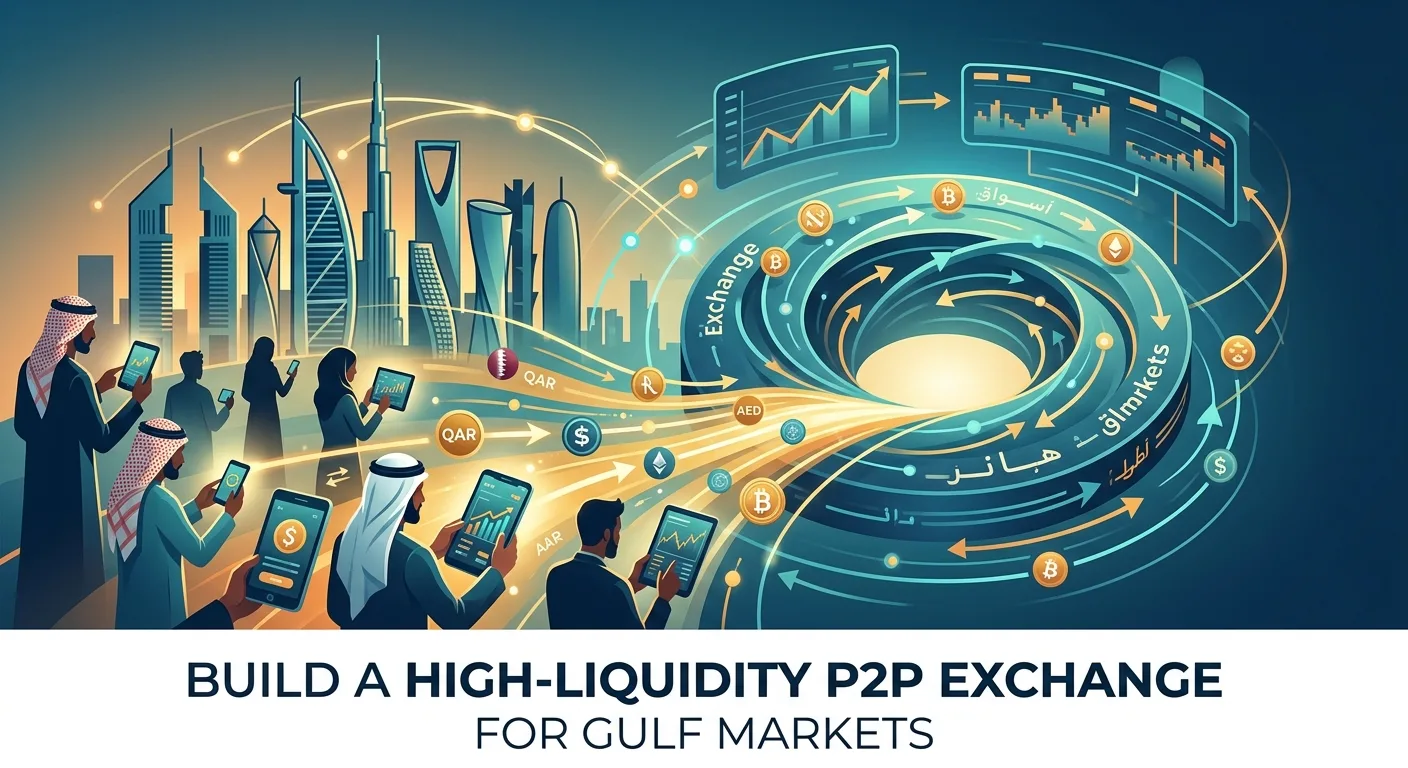
The Gulf region has rapidly positioned itself as a growing hub for financial innovation and digital assets. Countries like the UAE and Saudi Arabia are actively investing in blockchain technology and creating favorable environments for fintech businesses. With high internet penetration, strong purchasing power, and increasing interest in cryptocurrency, the region presents a valuable opportunity for launching P2P crypto exchanges.
However, entering the Gulf market requires more than just launching a platform. One of the biggest factors that determines success is liquidity. Without sufficient liquidity, users face delays, price inconsistencies, and poor trading experiences.
For businesses aiming to establish a strong presence in this region, building a high-liquidity P2P exchange is essential. It not only improves user satisfaction but also drives consistent platform growth.
What is P2P Crypto Exchange Development
P2P crypto exchange development is the process of creating a decentralized platform where users can trade cryptocurrencies directly with each other.
These platforms rely on automated systems instead of centralized control to ensure secure transactions.
Core components:
- Escrow-based transaction system
- User verification (KYC)
- Dispute resolution mechanism
- Multi-payment integration
- Secure wallet connectivity
A professional P2P crypto exchange development company ensures that these features are optimized for both performance and scalability, especially in high-demand markets like the Gulf.
Why Liquidity is Critical for Success
Liquidity determines how easily users can buy or sell assets on a platform.
Without liquidity:
- Trades take longer to execute
- Price fluctuations increase
- Users experience frustration
- Platform credibility decreases
With strong liquidity:
- Faster transaction completion
- Stable pricing
- Better user experience
- Increased trading volume
Liquidity directly impacts user retention and platform reputation.
Understanding the Gulf Market
Before building a platform, it’s important to understand the regional dynamics.
Key characteristics:
- High adoption of digital technologies
- Strong interest in crypto investments
- Government support for blockchain initiatives
- Diverse expatriate population
This creates a unique environment where P2P exchanges can thrive.
Strategies to Build High Liquidity
1. Encourage User Participation
A strong user base naturally increases liquidity.
- Offer incentives for early users
- Provide referral programs
- Reduce initial transaction fees
- Create community engagement initiatives
2. Integrate Multiple Payment Options
Users in the Gulf prefer flexibility in payments.
- Bank transfers
- Local payment systems
- International remittance options
- Crypto wallet transfers
Many businesses rely on P2P crypto exchange Development Services to integrate these payment systems efficiently.
3. Competitive Fee Structure
Lower fees attract more users and increase trading activity.
- Offer minimal transaction fees
- Provide discounts for high-volume traders
- Introduce loyalty programs
This encourages frequent trading and boosts liquidity.
4. Build Trust Through Security
Users will only trade actively if they trust the platform.
Key security features:
- Escrow-based transactions
- Two-factor authentication (2FA)
- Data encryption
- Fraud detection systems
Trust leads to higher user engagement.
5. Support Multiple Cryptocurrencies
Offering a variety of assets increases trading opportunities.
- Popular cryptocurrencies (BTC, ETH)
- Stablecoins for price stability
- Emerging tokens
This diversity attracts different types of traders.
Localization for Gulf Users
To succeed in the Gulf market, platforms must feel local and relevant.
Localization strategies:
- Arabic language support
- Region-specific UI/UX
- Local customer support
- Cultural customization
These factors improve user experience and retention.
Ensuring Regulatory Compliance
The Gulf region is becoming more structured in terms of crypto regulations.
Important considerations:
- KYC verification
- AML compliance
- Data protection policies
- Licensing requirements
Compliance builds credibility and ensures long-term sustainability.
Challenges in Building Liquidity
Achieving high liquidity is not easy, especially for new platforms.
Common challenges:
- Attracting initial users
- Competing with established exchanges
- Managing price stability
- Building trust quickly
Overcoming these challenges requires strategic planning.
Growth Opportunities in Gulf Markets
The Gulf region offers significant growth potential for P2P exchanges.
Opportunities include:
- Increasing crypto adoption
- High remittance demand
- Strong fintech ecosystem
- Government support for innovation
Businesses that enter early can gain a competitive advantage.
Future Trends in the Gulf Crypto Market
The market is expected to evolve rapidly in the coming years.
Emerging trends:
- Integration with Web3 platforms
- Institutional adoption of crypto
- AI-based trading and security
- Expansion of blockchain ecosystems
Staying ahead of these trends is crucial for long-term success.
Final Thoughts
Building a high-liquidity P2P crypto exchange for Gulf markets requires a combination of strategy, technology, and user understanding. Liquidity is not something that happens overnight it must be actively developed through user engagement, strong infrastructure, and continuous optimization.
With the right approach, businesses can create platforms that deliver fast, secure, and seamless trading experiences. The Gulf region, with its growing interest in digital assets, offers a strong opportunity for those ready to invest in building a scalable and user-focused P2P exchange.