As the streaming industry continues to evolve, businesses are demanding more than just video hosting and basic content management. Broadcasters, OTT providers, media companies, educational institutions, and enterprises now require scalable cloud infrastructure, automated broadcasting, advanced monetization, and seamless multi-device delivery. These changing requirements have led many organizations to search for Brightcove alternatives that offer greater flexibility, customization, and cost-effective broadcasting capabilities. At the same time, modern cloud playout software has become an essential solution for organizations looking to automate television channels and streamline content delivery.
Although Brightcove remains one of the well-known enterprise video platforms, many businesses eventually outgrow its capabilities or require features specifically designed for television-style broadcasting. Cloud playout technology addresses these needs by enabling fully automated channel scheduling, live streaming, advertisement insertion, and global content distribution without requiring expensive on-premise infrastructure.
This guide explores why businesses evaluate Brightcove alternatives, explains the advantages of cloud playout software, and discusses how cloud-native broadcasting is transforming the future of OTT streaming.
Why Businesses Look for Brightcove Alternatives
Many organizations begin their streaming journey with Brightcove because it provides reliable enterprise video hosting. However, as operations expand, businesses often require more comprehensive broadcasting capabilities.
Choosing among various Brightcove alternatives allows organizations to adopt platforms better suited to their evolving needs.
Several common reasons drive this transition.
Need for Television-Style Broadcasting
Traditional video platforms may not provide advanced channel scheduling or continuous broadcast automation.
Better Cloud Scalability
Growing audiences require infrastructure that automatically scales during high-traffic events.
Greater Platform Customization
Businesses increasingly seek branded OTT platforms with complete control over user experience.
Flexible Monetization
Modern streaming businesses require subscriptions, advertising, pay-per-view events, and hybrid revenue models.
Organizations often evaluate alternatives that better align with these operational goals.
Understanding Cloud Playout Software
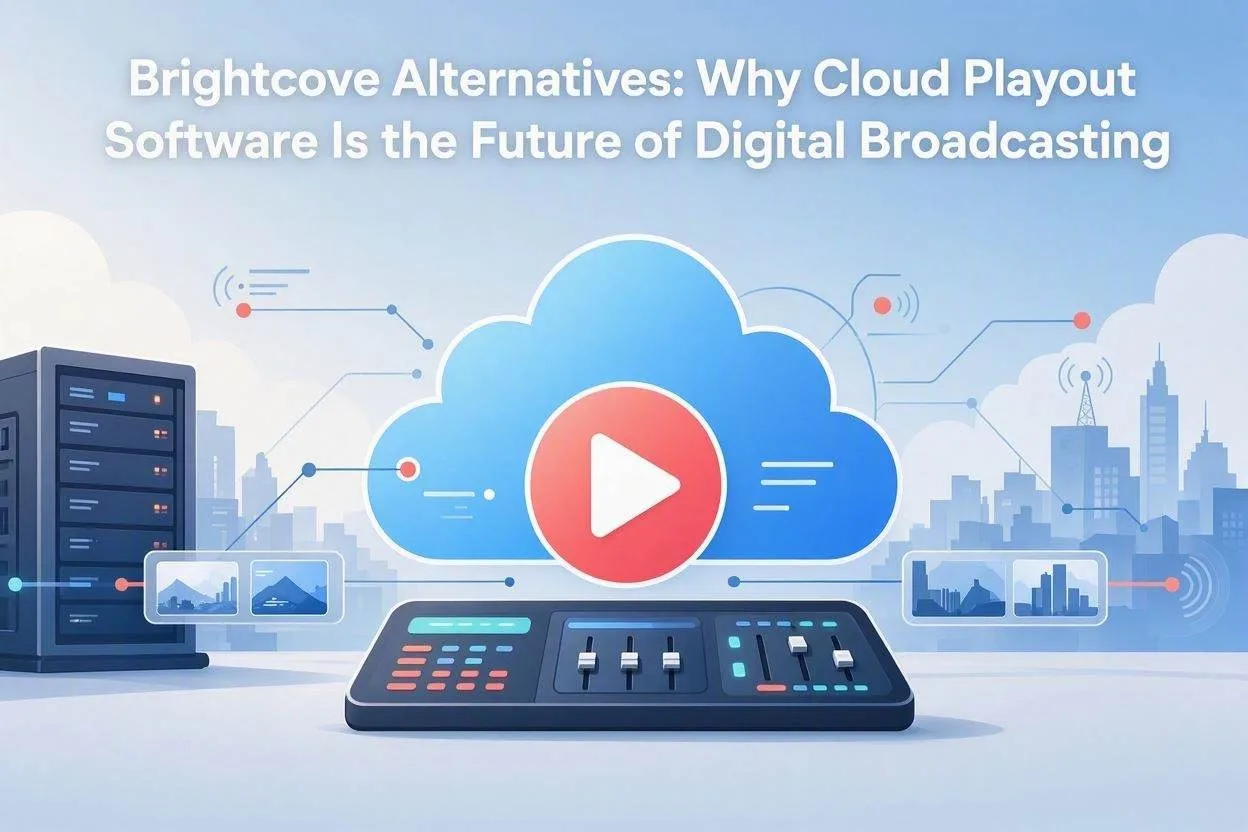
Cloud playout software is designed to automate television broadcasting entirely within cloud infrastructure.
Instead of manually controlling programming, broadcasters create automated schedules that continuously deliver content according to predefined programming rules.
Professional cloud playout software manages:
- Live channels
- Scheduled programming
- Movies
- Television series
- Advertisements
- Promotional content
- Channel branding
- Live event switching
Automation significantly reduces operational complexity while improving broadcast reliability.
Why Cloud Playout Software Is Important
Modern broadcasting requires continuous content delivery without interruption.
Professional cloud playout software provides several significant advantages.
Broadcast Automation
Entire television channels operate automatically according to predefined schedules.
Operational Efficiency
Automation minimizes manual intervention while reducing staffing requirements.
Reliable Broadcasting
Cloud infrastructure ensures consistent service availability across multiple regions.
Professional Viewer Experience
Structured scheduling creates an experience similar to traditional television broadcasting.
These capabilities allow broadcasters to operate multiple channels simultaneously.
Live Streaming Support
Live content remains one of the strongest drivers of viewer engagement.
Cloud playout solutions commonly support:
- Sports broadcasts
- News channels
- Entertainment programming
- Educational lectures
- Religious services
- Corporate events
Reliable cloud-based live streaming ensures consistent performance even during large-scale broadcasts.
Video-on-Demand Integration
Most streaming businesses combine scheduled channels with video-on-demand libraries.
Typical VOD content includes:
- Movies
- Television series
- Recorded events
- Educational courses
- Corporate training
- Documentaries
Offering both live and on-demand content increases viewer satisfaction while maximizing content utilization.
Benefits of Cloud-Native Broadcasting
Cloud infrastructure has fundamentally changed how broadcasters deliver content.
Organizations adopting cloud playout software benefit from several operational improvements.
Automatic Scalability
Resources increase automatically during periods of high demand.
Lower Infrastructure Costs
Cloud deployment reduces hardware investments and maintenance expenses.
Global Content Distribution
Content Delivery Networks efficiently stream content worldwide.
Remote Operations
Broadcast teams manage programming from virtually any location.
These benefits make cloud deployment attractive for broadcasters of all sizes.
Multi-Device Compatibility
Today's audiences consume streaming content across numerous devices.
Professional broadcasting platforms typically support:
- Smartphones
- Tablets
- Desktop browsers
- Android TV
- Apple TV
- Roku
- Samsung Smart TVs
- LG Smart TVs
- Amazon Fire TV
Cross-platform accessibility improves viewer convenience while expanding market reach.
Adaptive Streaming Technology
Internet quality varies between viewers.
Adaptive bitrate streaming automatically adjusts video quality according to available bandwidth.
Benefits include:
- Faster startup times
- Stable playback
- Reduced buffering
- Improved viewing quality
Adaptive streaming has become essential for enterprise OTT platforms.
Enterprise Security
Professional broadcasters require strong content protection.
Modern streaming platforms commonly implement:
- Secure authentication
- Digital Rights Management (DRM)
- Encrypted streaming
- Geo-restrictions
- Token-based playback
Enterprise security protects licensed content while maintaining compliance with distribution agreements.
Audience Analytics
Modern streaming businesses depend on detailed performance insights.
Analytics commonly monitor:
- Watch time
- Viewer engagement
- Geographic distribution
- Device usage
- Audience retention
- Popular programming
These reports help organizations improve programming while supporting data-driven business decisions.
Monetization Opportunities
Organizations evaluating Brightcove alternatives often seek broader monetization capabilities.
Professional OTT platforms commonly support:
Subscription Services
Recurring memberships generate predictable revenue.
Advertising
Commercial advertisements remain one of the largest income sources.
Pay-Per-View
Premium live events create additional revenue opportunities.
Sponsorship
Corporate partnerships increase monetization while strengthening brand visibility.
Multiple revenue streams improve long-term financial sustainability.
Best Practices When Choosing Brightcove Alternatives
Organizations comparing Brightcove alternatives should consider several important factors.
Evaluate cloud-native deployment capabilities.
Ensure support for professional cloud playout software.
Prioritize multi-device compatibility.
Implement enterprise-grade security.
Monitor platform analytics regularly after migration.
These practices help organizations build scalable broadcasting ecosystems.
Future of Cloud Broadcasting
Cloud broadcasting technology continues advancing rapidly.
Future platforms will increasingly support:
- AI-powered scheduling
- Personalized content recommendations
- Interactive broadcasting
- Cloud-native production
- Advanced analytics
- Cross-device synchronization
Organizations investing in cloud technologies today will remain competitive as digital streaming continues expanding worldwide.
Conclusion
The growing demand for Brightcove alternatives reflects the evolving needs of modern broadcasters seeking greater automation, flexibility, scalability, and monetization opportunities. At the same time, cloud playout software has become a critical technology for organizations that want to automate television channels, simplify operations, and deliver professional broadcasting experiences across multiple devices.
By combining cloud-native infrastructure, automated scheduling, adaptive streaming, enterprise security, audience analytics, Smart TV compatibility, video-on-demand libraries, and flexible monetization strategies, businesses can build future-ready streaming platforms that strengthen audience engagement, improve operational efficiency, and support sustainable long-term growth in today's competitive OTT landscape.